

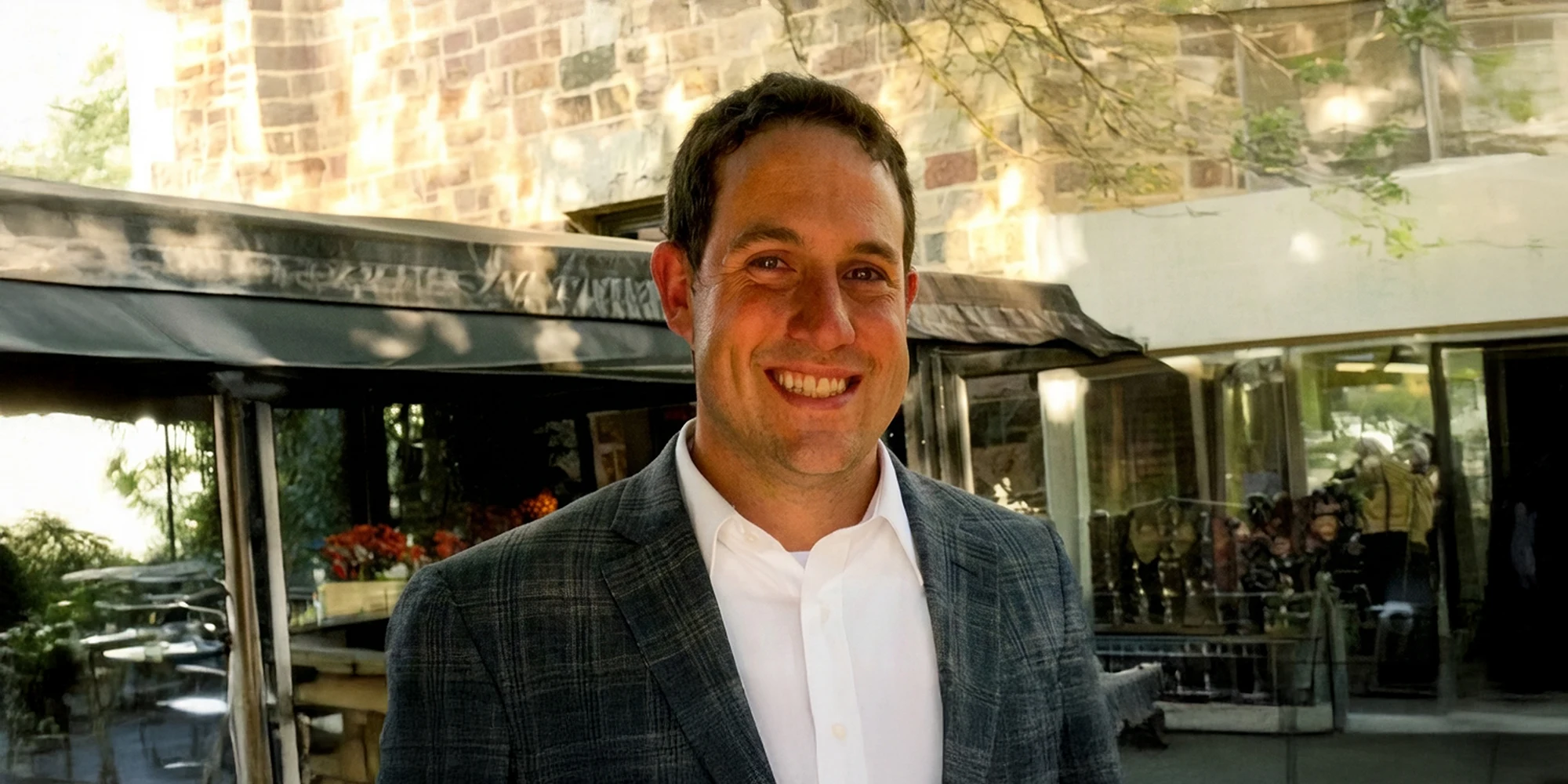


The best sales lesson Andrew Kawalek ever learned came from a country club where he couldn't afford to be a member growing up. At 13, caddying for four hours at a time, he discovered something simple: Read the room fast, adapt faster, and everyone walks away happy. Two decades later, that same principle drives how aytm builds client relationships—with empathy, not scripts.
What do you do here at aytm?
I lead our new business team. Our job is to bring on the right clients, not just any clients. We focus on our ideal client profile: The right types of companies, the right shapes and sizes of relationships. With our move to a subscription model, that focus matters more than ever.
But here's the thing: Success here is a team effort. I mean working closely with marketing, demand gen, finance, legal, solution strategy—everyone. That's what makes it run smoothly.
How did you get into sales?
I'm the opposite of shy. Going back to childhood, I've never been afraid to have conversations with people. Nothing's uncomfortable. Nothing's awkward. When I was a junior seller 15 years ago, I would find the CEO's email at any company and write directly—even though CEOs aren't typically the decision makers.
The answer isn't always in the org chart. Sometimes it's simply being a human.
I grew up in a single mother household, working since I was a kid. At 13, I started caddying at a local country club. We weren't members—we weren’t anywhere near financially able, but I caddied there.
When you caddy, you're with people for four hours. Your goal: Get the biggest tip possible and build relationships. They're not asking a 13-year-old for golf advice. They want to enjoy themselves. I learned to read the room fast: Is this person grumpy? Friendly? Good or bad at golf? Then I would adapt for four hours to earn that tip.
I learned to handle everyone—CEOs down to interns, people who are rude for no reason, people who are kind, everyone in between. That's sales.
If you could only keep three apps on your phone, which would they be and why?
- Spotify. I cannot sit still. Standing desk, constant movement. If I'm on a call without a camera, I'm walking (unless it's a blizzard). Some days 30,000 steps, some days 7,000. I'm not walking in silence—I'm listening to music or podcasts, especially “The Curiosity Current”: A Market Research Podcast.
- The Starbucks app. Even though I don’t drink coffee, my wife loves it and drinks it daily. Part of our morning routine is me going every weekday to get her order. I probably go 250 to 300 days a year. I don't even drink Starbucks. Having the app allows me to order ahead and just pick it up.
- The Outlook app. Always be closing. I don't expect anyone to work overtime, but if there's something to be done for my team at 9 PM and I can accomplish it from my couch through the Outlook app, I'll do it.
What's something you're weirdly competitive about?
Failure doesn't scare me. I'm weirdly competitive and optimistic about it.
People say sales is a numbers game—you fail more than you succeed. A 30% win rate means 70% of the time, you fail. I grew up in Cleveland, where the Browns have been bottom feeders for almost 30 years. Every week I find ways to be optimistic.
Here's the simple truth: Every failure brings you closer to a win - it’s the law of averages.
Think about the math. If you have 10 phone calls and know three will become deals, and the first two are failures, that means three of the next eight are wins. Fail the first five? Three of the next five are wins. Fail the first seven? You're going three for three on the next three.
The best baseball players ever—Hall of Famers—bat around 30%. For every hundred times they step up, they're only hitting it 30 times. And they're considered great. Sales is the same game.
How do you balance your career and personal life at aytm?
Family first always. No matter what.
With two young girls—Georgie turns six soon, Hattie's three and a half—there are complexities. We drop Georgie at the bus stop at 8 AM. We're back to pick her up at 3:15 every day. My calendar has a block at 3 PM Eastern. Hattie comes back from daycare around 5:30. My team knows between 5 and 6 Eastern, I'm unavailable. Then I'll log back in if needed—not till midnight, but maybe till 7 some nights.
Here's the reality: My wife and I both work. No in-laws in town. We figure it out, and we wouldn’t want it any other way. It also helps to have a rockstar wife who carries the team.
You work with what you have. Family first keeps me motivated to work harder, so our team can succeed.
Which aytm core value is your favorite and why?
I can't pick just one. Empathy and organic growth are tied.
Empathy should be a core value for everyone in the world, but it's critical in business. Even if you don't agree with someone. Even if you're on different teams. Even if you're having a bad day. Whoever's on the other side isn't part of what's going on with you. You need to have an open mind and understand what they're going through and what they believe in.
Organic growth is about growing the business with what we have. Double down on what's working. Don't reinvent the wheel. I'm a big believer in this: It'd be great if employees never left companies. That's not realistic, but here you see far less turnover than most places.
No one owes us anything. None of us owe anybody else anything. But the fact that people stay here—in a world where there are a zillion other options—says everything about this company.
What advice would you give to someone just starting out at aytm?
You're joining at the right time.
We're doing all the right things in a world that's chaotic. We have the right people—collaborative, skilled, experienced. Keep that in mind because like anywhere, there are macro trends, down days, challenges.
Remember this: A year, two years, three years from now, you're going to be extremely happy you got in.
We're almost 20 years old—far from the ground floor. But this is the ground floor of a brand new level. I've worked at SurveyMonkey, 1Q, Kantar. This is the best place I've worked.

.webp)


.jpeg)


