

Description
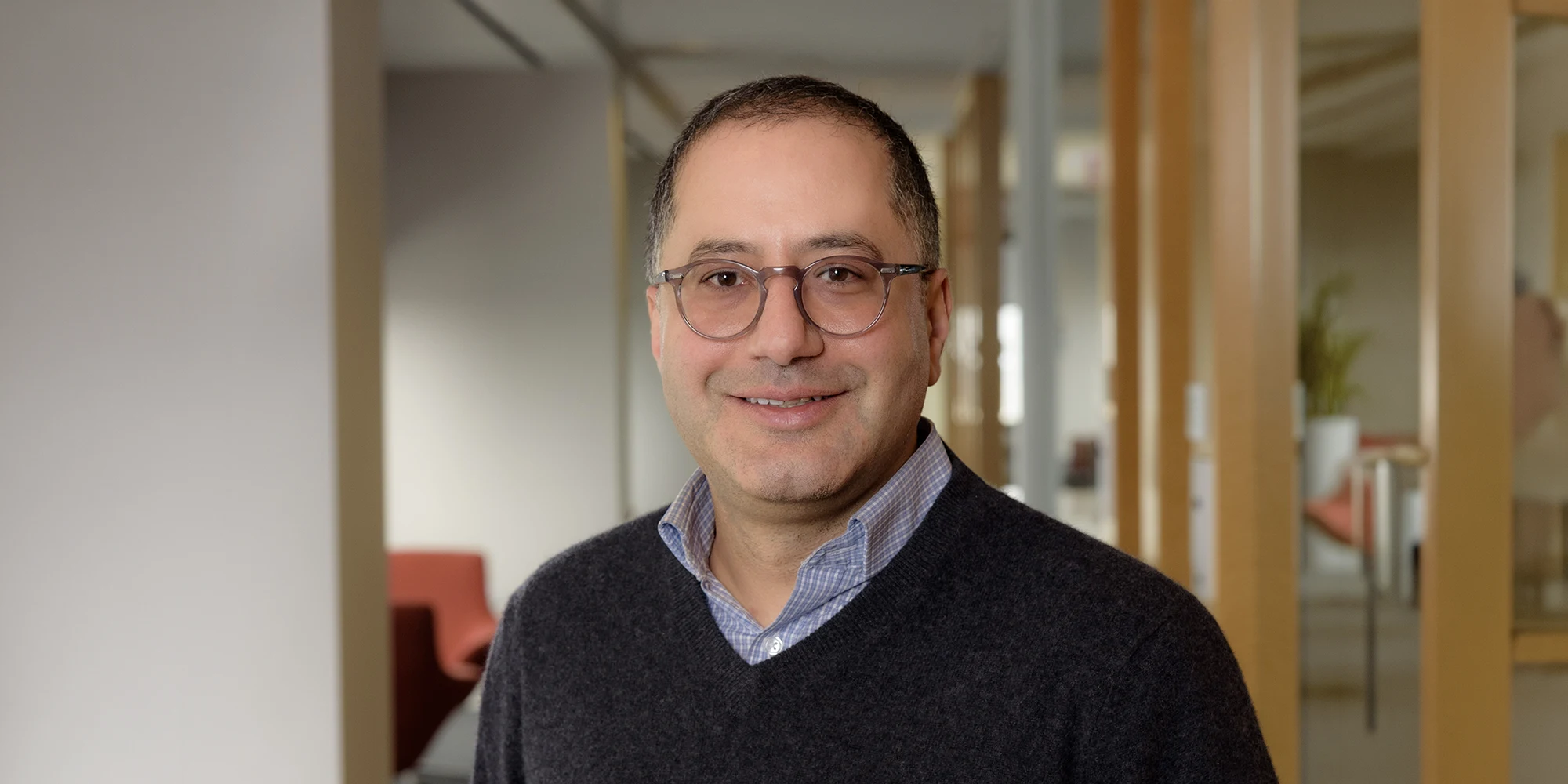
Christopher Khoury has built his career at the intersection of healthcare, technology, and policy, a perspective that shapes how he approaches strategy and insight. He began in electrical engineering and medical device development, but exposure to physiology and a personal loss anchored his long-term commitment to healthcare. Over time, his work expanded beyond products and research into understanding how systems, incentives, regulation, and people interact at scale. In this episode of The Curiosity Current, Christopher reflects on building and leading the Strategic Insights Group at the American Medical Association. When he joined the AMA more than a decade ago, there was no formal strategic insights function and little belief that new intelligence was needed. Credibility had to be earned. He explains how trust was built by saying yes to difficult questions, embedding the team in real business and policy work, and taking social-capital risks by showing up where insights had not previously been invited. The conversation explores why market intelligence in healthcare is uniquely complex. The customer is rarely a single person. Physicians, patients, payers, policymakers, and technology companies all influence outcomes, often with competing incentives. Christopher explains how frameworks and taxonomies help organize this complexity, while emphasizing the need for flexibility in a system shaped by constant change. Stephanie and Molly also discuss how relationships outside the organization strengthen insight quality. Christopher shares lessons from working with startups and cross-sector partners, using the aircraft carrier and speedboat analogy to describe the tension between institutional scale and startup speed. The episode closes with reflections on cross-training teams, approaching AI as a socio-technical system, and building long-term impact through curiosity, patience, mentoring, and relationships.
Episode Resources
- Christopher Khoury on LinkedIn
- American Medical Association Website
- Stephanie Vance on LinkedIn
- Molly Strawn-Carreño on LinkedIn
- The Curiosity Current: A Market Research Podcast on Apple Podcasts
- The Curiosity Current: A Market Research Podcast on Spotify
- The Curiosity Current: A Market Research Podcast on YouTube
Transcript
Christopher - 00:00:01:
What I've carried with me also is just simply inserting yourself in unlikely scenarios. And some of that serendipity that happens when you do that is taking intellectual risks and social capital risks, if you will, by showing up to things where you or your organization may not have previously been to. And there's an element of surprise that is actually, I found, to be very beneficial there.
Molly - 00:00:26:
Hello, fellow insight seekers. I'm your host, Molly, and welcome to The Curiosity Current. We're so glad to have you here.
Stephanie - 00:00:33:
And I'm your host, Stephanie. We're here to dive into the fast-moving waters of market research where curiosity isn't just encouraged, it's essential.
Molly - 00:00:43:
Each episode, we'll explore what's shaping the world of consumer behavior from fresh trends and new tech to the stories behind the data.
Stephanie - 00:00:51:
From bold innovations to the human quirks that move markets, we'll explore how curiosity fuels smarter research and sharper insights.
Molly - 00:01:00:
So, whether you're deep into the data or just here for the fun of discovery, grab your life vest and join us as we ride the curiosity current.
Stephanie - 00:01:10:
Today on The Curiosity Current, we are joined by Christopher Khoury, Vice President of Strategic Insights at the American Medical Association.
Molly - 00:01:19:
Christopher is a senior strategy and transformation executive with over two decades of experience navigating health care, technology, and policy. He's advised top leaders in health systems, health tech ventures, and regulatory bodies, shaping strategic decisions that drive growth and innovation in complex and highly regulated industries.
Stephanie - 00:01:39:
In his role at the AMA, Christopher works closely with senior leadership on strategy, market intelligence, and partnerships, and has helped develop multiple health tech ventures with real impact on healthcare.
Molly - 00:01:51:
Christopher has worked with top consulting firms like PwC and Gallup, advising Fortune 500 executives and policymakers on issues that shape industries. He's also co-invented nanotechnology patents, advised on AI in health care, and led initiatives that blend market intelligence, ethics, and growth strategy.
Stephanie - 00:02:09:
Today, we'll dive into how credibility plays a key role in strategic insights, the importance of chemistry and cross-training in high-performing teams, and how relationship networks can amplify your impact in areas like healthcare policy and innovation.
Molly - 00:02:25:
Christopher, you have had an exciting career so far. Welcome to the show. We are so excited to have you.
Christopher - 00:02:31:
I'm so glad to be here. Thank you for the invitation today.
Stephanie - 00:02:34:
Absolutely. Well, let's get started. We have a lot to talk about. So, Christopher, to kick us off, you have built a career that is at the nexus of healthcare and technology, policy, kind of culminating in this current role at the AMA. What first drew you to healthcare as a sector for strategy and innovation? And I'm curious how your perspective on the role of market intelligence in this space has maybe evolved over the years.
Christopher - 00:02:59:
Yeah. Thank you for that question. So, while I don't feel that old quite yet, it's been a really long journey, and it's been fairly circuitous, actually. At a pretty early age, I had wanted to become an engineer. I had a love for science and technology pretty early on. I got my start, began my studies as an electrical engineer, and somewhere in that, my student journey there, I took a physiology class, and that really changed my orientation away from just the technologies we all know, but this notion of technology of the body. And coupled with that was something more unfortunate, which is I had a personal crisis with the loss of my father to a disease during that time. And that kinda further really just cemented and galvanized me in the direction of wanting to do something hard in healthcare.
Stephanie - 00:03:51:
Yeah.
Christopher - 00:03:52:
So, I did spend a lot of time as a researcher, I mean, more on the academic side, and then eventually as a product developer in a medical device, a med tech company. And that really allowed me to cut my teeth. That's really what got me interested, eventually, in the bigger ecosystem kind of breaking out of that silo of engineering and product. But how do these products exist in the real world? Who's using them? How do the patients benefit from them? And all those other questions. And so today, I mean, the sector still remains incredibly exciting to me today. I love learning something new, and healthcare is really great for that. There's not a day that goes by where I don't feel like I need to get up to speed or learn about something. And, of course, this is an era of dramatic change in healthcare, too. So, that's really how I got into the healthcare space over those many years. You asked a question around how the market intelligence, my thinking on market intelligence has evolved. I am a voracious consumer of context and information, and I'll probably come back to that theme a little bit. And so I think maybe it was never being satisfied with just doing one job or focusing on one thing. That's kind of what, eventually, why I broke out of just engineering is because I had too much curiosity about the context and how the overall environment and the systems that we all operate in function. And so market intelligence for me has evolved over time as I've begun to better understand those systems that we all operate in, both as professionals, folks in the healthcare workforce, certainly as insights professionals. And I carry that with me, and I've tried to evolve that thinking over time.
Stephanie - 00:05:37:
Does being at an organization like the AMA allow you to kind of work more broadly and across more of those contexts than, say, like, you know, a health tech company that had a very specific mission of, like, launching and having this successful product. Right?
Christopher - 00:05:53:
Yeah. You know, it's a great question because I think I found my happy place at the AMA. It's part of the reason why I've, you know, made a successful kind of chunk of my career here so far is because of the sheer breadth. There aren't a lot of places where you can really grapple with the four and a half trillion dollars of healthcare in this country, you know, the expenditure and what that really entails. But I, without a doubt, and I'm sure you have this insight to every company, small, medium, and large, I think have really interesting questions that require good market insights, good strategic insights to grapple with. And I, you know, it's fun to talk with those folks, too, that are looking through maybe a narrower lens, but still really big questions. Yeah.
Molly - 00:06:41:
I'd love to dig deeper with you, Christopher, about the teams that you've built in your time at the AMA and how you've been dedicated to market intelligence, like you said, and uncovering that curiosity and strategic insights. How did you position your team as a trusted strategic adviser to the CEO and also to senior leadership? And that process takes time. Building that trust is an essential part of that. So, what was the most critical step in gaining that kind of trust and also credibility within the organization?
Christopher - 00:07:14:
Yeah. Molly, thanks. And, you know, of course, those notions go hand in hand, the trust and credibility, and they feed off of each other. And, I mean, the first thing I'd say is this, it wasn't an overnight phenomenon. When I first came to the AMA, which was about twelve years ago now, we didn't have a function that we would know today as a strategic insights function. There was a mindset at that time. You know, I'm working in an environment where the institution's been around for a hundred and seventy plus years at the time when I first joined. So to an extent, we knew what we thought we needed to know about the world, and so we had to build that trust and credibility from scratch. And, you know, the team built and evolved over time there. Part of that getting to that credibility and trust was, I think, I was, you know, you can convince yourselves of things looking retrospectively sometimes easier, but I would say we said yes a lot more often than we said no to projects. We jumped at the chance when we could play a role in potentially answering a strategic business or policy question for the organization that needed a different lens or a different angle, or just any angle at all. So, we said yes more often. I would say the other, you know, critical step is we were willing to get our hands dirty in the business of other departments, in the business of how we define enterprise strategy in a complex organization. And, you know, as you pointed out earlier in the conversation, highly regulated environment, so complexity kind of goes hand in hand with any kind of health care institutions, not unique to us. And then finally, I think what I've carried with me also is just simply inserting yourself in unlikely scenarios and some of that serendipity that happens when you do that. It's taking intellectual risks and social capital risks, if you will, by showing up to things where you or your organization may not have previously been to. And there's an element of surprise that is actually, I found, to be very beneficial there.
Molly - 00:09:23:
I love that. And I was even writing down for that the way you said about saying yes, getting your hands dirty, inserting yourself in things, those are all things that are great for any insights professional to take away when looking to build a more high-level strategic organization.
Christopher - 00:09:41:
I agree. Yeah. I think some of these could very much be generalized to other settings for sure.
Stephanie - 00:09:47:
Yeah. And I think what you said about social capital is the same way, right? Like, I think it's very much like a researcher's orientation to be like, oh, there's intellectual risk. But far more of that sort of social capital risk that exists in organizations that I think really keeps people from doing things that they should be doing more of. So, it's a great call out. Okay. So a theme that we're obviously gonna hit on over and over again here, healthcare, dynamic, highly regulated. One thing that strikes me, you know, in that context, though, is that it seems like the market intelligence in healthcare, part of what creates that complexity, is, like, who the customer is because there is no one customer. It isn't always the buyer. It's maybe the physician. It's the patient. It's the payer. It's the policymaker. And they all have really different incentives and priorities that guide their choices and behaviors. So, I guess I'm curious, how do you build intelligence systems that account for that complexity without just absolutely drowning in it? You know?
Christopher - 00:10:49:
Yeah. Right. Right. And I, you know, I have to confess, I think this is an ongoing challenge because, to an extent, the stakeholders that you mentioned, they're all evolving too, and the way decision making happens among them continues to change. That's not a fixed variable, if you will. You know, as I pointed out, I mean, there's not a day that goes by when I'm kind of overwhelmed privately, quietly by the complexity of healthcare and this, you know, urgency to better understand the environment we work in. Those epiphanies have really helped me, though, just in what you said, how you laid out this question. The customer isn't always the person in front of you. The buyer isn't always the person signing the contract. And the clinical outcomes that we're all working toward are shaped so much by the economic, social, technological and policy factors that there's a lot to unwind there. I would say healthcare, there's one advantage to healthcare, potentially, and I'll lay it out here. I'll try to lay it out. People in healthcare are generally big fans of taxonomy for better or worse. There are a lot of taxonomies out there, and I would just say more generally frameworks that help us understand the different, you know, components of the healthcare ecosystem. And I think once you're exposed to those and you have a grasp of those, it becomes easier to understand where to slot and place the market intelligence in the research you're doing, because then it's sort of in service of helping understand that taxonomy better. Of course, you have to be careful. Like, taxonomies are just inherently limiting too, and some of this comes out of just the fundamental science of medicine and biomedical research is, that everyone wants to nicely categorize and subcategorize things. But, of course, this is a dynamic system. And so when you're doing market intelligence, you can't just silo these things nicely into buckets all the time. And that logic doesn't account for sudden shocks, right? Like, taxonomies didn't necessarily account for COVID and a global pandemic, right? So, it's important not to only, you know, have that as your lens, but it does help.
Stephanie - 00:13:01:
Makes sense.
Molly - 00:13:02:
Yeah. And building off of that, that's going to require you to build relationships across a variety of sectors, including healthcare, policy, and tech. Take us through a certain connection or partnership that you've worked on throughout your career that perhaps didn't make sense on paper, but it ended up being really transformative for your insights organization? And how did you know to pursue it?
Christopher - 00:13:26:
Yeah. Molly, I think of this in two ways. One is absolutely, I think, specifically for market intelligence and making market intelligence actionable; relationships matter. And I don't just mean with the C-suite or senior executives, but relationships with the outside world matter greatly. And the ability to have substantive conversations with key folks in the industries or the sectors that we work with are really important, and that, again, that's where trust and credibility happen. You're not just interviewing them. You are engaging with them, you know, around important issues. And, you know, in the realm of relationships, thinking more about, let's say, corporate or institutional relationships, I've had the fortune to work with a lot of small startup companies, venture incubators, VC. We have our own called Health2047, based in Menlo Park, which I helped found in Circa 2016, and I would say one of the takeaways I have for these relationships and partnerships is that working with institutions like ours, like hospital systems or large companies, is we are kind of all aircraft carriers is one analogy I like to give to people. We're these giant aircraft carriers. There's a lot of staff and a lot of people that need to coordinate with each other. Startups are speedboats, right? They're able to do things very quickly. Docking and connecting these two, they're both boats, but they're just completely different entities.
Molly - 00:15:00:
Yeah.
Christopher - 00:15:01:
That's a real challenge. But I've really found benefit in even when these relationships, you know, didn't materialize in kind of corporate partnership types of ways, the dialogue with these founders and the relationship that came out of interacting with some of these startup founders, we really benefited from, and I would like to think and believe that they benefited from interacting in an authentic way based on trust with institutions. And for us, you know, we could, when you work with these entities, you get a sense of what speed and action can really look like, how quickly your approach to strategy can change when you have an anchor point, something tangible to look at, whether it's a prototype or a product or maybe a market that they're interested in. And on the flip side, startups can really get a sense for why things are so hard to change at this sort of health system institutional level, why it seems to be slow-moving, but also why some of those mechanisms actually protect us from, you know, much worse things happening to us in our healthcare system. So, there's clearly, you know, I really believe that there's benefit in both directions here if done well.
Stephanie - 00:16:19:
That's really cool stuff. I've heard a lot of this sort of, like, just tangentially and as a layperson, right? Like, injecting the sort of healthcare system with more of the startup style of thinking. And it's funny because I think as a researcher, I'm like, but what about all the because, you know, I tend to be more risk-averse, and thinking about all of that institutional stuff. So, it really does sound like, you know, the peanut butter and jelly combination is when we're working together of those two styles.
Christopher - 00:16:48:
Absolutely. Yeah.
Stephanie - 00:16:49:
Super cool. Well, just totally changing the subject, but I wanna talk a little bit about your approach to team building because you definitely have some unique approaches in this area that I think are really fascinating. One of the things that can sometimes happen in my experience with, like, strategic insights teams, is that they can get kind of siloed, everyone presiding over their area of expertise. So, walk me through how you have kind of countered this experience and built a culture where people made me feel comfortable stepping outside of what they know best. And do you have like an example you could share of where this sort of like cross pollination led to, you know, something that you didn't expect or wouldn't have otherwise been able to learn?
Christopher - 00:17:30:
Yeah. And I like grappling with this question. I mean, cross-training is so beneficial in other aspects of our lives if you're trying to maintain your health and your activity. I know that when I'm only doing one type of activity, you know, you end up, you know, pulling or straining a muscle or something, and you realize you need to balance it out with something else. And so we kind of applied that same approach. In terms of how we think about our team, you know, we have these kind of 80-20 or 70-30 rules where, certainly, we're hiring folks that either, you know, show the the potential or existing expertise in a certain domain, but we hire them with a notion, and we explain this that we want you to not just be stuck, as you said, in this silo, but to be able to apply that same type of thinking in a different domain and and, essentially, cross train. And so in practical terms, this certainly includes, you know, folks that do kind of qual and quant research. We're generally cross-trained, and it makes a big difference not only for, I would say employee well-being and just having that stimuli of a new or different type of project to work on and know that you're not just stuck, but it also tends to improve our insights because they're approaching things differently, and they can rely on each other when there's a technical lift or challenge. They can draw upon that person who spends more time in that area. And so we really try to remove this sort of territoriality to the extent you know, we look for those traits in terms of hiring, traits of folks that are willing to, you know, share development in that way and leave their egos on the side. And so I would say in terms of how we operationalize that in our team, we've settled on a number of norms inside our team, and we share these at every team meeting that we get together on. We look at these norms again together and ask ourselves, is this the right set? Do we need to evolve it? But these are norms that call out in clear language, prioritizing learning, teaching, feedback, and development, and being able to have a work environment, departmental environment, in our case, that encourages that. And we have norms that encourage sharing of context because that is super critical, I think, for any insights team. If you are, as you, you know, said earlier, siloed and your client or someone else is not sharing the full context, we actually try to push back on that because our work products are harmed when we don't understand that context fully or not.
Stephanie - 00:20:15:
You were only as good as the context that you have, right? Yeah.
Christopher - 00:20:19:
Absolutely. And so transparency around that context is very important. We're not trying to masquerade context from, you know, people that are, you know, earlier in their career, we really want them to begin to grapple with context to how it informs insights. Examples, yeah, I have to think a little bit, but we were fairly early on. I'm going way back here, but we were, I think, one of the first departments in our organization to begin to use cloud computing as we know it today, and we used it for insights assignment. And I would say, in this case, this was a project where we were working with truly big data. In this case, it was social listening, social media data that we were looking for clues around themes and trends among physicians and so on. But we, you know, knew we needed different combinations of people not only to understand how to analyze that data, but to build some of the scaffolding and infrastructure that would allow us to even look at data sources that are large and complicated. And so that was where we, you know, we mixed in data engineering, data science, qual, quant…
Stephanie - 00:21:24:
Yeah.
Christopher - 00:21:25:
And some external academic partnerships that allowed us to take a bigger leap rather than starting from scratch. Folks that had already been doing this for a while, kind of from a research perspective, that helped out a lot.
Stephanie - 00:21:37:
It's awesome.
Molly - 00:21:38:
And getting those kinds of cutting-edge, not just technologies, but also thinkings implemented into your team is super huge, especially in a forward-facing role, like market insights, where we need to be looking ahead to what the stakeholders need in the future. And I wanna go back to that, healthcare can move really slowly because of its highly regulated nature, but things like AI are moving incredibly fast. I mean, even just for myself, my entire role that I had at a previous company two years ago, I'd say 90% of that is now taken by AI or is changing because of AI. So, it's fast, at least the fastest thing that I've seen in my career so far. And implementing those kinds of things can kind of look like the wild, wild west because everybody is trying to do the best that they can with the fastest available tools, but it can kind of be segmented in nature, and regulation of that can be very difficult at times also. So, how do you get in that context of technology and AI, with also considering regulation? How do you build a team that can operate at both speeds simultaneously, that adheres to regulation but also is delivering cutting edge thinking?
Christopher - 00:22:53:
Yeah. And I'm kind of laughing inside and thinking about a year from now, whether this podcast will be avatars just speaking to each other or not, but I'm really glad we are. Let the record show that these are three humans interacting with each other with a reasonable…
Stephanie - 00:23:09:
Yes. Let the record show.
Christopher - 00:23:11:
So, yeah. And so, I mean, again, there's maybe two angles to this question. Certainly, AI in healthcare as an industry and sector is, well, it will likely need to be highly regulated. We're still in this kind of in-between state, and I won't get into, you know, the fine nuances of what the regulation can or should be. But with changes in administrations and things like that and new information about how to regulate these products, there's a lot still to figure out, suffice to say. And just one data point, there's something like, I don't know, last I checked, 1,100 or 1,200 FDA-cleared devices that have an algorithm component as part of it. So, we're to an extent, you know, those things are out there largely commercially available, and there are other routes, not just medical devices, where AI can play a role in healthcare. And you're certainly seeing it next time you go to the doctor's office. For anybody listening, ask them if they're using an AmbientScribe technology to help note the clinical encounter that they're having with you as a patient, and you might even sign a waiver allowing that to happen. So, some of these things are happening more rapidly than we realize in terms of its occurring in healthcare operations. On the, you know, insights and intelligence side, I think, you know, that's partly why we go to conferences. I don't need to mention their names, but different market research conferences, where we can see how it's being thought of and think with others that are in the same space as us about what is the right evolution here. And I would say, I don't know if we're moving at two speeds yet in terms of the use of these tools. I think we continue to do experiments, and we're developing, kind of, an intuition and comfort level. We certainly know at this point and have gone down learning curves around the notion of good prompting and bad prompting. We are much more adept at privacy and security dimensions for either, you know, proprietary data, also patient data in the healthcare context that are really important to get right. So a lot more opinions about what we mean by the wild west of AI in healthcare, but maybe I'll pause there for now.
Molly - 00:25:36:
I didn't even think about the AI interactions with doctors and other medicals, you know, kind of context. But, I mean, even as a human being on Earth who goes to the doctor, you know, when you have, you know, scans or other types of tests, I've definitely, I think we actually talked about this with a different guest, but, you know, I personally have taken some of those scans and test results in the raw PDF data form, put it into an AI tool, and just tell me what this says. Because, yeah, my doctor is gonna call me next week to talk about what this looks like and what we're seeing, but I would like to know right now. And it can break down and describe, at least from the consumer side, what this is trying to tell me. So, that's super interesting that there's also the implementation of it from the clinical side.
Christopher - 00:26:28:
Absolutely. And, boy, you want the right guardrails there. And what you just described, lots of people are doing, is just a reality. You know, again, good insights. Professionals need to look at the world as it is, not how we want it to be sometimes. And that is, yeah, so an organization like mine certainly has a perspective on that, but the reality in the real world is that what you just described of querying large language models among consumers and patients wanting to know more about their conditions. Very real. And, you know, it's totally fine until it's not, right? And so, we know there's some recent cases where, it can you know, there's reasons to be concerned of just opening up that funnel.
Molly - 00:27:11:
Yeah. Yeah. Seeking medical advice from an AI seems crazy, but I realize that we do it all the time.
Stephanie - 00:27:18:
Well, I mean, it's not so different from, you know, but for twenty years, we've been showing up at our doctors telling us what Dr Google told us. Now we're just talking about Dr ChatGPT, so.
Christopher - 00:27:33:
Absolutely. Yeah. It's an evolution on that. Yeah.
Stephanie - 00:27:35:
Well, you know so, Christopher, I wanted to return to something that you and Molly were talking about a little bit earlier, which is that in your current role, you advise the CEO, the trustees, the people at the top of the organization. And we talked a little bit about trust and trust building. I am wondering, and this is almost just like a salacious question that I love, but can you think of a time or a moment where you really had to say no or push back on an idea that was either a pet you know, someone's pet idea or something that actually makes really good sense but happens also not to be supported by data.
Molly - 00:28:11:
Yeah. And given the context that you said to say yes often, I think that it's important to know what are the context in which you do wanna say no, and have guardrails.
Christopher - 00:28:22:
Yeah. That tough question there, and I wanna see if there's, you know, some themes I can extract over, you know, a number of experiences here. One observation I think I've had, again, this is going on something like 23 years in healthcare and a good chunk of that interacting with a lot of these folks in those leadership positions. There will always be shiny objects that can be very attractive to leaders. To a large extent, the word innovation is a bug that has, you know, infected healthcare for a really long time. And as you've, I think, called out earlier, every organization and leader wants to make sure that their company or organization is seen as an agile, innovative organization even if they haven't really had that DNA ever or perhaps had it at one time, and it's not there now. And so one of the things we do to kind of temper that appropriately, I think, is to make sure that leaders always understand what I call the denominator of a business or a strategic question or pursuit they may have. And that's really where market intelligence becomes powerful to sort through the noise to understand, look, there are 150 other entities pursuing the same thing, but only 10 of them matter. But they matter in a big way in terms of whether we should pursue this or not. So, you know, as a function in an organization where our talent is being able to influence rather than say no, right?
Stephanie - 00:29:59:
Truly. Yeah. Great point.
Christopher - 00:30:01:
Yeah. Our job is to help them think through the options, you know, do you wanna be that leader among the 10? If so, this is what it's going to take. Do you wanna be a follower? Are you, you know, what does that get you in the end? Do you simply wanna go in another direction? And so one of the skills, I think I would credit this to partly just being in the geographic environment in Washington, DC and that this area is that I've been told by a few people that I can be somewhat diplomatic in a good way, I hope. And I found that, you know, either the point around either getting somebody to say yes or getting somebody to say no, rather, that's something that requires some finesse and is a kind of an art form that I've tried to hone over the years.
Stephanie - 00:30:51:
Totally. I think that is such a spot-on answer. So, it's not necessarily that the goal is to say no. It's to get them to the no on their own.
Christopher - 00:31:03:
If that's, yeah. Yeah. Or to consider the options, yeah, and as best as possible, the evidence that we're able to bring and let them get there on their own.
Molly - 00:31:13:
Yeah. I think that little bit of inceptionizing, like, coming up with the idea yourself that you kind of planted there, is an excellent skill for market researchers and research professionals.
Christopher - 00:31:24:
We do.
Molly - 00:31:25:
I wanna dig a little bit deeper into the specialized nature that's the vertical that you work in. And having experience across so many different verticals like healthcare, technology, and policy, how does your approach to market intelligence differ in a vertical like healthcare compared to other industries? What are some unique challenges and perhaps also opportunities in health tech or other value-based care that teams should consider when developing strategic insights?
Christopher - 00:31:56:
Let's see. Yeah. I would even, just taking those, you know, something like healthcare technology and policy, as we kind of chatted about earlier, these are not isolated, siloed things. I mean, of course, policy is largely in the realm of government, but it's shaped by all the things that happen in the private sector. There's a lead and a lag effect many times to policy, but there's also an interactive effect between what you might call the traditional healthcare stakeholders. One might think of the insurers, the hospital systems, the workforce, the dot where I spend most of my time, the workforce of the physician workforce, the pharma and the medtech companies and so on, and the research enterprise that fuels all this too. Those are all, you know, interacting factors that, again, make healthcare super interesting, but means that if you are trying to do market intelligence, you need to consider all of those different threads and how they interact with each other. Some ways, it's, you know, it's a regression model or something, I suppose. And I also think the special thing that market insights professionals can do in this day and age, so it's 2026, we are drowning in interesting analysis, insights, investigative journalism, and podcasts. And your job is sometimes to take all that and look through the lens of the strategic options that your organization has available to them, the cultural elements your organization has, what you value, and what you consider success. And that is, I think, the challenge nowadays. There's no shortage of evidence and information that you can draw upon. It's about how you weave that together within the context of your own organization. So, you know, I would say in the healthcare space, we're in an environment where literally hundreds, and I think reading some report the other day, a minimum of a couple 100 companies were formed in the healthcare AI space in 2025.
Stephanie - 00:34:02:
Yeah.
Christopher - 00:34:03:
Something like $14,000,000,000, right, that in funding according to one, you know, reputable source in digital health and AI in 2025.
Stephanie - 00:34:12:
Oh gosh!
Christopher - 00:34:13:
Yeah. I mean, there's just with that causes, you have to understand when you're operating at that scale of money flowing, there's a lot of extra questions I think you have to ask to get the market intelligence right.
Stephanie - 00:34:25:
It's a really fair point.
Molly - 00:34:27:
Wow. That's maybe I'm in the wrong profession. I need to be learning more about this AI stuff. I mean, as a marketer, I mean, I feel like I use it more often than not, but I hear things like that about these different, and I mean, even in the market research industry, there's so many new startup companies that are popping up. I mean, it's brand new when you walk through the expo floor. It's just a whole bunch of brand new companies that you've never heard of that are innovating in the AI space. It's so fascinating, and it's challenging a lot of these regulatory norms. I always feel like even though I feel like I know more about AI than an average person, I always hear stuff like that, and I'm like, I'm behind. I'm behind, you know, I'm not thinking about this in perhaps the way that I should be. Well, this has been an amazing conversation so far, Christopher. I wanted to take a break for a second and go to our recurring segment that we call Current 101 here on The Curiosity Current, and we ask all of our guests the same question, which is, in your view, what is something that is perhaps an outdated strategy that you would like to see stop, and what's something that you think that the industry should be doing more of?
Christopher - 00:35:38:
Oh, boy. So, I suppose I could get adventurous here in this question, something that could be stopped, I would say a couple of thoughts here. I think back to one of the arcs or threads that have gone through my whole career, which is just getting to know much better the people and the workforce that make up our healthcare sectors, and I say that broadly, including the incredible professionals that are doing breakthrough research in laboratories to their scientists in pharma, to the physicians, nurses, and all the other healthcare workers, the pharmacists. And one of the conclusions I've had is that the people really matter, and they're the most valuable thing you have in your organization. They're your most valuable asset. And I think in this era where we have these glossy promises, seductive promises around, you know, what economists might call that productivity frontier, that if you just implement this thing or you purchase this thing, you're going to be able to do a step change in productivity through some technological, you know, change. We talk a lot, you know, in my contributions around AI and healthcare, for example, we talk a lot about AI as a sociotechnical system. This is not just companies and technologies. These are technologies that need to operate in a very complex social environment. And, again, you need to ask different questions of those technologies. But I would, you know, encourage folks to stop assuming that technological implementations can be a, you know, panacea or kind of a slam dunk, to use a basketball analogy, in that it won't necessarily harm your most valuable asset, the people. I think there's a lot to think through there. One of the things I've learned and come to appreciate in healthcare is that healthcare delivery is an incredibly high cognitive load activity, and this applies to really a lot of the workforce. The environment they have to work in, we don't have a great way of measuring that yet. We know it to be true partly because burnout is really high in this profession, and we're concerned about it. But there is an incredible cognitive processes happening in real time anytime you enter a healthcare delivery environment among the people there. And we need to better understand that. We need to value it better as leaders and protect it.
Stephanie - 00:38:08:
So, does that mean, like, to put it in research terms a little bit, does that sort of, like, you don't have a really good hold on some of those leading indicators that might tell you that people are in danger of burning out and things like that? Or is that, like, a space that you're working in?
Christopher - 00:38:22:
Absolutely. Yeah. I mean, that's actually a big space specifically for our organization, and it's a big sort of, a grand challenge in healthcare delivery right now is, especially post-COVID and in that environment, the real significant hits the workforce has taken. We're talking about trust and credibility here, too, trust in science, right? And trust in the workforce is a theme, too. Your other question was around what we should be do or can you rephrase that?
Molly - 00:38:54:
Yeah. So, something that's going well that we should be doing more of as an industry.
Christopher - 00:38:58:
Well, there's something I would say I'm interested in this, and so, therefore, I think we should be doing more.
Stephanie - 00:39:05:
That works.
Christopher - 00:39:06:
And on the flip side with technology, I'm really excited about some of these tools that are all in our hands right now and their ability to do, I'd say, more sophisticated role playing about the future. And by role playing also, you know, analytical simulations or other types of simulations that allow us to ask strategy questions and see some potential futures out there. I mean, I just think about part of the, you know, the challenge of insights professionals is our stakeholders, humans in general, are wired to process stories and to look for stories. So, of course, as insights professionals, we need to be better at doing that. Great strategy formulation means that you have to build potential, like alternate futures to consider, alternate directions to consider, and or maybe different starting points to consider, whether it's market entry or whether it's audience development, so on, and different endpoints. And I really think the evolution of insights means that we get better at all that, and, of course, it's augmented by technology because, you know, the activity of trying to get you know, sort through hundreds of potential scenarios and come down to the 5 or 10 that really matter and on and play those out, well, that's actually a lot of cognitive load, and you actually that's a great use case for the use of this technology in an insight setting. So, I'm excited about that, and that's certainly an area that I wanna go down a learning curve on, too.
Stephanie - 00:40:40:
Me too. I like that. Well, Christopher, this has been absolutely illuminating. Like I said, I don't think Molly and I have had a chance to talk to somebody in such a complex sort of interesting environment as healthcare is today. Unique challenges, but you know, I'm sure that makes it endlessly fascinating. To close this out, there's a question that we would like to ask everybody, you know, and in particular with your experience bridging so many disciplines. What advice would you give to a young professional trying to carve out their path in strategic insights? How can they stay ahead of the curve and really set themselves up to make real impact?
Christopher - 00:41:19:
I guess the first thing I'd say is that that no one is, I think, born a strategy and insights professional. This is something that's learned and developed. And you know, my time in this space, I think I'd like to think that I've seen certain patterns and traits, though, that can really be beneficial, things that can be cultivated. And, you know, part of it is the name of this podcast. It's definitely curiosity for me. You have to want to learn to dive deeper. You have to want to ask the question why. You have to want to critique and poke holes in ideas and facts, and you have to be comfortably willing to keep asking the question until it becomes more clear. I was thinking about going to the ophthalmologist or optometrist, and as they dial in that prescription because I have bad eyesight, you know, then you have to keep doing that until it becomes clear. I also think another trait I've found, and I've tried to practice on my own too, is that, someone else said this much more eloquently, but the best writers are also really great readers. And maybe by virtue, they're also listening to podcasts and audiobooks and so on. But being able to communicate effectively and to be able to process from many, many different sources and make sense of it and be willing to search, like, for perspectives that you don't necessarily agree with is one thing I would say. On the career end, I would say patience is important in this day and age. Patience in a few different dimensions. One is patience in developing insights. Anyone who has actually tried to craft insight statements, the kind that would go on a, you know, key finding slide or stuff, knows that you gotta try it multiple times. You have to iterate, and you gotta be patient to be able to do that. I also think patience around your career trajectory too. And I found that, well, no one wants to get promoted and have a sense of movement in their career. Everybody wants that. If you are not in that situation right now, take advantage of the dwell time that you are in right there. And what I mean by that is that kind of stasis time where you can pick a skill or pick an interest area or practice area that you can, I mean, and practice it? Practice it with your colleagues, your team members, the folks you're able to interact with. And I feel like that kind of gets lost in the mix sometimes because everyone is thinking, how do I take that next step? And I do a fair amount of mentoring, and I've, you know, had sort of, I don't know if I've always been good at seeking mentors, so this is partly why I guess I'm bringing this up, is do find a mentor. And it may be more than one, right? There can be different mentors for different aspects of your professional life. And I think that also matters to have somebody outside of your initial department if you're in a kind of corporate or professional setting or other parts of life. And I think that's a critical step, especially for early-career folks. I don't have a cup of coffee with me now, but this one, maybe this is a good way to end on a fun note, but I am a coffee lover. I am unapologetic about drinking coffee. And I would say it might be one of the cheapest, most cost effective ways to make your career more interesting is simply grabbing a coffee with someone either, you know, in your workplace, outside of it, maybe someone from college you haven't seen in a while that's in your city, or someone you you look up to, or they've gotten to a point in their careers. Most people will say yes to a cup of coffee or a cup of tea. No one, you know, no one doesn't want a cup of coffee or tea most of the time. And so, I think that that experience, it creates, to me, it's like you create a more relaxed setting to have some tougher or more courageous conversations around, you know, your career and where you're trying to go with it. So, maybe just an easy thing, you know, easy tactic, perhaps, for people to consider.
Stephanie - 00:45:30:
Yeah. Absolutely. That's such good practical advice. And to go back to your comment about having a mentor, I think that's so important, and it's so important for people to know that, like, you just have to ask, right? Like, I think there's this idea that, like, the mentor will fall in front of you and tell you that they're your mentor, and, like, that's not really how it happens, right? It's it really takes a little bit of courage on your part to ask, but the reality is that so many more senior people wanna pay it forward, you know, and would love to mentor, so.
Christopher - 00:46:03:
Well, you get to a certain point in your career where you get a lot of value and reward out of that when you can help another group of people out in that way and provide, hopefully, some useful perspective.
Stephanie - 00:46:15:
Totally. Well, Christopher, this has been an absolutely delightful conversation with you today. We really appreciate you joining us.
Christopher - 00:46:21:
It's been a pleasure. Thank you for making this so enjoyable.
Molly - 00:46:25:
Thank you so much, Christopher.
Christopher - 00:46:27:
Have a great day.
Stephanie - 00:46:28:
You too.
Outro - 00:46:30:
The Curiosity Current is brought to you by aytm. To find out how aytm helps brands connect with consumers and bring insights to life, visit aytm.com. And to make sure you never miss an episode, subscribe to The Curiosity Current on Apple, Spotify, YouTube, or wherever you get your podcasts. Thanks for joining us, and we'll see you next time.




.jpeg)


