


Description
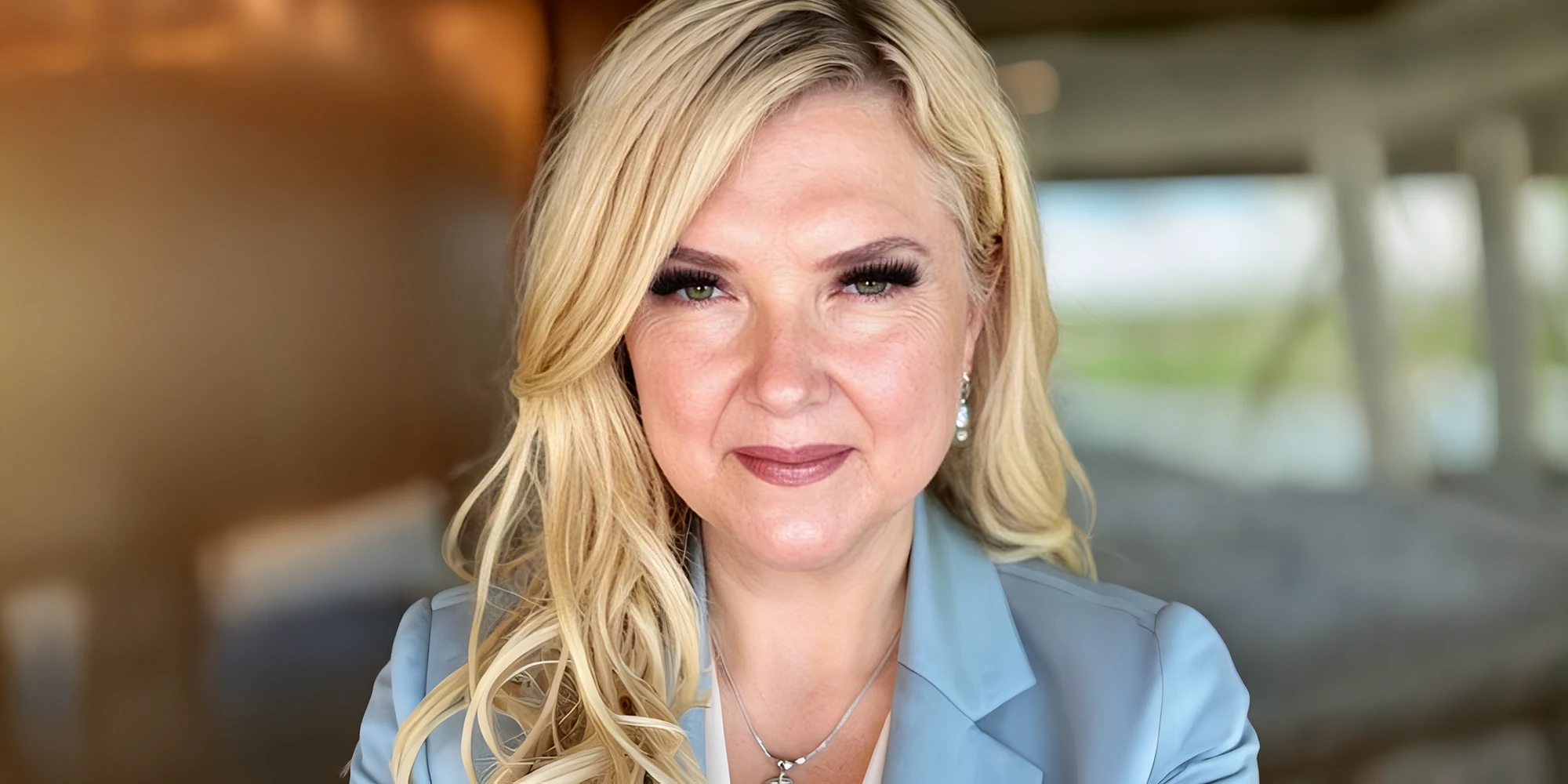
In this episode of The Curiosity Current, host Stephanie is joined by Andrew Kawalek, Senior Director of Global Sales at AYTM, for a conversation with J. Walker Smith, Knowledge Lead for Strategy and Consulting at Kantar. After decades of guiding brands through cultural and technological change, Walker has learned that the fundamentals of marketing rarely shift. While AI, automation, and analytics dominate today’s conversations, he reminds us that real progress comes from mastering constants: understanding people, respecting time, and crafting stories that stick. Walker reframes AI as being in its first phase, making old processes faster rather than transforming how consumers shop or decide. For now, AI helps marketers execute the basics more efficiently while freeing them to think more deeply. He argues that the true competitive advantage lies in this thinking time, space to anticipate what’s next instead of reacting to every new tool. From pricing strategy to agile research, Walker explains how price functions as narrative, influencing perception far beyond transaction. He warns that cutting prices can cheapen brand meaning just as easily as overpricing can stretch credibility. And when it comes to storytelling, he urges leaders to focus on “one thing,” the single insight, slide, or sentence the audience will remember. Looking ahead, he predicts a return to analog. As digital saturates life, people will crave more human, tangible experiences. The future of digital, he says, “is analog.” For marketers and researchers alike, that means pairing data with empathy, structure with spontaneity, and automation with imagination.
Transcript
J Walker - 00:00:01:
We are about to enter a golden age of analog. So I think one of the odd, ironic, I guess is a better word, consequences of this increasingly digital and AI world in which we will live is that it will lead to a resurgence of analog things in our lives. We are gonna use digital to become more analog. In fact, the way that I like to put it is to say the future of digital is analog.
Stephanie - 00:00:33:
Welcome to the Curiosity Current, the podcast where we dive deep into what's shaping today's trends and tomorrow's consumers. I'm your host, Stephanie, and I'm so glad you're joining me. Each episode, we tap into the minds of researchers, innovators, and insights professionals to explore how curiosity drives discovery and how discovery drives better decisions in an ever changing market landscape. Whether you're a data enthusiast, a strategy pro, or like me just endlessly fascinated by human behavior, this is the place for you. So get ready to challenge your assumptions, spark some fresh thinking, and have some fun along the way. Let's see where curiosity takes us next with this brand new episode.
Stephanie - 00:01:18:
Welcome back to the Curiosity Current. Today, I'm joined on the hosting side by Andrew Kawalek, Senior Director of global sales at AYTM and one of my favorite people to work with. Andrew, thank you so much for joining.
Andrew - 00:01:32:
Of course. I'm excited to be here.
Stephanie - 00:01:34:
And you actually know our guest who I'm so excited to introduce today. Today, Andrew and I are joined by J. Walker Smith, Knowledge Lead for Strategy and Consulting at Kantar. Walker has spent decades helping brands anticipate change from generational trends to AI-powered insights. He's written four books, contributed columns for marketing news and media posts, and served on boards, including the Hussman School of Media and Journalism at UNC.
Andrew - 00:02:02:
In this episode, we'll talk about how AI and technology are changing market research, why pricing and storytelling matter, and how agile research can help brands stay ahead. Walker, welcome to the show.
J Walker - 00:02:13:
Glad to be here. Thanks for having me. Very excited to have a little conversation today. It's good to see you, Andrew and Stephanie. I'm very happy to be here.
Stephanie - 00:02:21:
Awesome. I love it. Let's get right into it. So you have spent decades, as we said, helping brands navigate cultural and marketplace change. And I'm curious just to kick us off, how has your approach to understanding consumers changed in the context of all these shifts that we've seen in technology, in media, with the rise of AI, etcetera?
J Walker - 00:02:45:
So one of the things that I push back against a lot is kind of the marketing obsession with change. We just seem to be overly enamored with the idea of change and things always getting different and all the new and exciting toys and things that we get to play with as marketers. And all of that is important, and it does affect and improve how we do business, but I think it's important to remember that a lot of the fundamentals of marketing never change. So the core ideas of marketing, the things that we're supposed to be doing, the ways in which we're supposed to be delivering solutions to consumers don't really change. And I think a lot of the new tools that we have and a lot of the new developments that have taken place in marketing are helping us execute the fundamentals better. One of the ironies of marketing is the value of the things that change is really benchmarked against fundamentals that never change. And so while I do different things these days, I'm tapping into new sources of data. I've got better ways of accessing that data. There are many more datasets and sources of information available about consumers and brands and marketing activities than ever before. The core process, the fundamental job of trying to figure out what the story is about the marketplace and the consumer is the same, so I just find that I’m more overwhelmed than ever with all of the resources that are available to me. But I don't know that my fundamental job has changed all that much, which is a really, interesting story about consumers that our clients can use to find some innovative ways of solving problems for people.
Andrew - 00:04:42:
Very interesting. You've done this for a very long time.
J Walker - 00:04:45:
Let's not say very long, but I have done it for a long time.
Andrew - 00:04:49:
You got me thinking, like, when you think about some of this change, how do you tell which emerging behaviors are worth paying attention to and which are just noise?
J Walker - 00:04:57:
There is a lot of noise, and there's a lot of waste in what we do in marketing and marketing research as well. I think you know something is really changing and really worth focusing on and spending time on when you see consumers changing the ways in which they engage with brands. They want something different from a brand, or they want it delivered to them in a different way. And, of course, there are some continuities through all of this. So as we may discuss, it's certainly one of my long running themes. I think convenience is the single biggest driver of consumer choice and consumer decisions in the marketplace, and that's always been true throughout the history of, sort of, modern consumer marketing. So when we see things that people can really grab onto, that save them time, that make things more efficient for them, then we know there's really a there there. There's something going on that we should pay attention to. And that's all about how consumers engage with the marketplace. It is that point of intersection between brands and consumers. And I think that's the key to me, at any rate, when we see consumers asking for something different in the way in which they're engaged with brands in the marketplace. And there are a lot of things, by the way. I would just say we live in a very volatile world nowadays. One of the big changes and it's, kind of, the water in which we swim, so sometimes we don't recognize it. But for the entire 21st century, we've been living in a much more volatile world than we lived in during the latter part of the 20th century, and we sometimes forget this. We just kinda live as we are now, and we think life is always like this, it's just sorta getting a little bit worse these days. And, actually, that's just not true. The last part of the 20th century was a period of time that Ben Bernanke described as the great moderation when central bankers, macroeconomists like Larry Summers and others thought they were in control of things. And to a large extent, they were. I mean, we still had disruptions and volatility and uncertainty. We had all those things. But keeping all of that under better control was one of the things that we learned how to do coming out of the inflationary crisis of the 1970s. And all those tools were very effective in managing the global economy and the consumer marketplace right up until the financial crisis when things fell apart. And we've lived in a much more volatile world since then. And so, I do think we are seeing some changes in the ways in which people are just thinking about how they wanna connect with brands in a world that is much more disruptive and uncertain than seen in the past. It should change the ways in which we think about how we engage with consumers. I think that's one of the things that we're a little bit behind on as we get caught up in all the novelty of things like AI.
Stephanie - 00:08:05:
Walker, I would love it if you could unpack something you said about convenience because I think that's such an important point. And I'm curious, like, in your example, I feel like you were using examples of the convenience that a product offers. Is it also about the convenience of choice? Like, how convenient and easy it is to make choices at shelf, and then also that, like, creating a seamless path to purchase. Does all of that fall under that convenience umbrella?
J Walker - 00:08:33:
I would say so. Yes. Because I think it's all about consumers getting time back in their lives. It's kind of all about control over time. I do think one of the things we tend to forget is people don't like marketing as much as we do.
Stephanie - 00:08:46:
That's such a good point.
J Walker - 00:08:47:
The typical encounter that people have with marketing is an experience of clutter. It's like, I gotta wade through all these ads, I gotta wade through all these promotions, I gotta spend all this time on this website. We're kind of in the business of creating little irritations and annoyances that people have got to manage their way through in order to do business with us. And people do wanna do business with us. Thank goodness. But they're not as enamored of marketing and advertising as we are. And so there are other things that people wanna do in their lives. They don't wanna sit around and hang out with a brand all day. They don't wanna watch it all day. We do it from 9 to 5 every day. That's our job. But that's not what most people wanna do. Most people wanna get what they want from the marketplace and then get back to their lives. And the more conveniently they can get what they want from the marketplace, the happier they are because they get time back in their lives to do what they really wanna do. And, obviously, some of that is tied up with marketing too. I don't mean to make it sound like these dividing lines are crystal clear. There's a lot of overlap and fuzziness and all that kind of thing but I think convenience is just kind of the most important thing that people are looking for in all of the ways that you describe. And I say that because people will pay more for convenience, and you can introduce a much better new product, and people won't use it if it's less convenient. Convenience just overrides everything. Now I'm exaggerating a little bit, obviously, but I do think in the balance of things, convenience is more likely to tip the scale than anything else.
Stephanie - 00:10:34:
It's fascinating.
Andrew - 00:10:35:
What's interesting and you've said before I'm thinking about convenience and how AI plays into this, and you've said AI is helping us get better at old ways of doing things, but not necessarily at predicting what comes next. Do you see a world where brands will be able to leverage AI to actually forecast the future instead of just speeding up our old process?
J Walker - 00:10:54:
Forecasting is a fraught exercise, and the best predictor of the future is what's happened in the past. So, you know, all these kinds of things are true. It remains unclear to me exactly what AI will offer when it comes to doing future prognostications. My concern about AI is that right now we are looking at AI and we're seeing all the things that it's doing and we're getting all excited about it but when I kinda take a step back, what I see is that AI is helping us and helping consumers get better at doing things in the same old way. So we've got Better Search and now Amazon has just introduced a recommendation engine powered by AI for its website. Well, we've had recommendation engines, you know, there's nothing new about that. It's just using AI to do the same old things. I think that's phase one of AI. I think phase two is when we're gonna say to AI, I wanna have a dinner party, can you just get everything for me? So AI will take over the job. It will truly be our agent. And then just over the horizon, I can't quite see it yet, but it's coming, when our AI overlords are gonna say, “hey, you haven't had a dinner party in four or five months, and you need to entertain these people. So I'm gonna set it up for you”, and you go, “okay, yes, ma'am, yes sir, that's what I'm doing.” So I think we're in the first phase right now. I do think AI is helping us and helping consumers get better at doing the things we've always done. It has yet to change us and change our habits into doing things in different ways. The shopper journey still looks like the shopper journey, just AI search or AI recommendations. Now we are gonna have to think about what happens when AI changes that shopper journey, and we're not quite there yet.
Stephanie - 00:13:01:
That makes a lot of sense. So to switch gears a little bit, in a recent media post column, you said that price is often the most overlooked P. Can you talk a little bit about what brands get wrong, how they can think more strategically about pricing, and what role research plays in getting pricing right?
J Walker - 00:13:21:
I think a price tells a story, it's not just the currency of a transaction. We tend to think about price as being what gets exchanged when we complete a transaction with consumers. And we try to use price as a way of commanding a premium or promoting some kind of a sale. And when we command a premium, we do begin to think about price a little bit more strategically because that's the point at which we realize that price actually tells a story about our brand. It helps us tell the value add story about our brand. It's not the only element of it, but if you're trying to sell a luxury product or a premium product or something with a lot more value add and you're not charging a higher price, you got kind of a different message going on. You know, people are either gonna think great value or they're gonna think, I'm not quite sure I believe this is premium because the price doesn't match it. When we don't think about it strategically, it’s, kind of, when we reduce price. We forget that cutting the price also tells a story about our brand. And sometimes we kinda never recover from the fact that we have cheapened our brand story when we cut our prices in the exigencies of the moment. So, I think strategically using price means understanding very clearly that price is a part of the way in which we tell stories about the brand. And so from a research standpoint, it means including that in the ways in which we test and evaluate and make some decisions about the ultimate positioning that we wanna live with for our brand. Price plays into that, not just other things that we include in the message.
Stephanie - 00:15:08:
That's such an interesting point. Do you find that you are having to, that's a conversation that comes up a lot with brands that, like, price is telling a story even more than it's about your bottom line, it is also telling a story about your brand.
J Walker - 00:15:21:
Yes. So we do have a lot of conversations with clients about that. Now at Kantar, we talk about that a little bit differently. We talk about pricing power and how most brands are under leveraging their pricing power, or some brands are charging more than they really have permission or pricing power to do. That's kind of a spreadsheet calculation that we do with clients but it is strategic in the sense that pricing power is kinda just another term. It's a Kantar term for talking about the role that price plays in telling the story of your brand. And when you put price in that frame, then you really are thinking about price more strategically.
Stephanie - 00:16:07:
You've talked a lot about the importance of storytelling, and we talk about that a lot on this podcast. It's a big topic. One of the things that I do get curious about and that I wrestle with personally is that if and as research is becoming faster, more automated, how do we make sure and preserve that the stories that we tell, ensuring that they maintain the depth and stay meaningful and persuasive, which at the end of the day is the reason that we engage in that storytelling?
J Walker - 00:16:37:
So there was a column that was written by somebody who runs one of these firms that helps corporate leaders tell stories to investors and tell stories to employees and, you know, that sort of thing. So there are consultants out there who specialize in working with senior company leaders. And this column was making a point about AI and the point in this column was that AI is actually now getting very good at coaching people on how to deliver presentations better and there are AI apps out there now that will listen to you present and then make some very detailed recommendations to you about pacing and speed and pauses and all these things that we think about as speakers and presenters but the article said, the one thing AI cannot do is actually come into a meeting or venue or setting and, quote-unquote, take possession of the room. That's what human beings do, and that's what the best speakers do. The best speakers kinda own the room. When I coach people on how to present, that's one of the things I emphasize. The audience has kind of given you permission to take possession of the room. They've said, the stage is yours. Take possession of the room. Get me involved in your story. And if you don't accept that and then do that, then you're kinda missing out on your opportunity and so I think that is one of the things that humans, us researchers, us marketers will always have to do. And I think the same thing is true for our advertising. Notwithstanding, sort of, the clutter experience, we do invite advertising into our lives and into our homes, so we kinda give it permission. I think that AI is also very good at summarizing and sorting, making some recommendations, but I think the best stories, the best presentations are always about, kind of, one thing. This is a mantra of mine - one thing. Every presentation should be about one thing. You tell a story about one thing. Every slide should make one point, not many points, one thing in each slide. So it's kinda get it down to the essence and distill what the core idea is. I don't know if AI will ever get there. I personally think that AI will be really good, but the ability to stare at everything that AI offers to you and then figure that out will remain a little bit of that spark of genius, that spark of human creativity that we still bring to the party. And so one thing in possession of the room, I think those are the human qualities that can be improved with the help of AI, but that is still what we will have to do, AI notwithstanding.
Andrew - 00:19:36:
That's very interesting. You know, one thing in trying to, especially in today's world when everything's so chaotic, if you think about that and how markets move fast, how can companies make research more agile without losing depth or reliability?
J Walker - 00:19:50:
I think AI is really good at performing structured tasks. Now AI will get better, and it'll do other things than what we're seeing it do right now. I think it's great at doing all these task-oriented things. And I think research and marketing will increasingly hand off all of that stuff to AI. And some of it will be creative iterations. Right now, at Kantar and our link AI testing, we'll take an ad or a concept, test it, and then based upon our database of past ads and past concepts, we'll make some real time recommendations about how to improve it, and then we'll make a prediction about how that would test. And then we'll iterate and make another improvement and make another prediction. I think AI will do a lot of that stuff too. But agility is not just kinda the speed and the efficiency of doing all these task-oriented things. Agility is really the ability to think on your feet and to think a few steps ahead and to be able to anticipate and have some creative responses to where things are likely to be headed. I hate to use battle analogies or war analogies, but, consistently, when you read histories of battles and wars and soldiers and armies, it is the military leaders who can see a few steps ahead outside of everything that's going on in the moment who are able to sort of carry the ultimate victory and I think that's true in research. We will be more agile the more time we can spend thinking. And AI is gonna give us more time to do that. And I think that's the most exciting part of a lot of the things that are happening right now.
Stephanie - 00:21:41:
It's interesting because it almost sounds like when we're talking about agility, that it's the ability to kind of, based on the information around us, be able to pivot quite quickly. And it does strike me that as researchers, you're kind of on the forefront of that information. Right? So it really does become critical to the role.
J Walker - 00:21:58:
I think our jobs are gonna change, particularly in corporate settings. One of the things that has been critical in the past is our knowledge of research and our ability to manage research projects. I think that will increasingly be a skill that we don't look for when it comes to researchers. Instead, we're gonna ask for people who are comfortable with thinking with data and telling stories with data. And AI is gonna be great at the data, and AI is gonna be great at coaching the storytelling and helping us do some better things with the data. AI, it's gonna make us better but, ultimately, it is thinking about these things. In all of the full richness of that idea, thinking about these things is gonna be what we bring to the party, and we don't get enough time to do that right now as researchers. There are some people in some organizations whose job is to do nothing but sit around and think about stuff. I can’t tell, but I have one of those jobs. But we're all gonna have a job like that in the future. All of us. And that's gonna be the skill that we hire for. It's people who can really process things and think more deeply about them. I think AI will give us the time and give us better resources to make us into better thinkers. I don't think we're gonna hire researchers in the future for their ability to do research. If we need somebody who's really good at analytics or who's really good at writing code for LLMs or whatever it is, they're gonna work at outside firms, and we'll hire those outside firms as we need them, but we're not gonna staff them within our corporate or agency organizations.
Stephanie - 00:23:41:
I've heard the notion of, like, a data steward type of role, which is really that human in the loop staying in the loop on all that executional work and making sure that, like, it's all up and up. And then, like you said, the storytellers, and that's who it will be, the data stewards and the storytellers. So…
J Walker - 00:23:57:
Data integrity, I think, will be one of the skills. We're pretty good at data integrity right now, although one of the big problems in our industry are bots and fake interviews and all those kinds of things. But we've gotten better at that, so we're pretty good at being data stewards. I don't think the data steward, the AI steward in the future will ever go away. I do think our jobs look different and look a lot more like the Rodin sculpture of The Thinker. That'll be us.
Andrew - 00:24:26:
Okay, Walker. So as we touched on a few topics today, and you've in the past written that convenience often shapes pricing perception, how should brands balance convenience, price, and storytelling to really connect with the consumer?
J Walker - 00:24:39:
So I think of those as fundamentally different things, or I guess I should say two kinda fundamentally different things. So I think of price and convenience as attributes or characteristics of a product. They're features of a product. And storytelling is about an emotional connection, and price and convenience feed into the storytelling. So the storytelling says something strategic about price, or it says something strategic about convenience, or it translates convenience and price into an emotional connection with consumers. That's what storytelling is really all about. There's an article in Scientific American about the kinds of stories that people are best able to retain in their memories. So stories that are all about perceptual things, you know, like all the stimuli, all the details of the story, the things that happen, those don't really stick with us but the stories that are a little more conceptual tend to stick in our memories longer. You know, stories where we kinda get the gist of it without necessarily all the details. So the details are engaging in the moment, but what sticks with us is kind of the conceptual idea that we take away from a story. And if a story doesn't have that, then we're likely just to forget it down the line. It was kinda like, that was an interesting mystery novel that's sort of entertaining on the plane, and then I forget about it. But the stories, the books, the things that I remember are things that have some message to them that really strongly resonates. And when it comes to marketing, the thing that we want to resonate is this emotional connection that gets people to really be committed to our brands.
Stephanie - 00:26:31:
Absolutely. It almost reminds me of how narratives like fables, right, like, there's always a moral of the story, and it's quite succinct. And we don't always remember that story, but we all know the moral of every fable that we know. Super interesting. Well, Walker, we wanna take you through just very quickly a new segment we have called Current 101, where Andrew and I are just gonna ask you a couple of interrelated questions. So the first one is, when people look back five years from now at this moment in the consumer insights industry, what do you think that they will say that we got right? Or if you would like to take a contrarian view, what do you think they'll say we got wrong?
J Walker - 00:27:12:
I think that people will say what we got right is all about how we are deploying technology to give us more time to think, something that we discussed a little bit earlier. I think what people will say that we got wrong is that we got sort of caught up in the volatility of the moment, and we scared ourselves with all these frightening stories about the end of the world as we know it. We kinda fell off the edge of the Earth with catastrophic tales of our own destruction for whatever reason, social, political, technological, economic. There's a lot of catastrophism in the ways in which we talk about our lives these days and there have been periods of time like that in the past, and we kinda come through it and go, oh, okay, I guess things weren't as quite as dire as I thought they were in that particular moment. So I think that's where we're gonna say, gosh, we kinda got that wrong. But I think what we are getting right is understanding more what it is that we really wanna do. We don't really wanna spend all our time posting tables, you know? We don't really wanna spend all our time checking questionnaires.
Stephanie - 00:28:34:
What I was about to say, QA? You don't wanna do that all day, every day? Yeah.
J Walker - 00:28:38:
We don't really want a job working in a call center answering questions from disgruntled customers. There are ways in which we can use technology, use some of these advances to take over some of these kinds of mundane things that we're doing to give us an opportunity to spend our time doing more engaging things. And that's an important moment in human history because most of human history has been stuck in the furrows, plowing the fields, and hoping that the rains come and that we've got at least 1,200 calories a day to survive. That's like tens of thousands of years of human history. We're kind of on a moment right now where in life, much less in market research, we can make a transition. And I think we'll look back and go, what happened? And we got that right, and we've wound up in a better place.
Andrew - 00:29:38:
And similarly, we'll flip this. Walker, you and I have had a lot of really good discussions over the last decade, a little bit more than a decade now. And one thing I've always valued is your ability to think ahead a little bit. And we've talked about different things, whether it's work related or personal or whatever it might be. So I'm curious. Now looking ahead five years, what trends or technology do you think will change the way brands generate and use insights? And then, really, most importantly, how should researchers prepare for that?
J Walker - 00:30:05:
Let me answer that question in a slightly different way as opposed to sort of predicting the future of marketing and the future of research per se. I think, oddly enough, we are about to kind of enter a golden age of analog. I think one of the odd, kind of ironic, I guess, is a better word, consequences of this increasingly digital and AI world in which we will live is that it will lead to a resurgence of analog things in our lives. We are gonna use digital to become more analog. In fact, the way that I like to put it is to say the future of digital is analog. We're not headed into the future so that we can live a 100% digital life. Remember, before the pandemic, how we kept talking about how digital was gonna take over our lives, you know? It was gonna put brick and mortar out of business. It was gonna drive our car. All these things, digital is just gonna run our lives. We're gonna be 100% digital. We didn't quite know what that was gonna be, but we felt like digital was coming to take over the world. And then we had the pandemic, and we all got locked down in quarantines. And so what happened? Well, we actually experienced what a 100% digital life was like and did we like it? No. We hated it. We couldn't wait for it to be over, and we rushed back into the marketplace. And the things that really boomed in those couple of years of excess spending that we had, revenge spending, whatever it was, right after the pandemic, were services, travel, and analog engagement. It's kinda like we wanna use digital for analog engagement. So when we think about the future of brands and the future of marketing and the future of research, I think it is all gonna be about a world in which people are getting back to the things that really matter to them. And it's not time on the computer, it is time and analog engagement. And by the way, before the pandemic, I used to deliver a presentation I called human scale. And I used to say to my audiences of marketers, look up from your digital screens, there's an analog world booming all around you. You know, we record the number of farmers markets, cafe culture, coffee shop culture, music festival culture, and then all these little signals, you know, vinyl LPs and wooden toys and urban greenways. And that's what people wanna do. I think digital is gonna unlock more opportunities to do that. So I do very strongly feel like the future of digital is analog, and I think brands have to understand that in the ways they engage with us.
Stephanie - 00:32:50:
That's so fascinating, and I'm hoping that you'll start producing the T-shirts soon so we can buy them.
J Walker - 00:32:56:
That's a good idea. I like it.
Andrew - 00:32:58:
Earlier, Walker, you shared and I'm surprised I have never heard your mantra until today of one thing, so, which, I'm gonna use that regularly, and I think it's very important. Thinking about that, I'm gonna put you to the test with your own mantra. So in our ever changing world full of unknowns, what is the one truth that brands can't afford to forget?
J Walker - 00:33:19:
So, Ted Levitt said it best way back in ancient history. He was a marketing guru at Harvard, wrote a number of fundamental books that every marketer should read. Probably the most famous essay he ever wrote was called The Marketing Imagination, that was also the title of a book he published later in his career that was a collection of some essays about marketing. But Ted Levitt said, people don't want quarter inch holes, they want quarter inch drill bits. So we've all heard that. And by the way, Ted Levitt will tell you in an earlier book he wrote, he didn't invent that idea, although he gets the phrase, he gets credited with it, came from somebody else. But the idea is that people want solutions to their problems, not products to buy. That's the fundamental truth of business. It's the fundamental truth of marketing. It defines exactly what research is supposed to do. We're supposed to identify the problems people have and then test the solutions that we develop to try and solve those problems. That's our job. Find the problems and then make sure the solutions are good solutions. So I think that's the fundamental truth. People want solutions to their problems, not products to buy. That is Ted Levitt, and it's one of these fundamentals that is unchanging in the midst of all this volatility and change around us. That's my one thing.
Stephanie - 00:34:44:
I love it. Walker, that is the end of our journey here today. This has been absolutely illuminating, which I think we both knew that it was going to be. So thanks so much for taking us through just kind of the years of just intelligence and knowledge and wisdom that you've built around these areas. It's so fun to get to hear from you.
Andrew - 00:35:02:
Thank you, Walker.
J Walker - 00:35:04:
Long years, but not very long years. So thank you very much. Glad to be here. Thanks for having me. It was great talking with y'all.
Stephanie - 00:35:14:
The Curiosity Current is brought to you by AYTM. To find out how AYTM helps brands connect with consumers and bring insights to life, visit aytm.com. And to make sure you never miss an episode, subscribe to the Curiosity Current on Apple, Spotify, YouTube, or wherever you get your podcasts. Thanks for joining us, and we'll see you next time.
Episode Resources
- J. Walker Smith on LinkedIn
- Kantar on LinkedIn
- Kantar Website
- Stephanie Vance on LinkedIn
- Andrew Kawalek on LinkedIn
- The Curiosity Current: A Market Research Podcast on Apple Podcasts
- The Curiosity Current: A Market Research Podcast on Spotify
- The Curiosity Current: A Market Research Podcast on YouTube






.jpeg)


