

Description
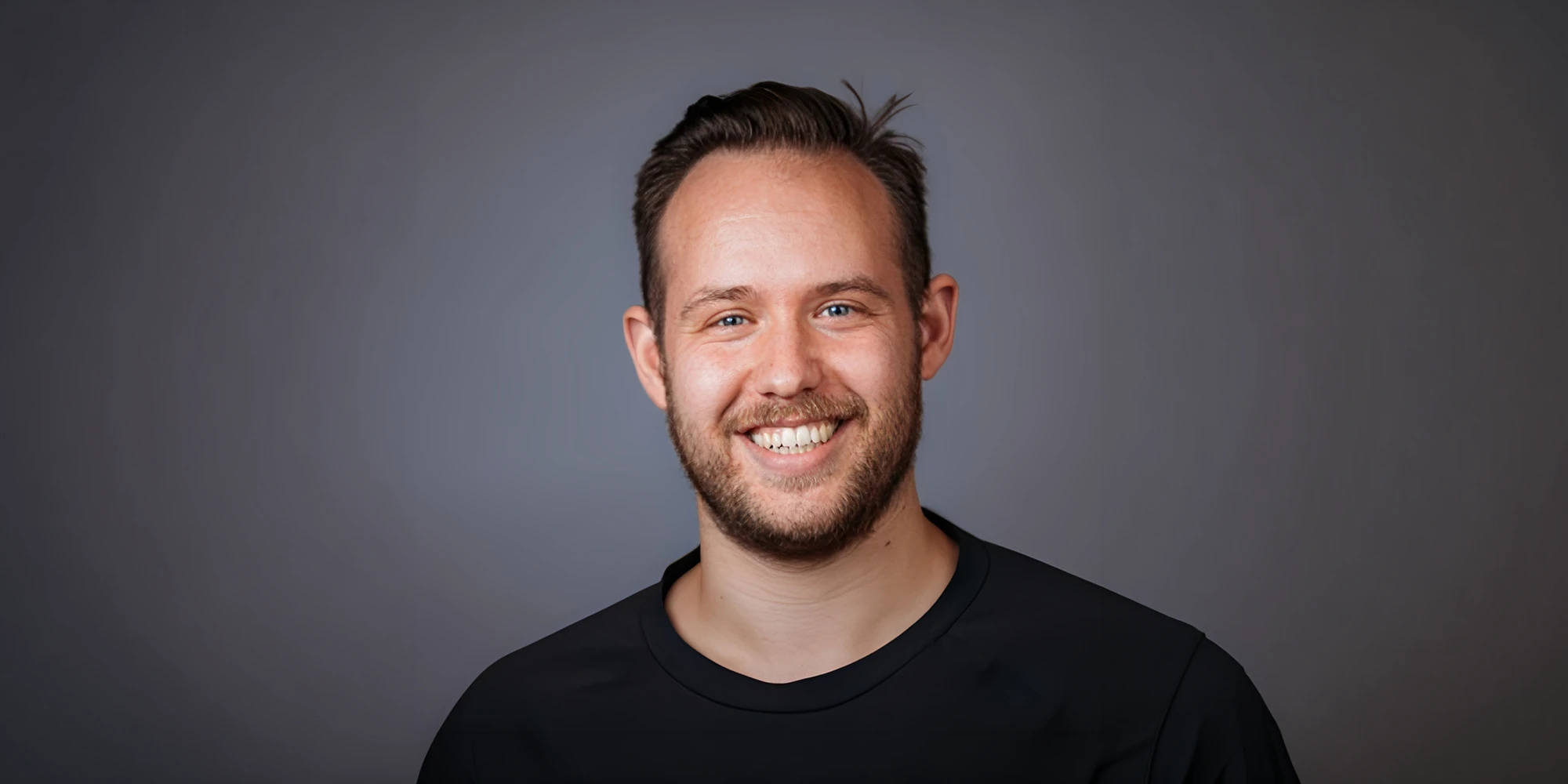
Alec Levin, Co-Founder and CEO of Learners, joins the podcast to explore the shifting landscape of user research and professional education. Alec shares his unconventional journey from a biology student to a community builder and reflects on how early failures shaped his understanding of what researchers actually need to thrive.
He argues that traditional and rigid learning structures can no longer keep pace with the speed of industry change. Instead, he advocates for a messy and peer-driven approach to skill development that prioritizes real-world application over formal certification. The discussion moves into the role of artificial intelligence, where Alec introduces his cheese factory metaphor to explain the future of insight production.
He suggests that while AI will democratize simple research, it will also increase the demand for human expertise in study design and data auditing. By reframing the researcher as an interpreter and strategist, Alec offers a hopeful vision for the profession. The episode concludes with a deep dive into the power of natural intelligence and how connected communities act as a vast sensor network to solve complex business problems in real time.
Episode Resources
- Alec Levin on LinkedIn
- Learners on LinkedIn
- Learners Website
- Stephanie Vance on LinkedIn
- Molly Strawn-Carreño on LinkedIn
- The Curiosity Current: A Market Research Podcast on Apple Podcasts
- The Curiosity Current: A Market Research Podcast on Spotify
- The Curiosity Current: A Market Research Podcast on YouTube
Transcript
Alec - 00:00:01:
If you think you're a people talker, AI is an existential threat. If you're someone who sees your role more as a study designer, and information gatherer, and interpreter, then this is the greatest thing ever. Because now all of a sudden, you have so much more power. You can contribute so much more, so you should be feeling even more comfortable in your role.
Molly - 00:00:19:
Hello, fellow insight seekers. I'm your host, Molly, and welcome to The Curiosity Current. We're so glad to have you here.
Stephanie - 00:00:27:
And I'm your host, Stephanie. We're here to dive into the fast-moving waters of market research, where curiosity isn't just encouraged, it's essential.
Molly - 00:00:36:
Each episode, we'll explore what's shaping the world of consumer behavior from fresh trends and new tech to the stories behind the data.
Stephanie - 00:00:45:
From bold innovations to the human quirks that move markets, we'll explore how curiosity fuels smarter research and sharper insights.
Molly - 00:00:53:
So, whether you're deep into the data or just here for the fun of discovery, grab your life vest and join us as we ride the curiosity current.
Molly - 00:01:05:
Today on the Curiosity Current, we're joined by Alec Levin, cofounder and CEO of Learners, a global platform and community dedicated to helping UX researchers and designers advance their careers and to make that learning free for everyone.
Katie - 00:01:19:
Alec has spent years shaping the field of user research from hands-on roles at startups like Formik Labs, Fineo, and the original Meta. Yes. Not Meta. To founding learners, where he's helping researchers around the world develop the skills, mindset, and tools to turn insights into real business impact.
Molly- 00:01:37:
He's also the mind behind the UXRConf and the newly expanded Research Week conference, and he's been unusually candid about where the research profession needs to grow, including some things researchers may not always love hearing.
Katie - 00:01:51:
Today, we're exploring how research training, AI, and the way researchers learn and grow are shaping the future of consumer insights.
Molly - 00:01:59:
Alec, we're super excited for this conversation. Welcome to the show.
Alec - 00:02:02:
Thanks for having me. Should be fun.
Katie - 00:02:05:
Alright, Alex. So, I wanna start with something I think a lot of our listeners will relate to. You didn't set out to be a researcher. You studied biology. You kind of stumbled into it. So, what did it feel like when you realized this was actually what you wanted to build your career around?
Alec - 00:02:20:
Confusing. I didn't know. I mean, so the story goes that, you know, like many young Jewish boys being pressured into trying to go to medical school, you know, studying biology, didn't quite have the grades. I was close, so I could've gone to grad school and gotten in, but I was pretty sure that if I went to grad school, I wouldn't take it seriously. So, I was, like, trying to figure out, like, what else I could do. I volunteered at this lab, and they had a career day, but they canceled it. And I'm like, can you uncancel it? So, they uncanceled it. And there's one guy he was talking about at his career day, talking about, like, doing a startup. I'm like, what is that? That sounds cool. Right? And so they're building software for biomedical researchers. And I'm like, that sounds super fun. So, then I pitched him on a project. He's like, “Okay, this sounds interesting. Maybe we can do something.” And I kind of figured out how to be helpful so that I could have a job because I didn't have any prospects. And so I just, like, took his website to a bunch of grad students. And I was just like, “Hey, what do you think? Tell me about it.” You know? Play around with it. What do we, and so I wrote up a report. I'm like, this is what we heard from grad students and undergrads about the products and blah blah blah. They're like, “Wow, this is really helpful.” And so then I got a job, so that was cool. It was just that we don't really have, I think they called me community or something or community lead growth, whatever it was, and I just spent a lot of time doing research. I just didn't know that that was a job. And then, like, only years later, after doing some other shenanigans that I find, did I meet people who do this, like, as in their job title? I'm like, oh, this is a thing for real. Like, I should do that. This is what I wanna do. That was that's the story.
Molly - 00:03:54:
You started running these meetups as sort of a consumer acquisition strategy for a startup that I don't think panned out for you in the long run.
Alec - 00:04:03:
It did not pan out. 2015 was a bad time to be doing research startups, and I was also not very good at it. So, that's a pretty lethal combination in terms of, like, startup success. It's not gonna work.
Molly - 00:04:17:
Well, the meetups that came out of that was actually the thing that ended up working. So, when was that moment for you when you realized that the community that you were working to curate was actually the product and the true selling point?
Alec - 00:04:32:
Yeah. I mean, it's mostly accidental. Like, I was called, like, user testing TO. It was, like, just a meetup. And then when I shut down my crappy startup, and I was all burnt out, and I was trying to figure out what to do, I was like, what did I actually enjoy about this experience? And the answer was not much, but I really enjoyed the meetup. So, you know, we started spinning that up again in a bit of a different format and, you know, just like, you know, resonated in its right time, right place. Research was growing, but it was still very disconnected, at least in Toronto, where I was. And so, you know, it kind of spun out from there. And when the pandemic came, you know, because we had done our first conference prior to that, and it was still meant to just be a side project thing, but the pandemic came at a particularly bad time, when I had just left my job. My wife was full-time on it, and then, like, the pandemic nuked our business because conferences don't exist during pandemic. And so that was when we had to, like, find a way to evolve and become something different. And, you know, we basically said the only path forward is to try and pursue, know, the stuff that we were excited about, which is affordability around learning, access around learning, community. We didn't really know what it was gonna look like, but, you know, it's like do or die. I had no choice.
Molly - 00:05:47:
Yeah. Talk about under the gun.
Alec - 00:05:50:
Yeah. She was also pregnant, which was bad. Bad time.
Molly - 00:05:53:
Oh my gosh. With Aspen?
Katie - 00:05:56:
You just keep adding more stuff.
Alec - 00:05:57:
The first kid.
Molly - 00:05:58:
The first.
Alec - 00:05:59:
I think when we realized that, even though, like, they hadn't shut everything down yet, but we realized pretty, there's, like, an outbreak in a nursing home in, like, suburban Washington state, and that's when we realized, like, this is not happening. Like, this thing is gonna be everywhere before you know it, and it's probably, like, halfway, like, probably 5 months of your time. We're like, this is bad. This is pretty bad.
Molly - 00:06:22:
Gosh. Talk about trials and tribulations and doing all of that while having, like, unpredictable income. I mean, startup life is hard. Startup life is hard.
Alec - 00:06:32:
Yeah. I think, you know, you've got to really want it. I don't recommend it. I think…
Molly - 00:06:40:
Well, that's great.
Alec - 00:06:41:
Yeah. I don't know. It's like, you gotta be able to look into stuff.
Katie - 00:06:44:
You got advice for our listeners. For sure.
Alec - 00:06:46:
Look. I think you gotta look into someone's eyes and be like, they're just gonna not do it, and then it's like, yes. Here's all the encouragement in the world. But I think, you know, if people think it's gonna be, it's not the easiest way to make money. It's not the easiest way to have a successful career, all these other things. There's much more pleasant ones. They require very difficult trade-offs.
Molly - 00:07:07:
Yeah.
Alec- 00:07:08:
And you have to really want it, and you have to really care about the thing. And, like, we happen to have to figure it out, but we also happen to really care about the thing. So, you know, that part makes it actually doable, but it's not, I wouldn't say it's easy.
Katie - 00:07:21:
Yeah. There's something about that. Yeah. Having the passion is important.
Alec - 00:07:25:
For sure. Otherwise, it's just gonna fall apart when it gets really hard, which is quick.
Molly - 00:07:29:
That unbridled passion of, like, there's nothing you can do to stop me. That's how you know.
Alec - 00:07:35:
Yeah. Yeah. Something like that.
Katie - 00:07:40:
Alright. Well, let’s see.
Alec - 00:07:41:
It doesn't feel that way every day, so.
Katie - 00:07:42:
So, you know, I'm in learning. I've been in learning a long time, and I think about, you know, how are people learning and what are the best ways that they could learn how to grow people in their careers. So, you know, you're spending a lot of time doing the same thing. So, what's the biggest gap that you see between what researchers are being trained to do and what organizations actually need from them right now?
Alec - 00:08:04:
I'm not even sure researchers are being trained to do anything in particular these days. I think that's part of their problem. I think, like, our theory, essentially, of what learning needs to look like in the future is that it needs to be way more messy and unpredictable and chaotic than we are used to in the past in order for it to be effective. I think we are coming out of an era where, for the last hundred years or so, the efficient and productive way to teach and to learn has been extremely structured and very rigid, right? So, you know, and that rigidity and structure have been, you know, you build layers on top of it. So, you know, if you think about an undergraduate program, it's a specific amount of time, a specific course. It doesn't even matter where you do it. It's pretty much all the same, right? It's a very similar material. And in a world where you're training people to, like, generally think critically, know how to write well-ish, know how to do math, whatever, like, okay, cool. That'll probably work. But the work is changing so fast these days. I think that, you know, even prior to AI stuff, this had run its course. This, being the default way of learning a craft or a trade, you know, like, contrast that with, like, the trades, right, where, you know, you get your hands on, you're actually in the field a lot, you're doing apprenticeships, you know, it's a much slower change of pace, or pace of change in the field, but you get to actually go and see how things are working in real time with Journeyman or with whatever. And I think nowadays with the way things are moving, and it's not just that they're moving in one direction. They're also spreading out in a lot of different directions. There's gonna be new specialties and new subspecialties and all sorts of things like that. So, what I think you need is a much more chaotic array of options, where we have to have a lot of content being made, a lot of, you know, workshops being done, a lot of trainings being done, and trying to figure out how to get the right thing to the right person at the right time. And I don't think it's gonna look the structured way that you've done this stuff in the past with, like, MBAs or with certificate programs. By the time you actually build a curriculum, which takes a really long time, it's probably not as relevant as it should be if you're charging the money you charge.
Katie - 00:10:26:
Got it. Yeah. I mean, I think the days of, like, a rigid structure are definitely gone. I always think about, like, how would you learn something sort of outside of work or outside of, you know, your educational system, and it's like, what are people doing? They're asking peers. They're working. They're getting hands-on. They're jumping in. They're watching small videos on different ways of doing things. So, I think there's a lot of sort of new ways that people are learning for sure, and AI definitely contributes to that as well. So, definitely really interesting. So, you've built Learners, though, around this idea that professional learning happens, you know, in a community. You're inviting in all these different people, cross-disciplinary, peer-driven. It's accessible to anyone who sort of wants to grow. So, when you see someone coming in and genuinely shift how they work and how they're thinking about their work, you know, what makes that possible? What actually changes for them in that environment?
Alec - 00:11:18:
Do you mean, like, for people coming in to learn? Like, how are we kind of, like, catalyzing change in their craft?
Katie - 00:11:24:
Yeah. Exactly. So, you know, you have this community with all these different people, and you have different topics. You know? How are you getting people to, like, shift and learn what's going on in research in their careers?
Alec - 00:11:36:
Yeah. There's a few different ways to answer this question. It's, like, so it's no silver bullets, a lot of lead ones kind of thing. So, there's how you actually make the content. There's who produces the content. There's how it's delivered. So, for example, with us, the way we've designed our program is without the expectation that people will be watching the whole thing, right? Because we think that it's actually more valuable if we make sure that, like, 25%, 30% is super relevant, right? It's, like, right on where they need to be. And then maybe some stuff is interesting, but maybe not as critical, and some stuff maybe not relevant at all, right? And so that there's that. There's even the way we pick content, like, coming back to this more chaotic, messy way of learning, one of the things that we've, I think, done that's kind of new in this space is rather than me pick all the content, which is how it used to be 6 years ago, I try and find people with, like, different specialties or areas of focus that are really capped into a much more niche area and say, “How about you pick the content?” Right? I'll work with you. I'll try and help you. So, for example, you know, with our AI program, it's not me. It's actually a researcher at Anthropic who is very tuned into, you know, who are some of the people that she respects in the field that she thinks are doing the interesting work. So, there's that. Most of our speakers don't speak at other conferences. Many of them, this is their first time ever speaking. There's this kind of unhappy relationship between propensity to speak at conferences and the novelty and interestingness of the content. Because generally speaking, the people who are doing the most interesting stuff are, a, very busy, and, b, their ability to do that doesn't rarely comes with the natural skill set of, like, building an audience on Substack or YouTube or, you know, building a LinkedIn following. Those things don't usually coincide. So, the people with the biggest, you know, reach on these platforms, at least when it comes to craft-related content, in many cases, are not the people doing the innovative stuff. Right? So, you have to find all these clever ways of just, like, how do we make this better? How do we make this better? How do we make this more applicable? How do we, and then there's just how we support our speakers. You know, a lot of the people that have the really interesting ideas, you know, obviously specialize in those ideas and not have a format and deliver them. So, we do a specific kind of coaching with them as well. So, it's a handful of things like that, but it's really using different strategies to find the people doing the hardest work that we think is the most relevant for a wide group of people to, like, help them get promoted, help them keep their jobs, help them find their next one, help them stay on the leading edge, you know, that's kind of the way we think about it.
Molly - 00:14:14:
Yeah. And supporting the personal brand development of a lot of these really impressive people.
Alec - 00:14:20:
Mhmm. Yeah. I mean, a lot of the people who are, you know, some of them, at least within our little niche, are, like, household names now. You know? Some of them, you know, their first thing was with us, kind of thing like that. And now they're all rock stars and superstars, and it's great to see their growth because, you know, once people see how brilliant they are, why wouldn't you ask them to speak at your next thing or whatever it is, though? It's great.
Molly - 00:14:43:
I love that. That's so cool. As, like, to be ground zero for someone that impressive, that's very cool.
Alec - 00:14:50:
Yeah. I cherish those relationships. Usually, they stick around. Like, you know, Colette, Kolinda, for example, I think we were in the first conference talk. Now she has her own program at Research Week that she curates.
Molly - 00:15:01:
That's so cool.
Alec - 00:15:02:
You know? And it's all focused on really senior individual contributors and content that's focused on them, which is right in terms of what she loves to focus on and talk about, and it's perfect. And those relationships are great because you get to know each other before, you know, things really take off. So, it's fun.
Molly - 00:15:20:
Yeah. That's wonderful. Well, I wanna pull the thread a little bit on something that we've alluded to, which is AI. And I think that you've had an analogy in the past about the sort of thinking about AI and its implications for today's work as an agricultural revolution, this idea that AI is to research in terms of what a tractor is to farming. So, I have to ask, what does that actually look like in practice when you're seeing those things happen? And, you know, what's something perhaps that you're seeing researchers utilize with AI that wasn't possible just, you know, two years ago at scale?
Alec - 00:16:01:
Yeah. For sure. I think the analogy or metaphor that I've landed on that I like the most is like it's like a cheese factory.
Molly - 00:16:07:
Okay.
Alec - 00:16:08:
Because 99% of, like, the cheese that's consumed is relatively inexpensive, and it's like Black Diamond or Babybel or whatever kind of thing. And it's made in a factory, and, like, most cheese is not touched by humans or whatever is made. But we still have very expensive Dutch cheese that you pay quite the premium for, you know, if you wanna do that or, like, made in the Swiss Alps or stuff like that. So, you know, basically, if you look at the consumption of cheese over time, cheese used to be a thing that you could only do if you were more wealthy, right, because it's expensive. But now, like, cheese is something that no matter how well-to-do you are, everybody gets, you take it for granted. Of course, everyone can afford cheese. And, like, this is a kind of you know, I think it's an interesting analogy to research as well because my guess is, like, 1% of the desired research that an organization has actually gets done or actioned on. And that's because when it's done in this very artisanal way, it's very expensive to produce, right, to produce research, to produce insights. Now, some of this research that doesn't get actioned on is quite complex, and there's good reasons not to do it. Some of it's very simple, right? If you go in to ask, like, a bunch of executives in almost any company, you say, “Hey, you know, why are we competitive against company A, or why are we losing customers to company B, or why is churn down last month?” These seem like things that are pretty fundamental to know about a business. And I bet the vast, vast majority of leaders and executives could not answer those questions, right, on any granular level. And that to me is just a very simple example of something that is knowable, should be known, and isn't. And it's just that the only reason is because research is expensive to do, and in a company where you're trying to do new things and take that next leap, and you have limited research resource, you know, you wanna invest it in that next big thing. But if AI makes doing simple research much less expensive, then all of a sudden, all this stuff becomes financially accessible from an organizational point of view. So, yeah, it's easy to look at a lot of AI tools and think that, you know, there's things that you do as a researcher that they can do too, and that's kind of scary. But I think we're missing the bigger picture here, where you're a lot more than talking to users, right? Your relationships, your business context, your intuition, your understanding of organizational dynamics, your ability to design studies and critically analyze data to interpret from and infer things that you know, AI system might not be able to. These are super valuable. And I think for a long time, a lot of research folks have thought of themselves as, like, people talkers instead of, like, study designers. And in a world, if you think you're a people talker, AI is an existential threat. If you're someone who sees your role more as a study designer, and information gatherer and interpreter, then this is the greatest thing ever. Because now all of a sudden, you have so much more power. You can contribute so much more, so you should be feeling even more comfortable in your role.
Molly - 00:19:22:
That was a lot. I'm like, I'm taking it all in from a bunch of different angles because you're totally right. And it also begs the question of: where do researchers need to skill up, and where do researchers need to learn how to utilize these whole bunch of different tools? Because, like you said, there's the threat of now these people can do the same thing that I can. So, how are researchers skilling up in order to utilize these AI tools in a way that expands their job function and still keeps them relevant?
Alec - 00:19:51:
See, I push back. I don't think that even with AI tools, PMs can do research the same way that we can. There are some who are super, super talented, and that's awesome. I think for the most part, they can't. Same with design. Look, I can do design work now by using Claude Code.
Molly - 00:20:06:
Mhmm. Mhmm.
Alec - 00:20:07:
Is it good? No. But it's like they're rectangles and buttons and stuff like that. And so, you know, there's a quality side of things to research, as to design, as to everything else that, you know, it's easy to see when the design works badly. It's hard to see when the research is bad. You know, someone said a line. I wish I knew who said it, but bad research doesn't stink, right, versus, like bad design. You look at it, and you're like, I don't even understand what I'm looking at, right?
Katie - 00:20:34:
Yeah. Yeah.
Alec - 00:20:35:
And so I don't believe I think the vast majority of PMs and designers would really, again, struggle to do research well, even with AI tools. Sure, they don't have to talk to the people anymore, but there's a whole thing again, it's like the study design element of it. Like, when great researchers walk into a room, right, I remember back in the day, I am old enough, when we used to do research, and the way you were supposed to do it was to read from a script. So, you're gonna, like, you had 6 or 7 interviews you're doing, and you had to literally print out a script and then, like, read it word for word and ask it to the person and write down their answers. And if you didn't ask the questions in the same way, it was biased, right? You couldn't be trusted, which makes absolutely no sense. No sense whatsoever because this type of research is purely interpreted. And at that number of participants, there's no statistical significance that can be gathered from anything. Right? And if you read from a sheet of paper, you'll never build rapport. Yeah, you'll get input from the person, but you'll never get a real deep understanding because they're not gonna be honest with you when you don't even have the respect to look them in the eye when you're talking to them, right? But that's how it used to be. Right? And, like, great researchers wouldn't do that because what you realize is I gotta, like, build a relationship and build trust very quickly, and then I can be like, alright, where's my end to get them really talking? It's over here. It's over there. Whatever it is. Like, designing the thought process of how to get somebody to open up in the right way is a skill that most PMs and designers don't have and won't develop. Right? And so I don't think, like, of course, AI will get more and more powerful, but I just don't see how there's not specialty here that matters, right?
Molly - 00:22:21:
Yeah.
Alec - 00:22:22:
And, again, as long as you don't ascribe, as I don't, to the idea that researchers are just people talkers, then, you know, you understand there's a lot more to the craft here.
Molly - 00:22:33:
Yeah. I think that craft is the right word because when I've seen research be done, there's an art form to it that is not necessarily based in science, and there's very specific nuances where I think that institutional knowledge is essential. And can we or should we encourage people who are users of market research AI technology, encourage them to gain that institutional knowledge and maximize what they're able to do using these AI tools?
Alec - 00:23:06:
Yeah. For sure. Look, I think in terms of what we need to do, I think we need to get, I think everyone should be experimenting and trying things. There are so many specialties that we haven't even identified yet with these tools. The volume of research to be conducted is going to go up by, like, probably a couple of orders of magnitude, right? Because as the cost to do research comes down, that means the amount of profitable research that can be done goes up dramatically. And so you get more research into this new equilibrium, right? So, there's gonna be tons more research, which means there's tons more data to manage, there's tons more studies, types to run, you know, there's just gonna be so much more stuff. So, you know, when I think about what those things might be of the future, like, I try and look back to that metaphor of the cheese factory, for example, and I'm like, you know, so, there's the old way of making cheese. You know, you get the milk from the cows. You put it in a pot. You add some whatever, rennet to it. Let's sit with it.
Molly - 00:24:04:
Pretty sure there's, like, salt and vinegar in there somewhere.
Alec - 00:24:06:
Yeah. Some salt in there. Some sugar in there? I don't know. I don't know how to make blue cheese, but, you know, somebody knows. Right? And then you look at the new way, and you're like, oh, there's, like, a technician, right? What does a technician do? Well, a technician, you know, they're the ones who are updating the software and the hardware components on all of the big factory machines, right? And there's actually probably a handful of them because there's lots of different machines. So, you know, we might have a bunch of different AI tools that need models to be updated and reconfigured as new labs release new things, and then tooling to swap out features and whatever. So, there's gonna be a management thing. There's also a QA thing. Right? So, you know, when cheese factories are pumping out cheese, every thousand pieces of cheese, someone's gotta eat it and see if they get sick, right? Like, we're gonna need to audit these massive flows of AI conducted interviews and surveys and all that stuff, right? Okay. There's probably gonna be, like, AIs doing interviews with, like, AI avatars of ourselves at some point. How is that gonna work? I don't know. But someone's gonna have to figure this out and how these pieces connect together. And there's probably gonna be somebody who's trying to figure out how do we match our on-platform data or other data that's available to us to complement the analysis that's being done on the qualitative stuff that we get in. All that is gonna be work to figure out. All that is gonna take time. All that is gonna take humans, in my opinion, who have the sense of business context, organizational context, craft understanding, and understanding of what all these AI tools can do. This will be hard. This will be figured out. And if you want proof, like, are the AI companies not hiring humans anymore? No. Their hiring increase, right? As long as salespeople have a job, account executives have a job, I'm not worried, right? Because that should be the easiest thing for these AI tools to automate. Right? But why are OpenAI, and Anthropic, and all these other ones, why are they all partnering with Accenture, and BCG, and McKinsey? Right? Because the human selling, the trust building, it's all really important. And even though Anne might already and probably does already have the technical capabilities to have these conversations. There's a reason it's not working, right? And so all I'm saying is we're, essentially, some version of not only are we learning about what AI can do, we're also learning about what's special about us, right? And what are the things you really bring to the table? Right? And so for a long time, I think we were the best at talking to people, and we're the social cats, which is fun, and it's an important part, but it's such a small part. It just felt like the big part because it's what we spend 60% of our time doing.
Katie - 00:26:56:
Alright. Alright. So, let's come back to the community. So, Learners started because you felt isolated as a, you know, solo researcher. You've built a community now with 35,000+ people. It's a huge community. Beyond the networking and the career development, do you think having that kind of community actually changes the quality of research that people are doing?
Alec - 00:27:16:
Oh, without a doubt. Without a doubt. Like, so we're all, you know, talking a lot about artificial intelligence, but I'm also big into natural intelligence too, right? And so, like, if you were imagining you're pitching a product to, like, a bunch of venture capitalists, and you're like, okay, hear me out. What if we took an AI, thousands of them, and we planted them into thousands of unique circumstances? Right? And each one of them had to figure out on their own how to navigate the unique challenges of their organization and their product and their this and their that. And then what if we, like, connected those AIs together? Right? Like, what could we learn? Like, that's the community. Right? Like, every single one of us is dealing with a unique situation, unique challenges. Right? The key thing is, like, if you want, you know this is what I was saying about learning before. It's got like, the next generation of learning is very chaotic. It's very messy. It's very flexible. Right? It's more of an ecosystem than it is a rigid structure in my view. But, like, if you think about it that way, where you have 30,000 sensors, each one in a unique situation, but now they're connected, and they can talk to each other and share things with each other, well, shit. We're gonna have a very bright future ahead of us. Because every time one unique intelligence learns something, it can propagate to the rest of the entire space. And, like, that to me is the exciting vision for, like, what is possible with a community approach to stuff moving forward. Right? I don't think we can rely on our institutions for our future growth and training the way we have in the past. I think, you know, there's a lot of signs that they've been failing us for a while and that they're incapable, even though there's lots of great people that they're not capable of keeping up with what's happening. But I think we are, right? And if we have open dialogue and the right kinds of connections with each other, we can keep up with whatever changes and challenges are thrown at us, and there will be many over the coming years. So, that to me is the that's the exciting opportunity, right? And, you know, it happens both for the learning. It happens both with, like, all of our partners like you guys. You know, you're working on new products that solve problems. Great. How do we help? How do we help, you know, you all meet people who have those problems? Right? It's just another version of the same thing, which is thinking more of a connected ecosystem where we focus, like, learners focus on building the infrastructure and the shared space, literal literal space and figurative space. And then now we're ready to tackle anything that comes ahead of us. So, that's the thinking. That's the focus.
Molly - 00:29:54:
I love that. What a fascinating reframe.
Katie - 00:29:56:
It's awesome. I love that, and I love community.
Alec - 00:29:59:
It's good stuff, right? It's fun too.
Katie - 00:30:01:
It's super fun. Yeah. And events and community are always a fun thing for sure.
Molly - 00:30:06:
It's a fascinating reframe also to think of, like, imagine if you could have AI systems that were constantly learning and they were all connected to each other. Oh, that's people, like..
Alec - 00:30:16:
Yeah. We call those people.
Katie - 00:30:17:
Yeah. That's called people. Amazing. We've come full circle. Here we are.
Molly - 00:30:22:
Yeah. I mean, that's gonna be the continued importance of remaining grounded and remaining in-person and seeing the value in human connection. I feel like it’s even more important in these times of advancing technology.
Alec - 00:30:37:
No doubt. No doubt.
Molly - 00:30:38:
Fabulous. Well, thank you so much, Alec, for joining us today. This has been such an enlightening conversation, taking us through startup life, what it means to be a founder, that it is definitely not for the weak, the researcher and AI relationship, and now I'm going to have a grilled cheese, so thanks a lot for that.
Alec - 00:30:56:
You should.
Molly - 00:30:57:
The power of natural intelligence, of human connection, is incredibly valuable and the essential nature of community in the world today. So, thank you again so much for joining us, Alec. I really enjoyed our conversation.
Alec - 00:31:08:
My pleasure. Thanks for having me, and I'm looking forward to hanging out at Research Week. Just a few weeks.
Molly - 00:31:13:
Yes. It's gonna be a short flight up for me to San Fran from LA, so I'm really looking forward to it also. I've only been there a couple of times. It'll be a really good show.
Alec - 00:31:21:
It's gonna be fun.
Stephanie - 00:31:24:
The Curiosity Current is brought to you by aytm. To find out how aytm helps brands connect with consumers and bring insights to life, visit aytm.com. And to make sure you never miss an episode, subscribe to The Curiosity Current on Apple, Spotify, YouTube, or wherever you get your podcasts. Thanks for joining us, and we'll see you next time.




.jpeg)


