

Description
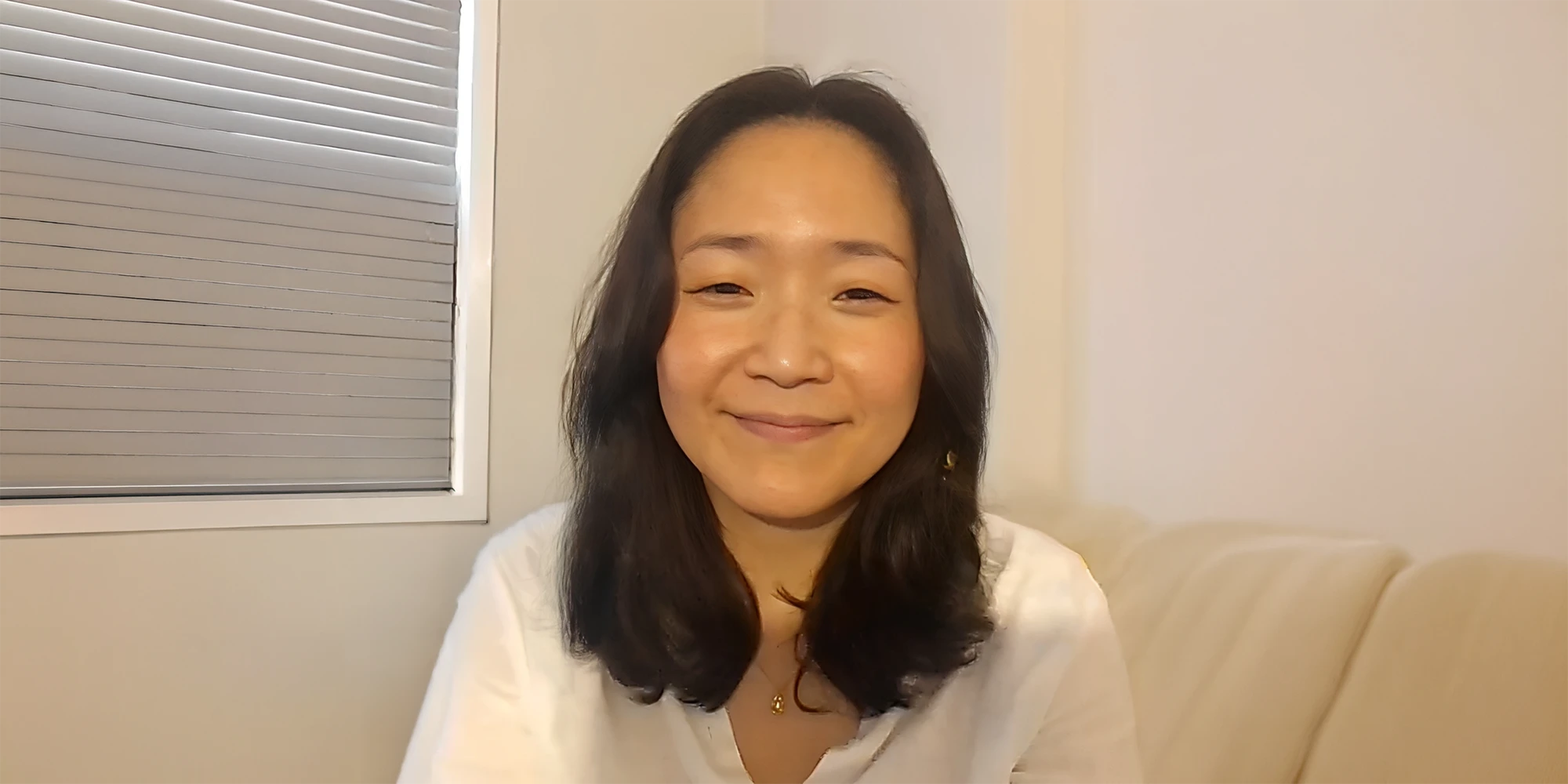
In this episode of The Curiosity Current, hosts Molly Strawn-Carreño and Stephanie Vance
welcome Elle Park, the research and CI lead at Arcutis Biotherapeutics. Elle describes herself
as a Swiss army knife of data. She built a career across business intelligence, analytics, and
primary research. This broad expertise allows her to approach complex problems with a
systems thinking mindset. The discussion centers on how AI is reshaping the landscape for
researchers—particularly relevant in highly regulated fields like pharma.
Elle shares her perspective on how AI reveals existing weaknesses in insights work—not just by
providing faster results, but by making gaps in research quality more visible. She emphasizes
that tools can handle junior-level tasks, but the real value lies in human judgment: interpreting
data within a broader strategic context. The conversation dives into the concept of the human in
the decision loop, where researchers serve as essential sense checks for AI-generated outputs.
Listeners will hear about the importance of maintaining a strong foundation in research basics, and how to navigate the challenges of talent development and vendor partnerships in an
automated world.
Episode Resources
- Elle Park on LinkedIn
- Arcutis Biotherapeutics website
- Stephanie Vance on LinkedIn
- Molly Strawn-Carreño on LinkedIn
- The Curiosity Current on Apple Podcasts
- The Curiosity Current on Spotify
- The Curiosity Current on YouTube
Transcript
Elle - 00:00:01:
The path forward is to really hone in on the basics and really have a solid foundation of basic, good, great research. I think it's one of those things that's so easy to lose in the mix because it just becomes table stakes, right, at some point in your career. So, we kind of forget about it. But if you think about it from the lens of, like, we need that for good judgment, and that's the one thing that AI doesn't have on us right now. I think it becomes our competitive edge.
Molly - 00:00:34:
Hello, fellow insight seekers. I'm your host, Molly, and welcome to The Curiosity Current. We're so glad to have you here.
Stephanie - 00:00:41:
And I'm your host, Stephanie. We're here to dive into the fast-moving waters of market research, where curiosity isn't just encouraged, it's essential.
Molly - 00:00:51:
Each episode, we'll explore what's shaping the world of consumer behavior from fresh trends and new tech to the stories behind the data.
Stephanie - 00:00:59:
From bold innovations to the human quirks that move markets, we'll explore how curiosity fuels smarter research and sharper insights.
Molly - 00:01:08:
So, whether you're deep into the data or just here for the fun of discovery, grab your life vest and join us as we ride the curiosity current.
Stephanie - 00:01:19:
Today on The Curiosity Current, we are joined by Elle Park, Research and CI lead at Arcutis Biotherapeutics.
Molly - 00:01:27:
Ellie calls herself a Swiss army knife of research and data, and that perspective did not happen by accident. She intentionally chose to build a broad career across business intelligence, commercial strategy, primary research, analytics, and launch planning, even when mentors encouraged her to specialize.
Stephanie - 00:01:46:
That range has become especially valuable in a moment when AI is automating different parts of the research process and raising new questions about what researchers uniquely bring to decision-making.
Molly - 00:01:57:
So, today, we're exploring what it means to integrate insights into a regulated industry like pharma, why human in the loop is not necessarily the same thing as human in the decision loop, and how this next generation of researchers can build a judgment, creativity, and confidence that AI just cannot replace.
Stephanie - 00:02:17:
Elle, welcome to the show.
Elle - 00:02:19:
Thank you. It's so great to be here.
Stephanie - 00:02:21:
Well, to jump right in, Elle, there's something interesting about building a broad research identity in a field that does reward specialization. And I was wondering, could you talk a little bit about your instinct to follow that path? Like, where did it come from? How did you know to trust it? And what does it do for you?
Elle - 00:02:40:
Yeah. Thank you. I think it helped that I am a systems thinker in general. Like in history, the thing that I remember the most were not the dates, but the stories that it contained. I think best when things relate to each other, and they make the most sense to me when they are connected to each other. I think I was able to trust that instinct. I had the benefit of being on the client side of things, where working with the marketers and working with different stakeholders who needed to make decisions, and not necessarily based on a single market research study or a single data point, but they needed it all to come together in a way that made sense strategically. And I think strategic thinking requires systems thinking, and that's where I wanted to be. I trusted that desire, my ability, and just good old youth, right? You're just able to kind of make that jump and see what happens, and luckily, it worked out for me.
Stephanie - 00:03:39:
Yeah. That makes a lot of sense. And I also think when you talk about being a systems thinker, it's especially powerful for taking insights beyond the space that it can sometimes sit in, which is in a vacuum, right? Like, this is my part of it. I do it, and then I hand it over to a brand manager to make a decision. Whereas I've heard you talk about the importance of researchers being part of that decision-making process. So, I have to think that that's part of that systems thinking for you.
Elle - 00:04:08:
Absolutely. And the more I spoke to them, the more I realized the answers came from more than just one source, whether it was primary market research or analytics, as you said. And when I was in analytics, the more I did the data, the more I realized this was actually going to grow into something, like, something more than just pivot tables and even just regression models. We were getting into predictive analytics and big data machine learning. All that was building up to something that was going to really blow up. And between that and the displacement of primary market research that people were trying to do with that kind of predictive analytics, I wondered if I would have more job security if I was just branched out and more useful to the decisions that were needing to be made as one person than just simply being a specialist in my area of market research.
Stephanie - 00:05:03:
So, there's a practical element as well.
Elle - 00:05:05:
There was. Yeah.
Molly - 00:05:06:
Yeah. Speaking of job security, I think it's great to bring into the conversation about the changing landscape of AI and how it's changing not only how we generate insights, but it's encroaching on that systems thinking to determine how insights actually get dispersed and used effectively across an organization. So, I'm curious from where you sit, how do you see that AI is changing the way that insights are integrated into business decisions today?
Elle - 00:05:38:
So, AI can mean so much, but I will take, for example, the large language models that are being broadly used to, I think, replace junior researchers sometimes, depending on the organization. But what I've learned is that, and I'd actually read a paper on this, about how AI is not necessarily improving insights, or necessarily making it faster. What it's actually doing is revealing weak insights teams or weak insights work that were done before. Because in the summarizing of the work, the weakness, and it comes out where you're kind of missing things will come out. I think it's interesting, though. I don't think that's necessarily as much a castigation of the market researchers that came and did the work. I think it has more to do with the need for more experienced researchers to look at what AI is putting out, so that you can have that lens of AI will believe what you're feeding it. But do you have someone who can look at what AI is putting out to say, “Is that actually relevant? Is that actually right, based on years of experience, and just a simple sense check that I'm able to give it that AI currently is not?” I do think that there is a place for AI as a tool, as an acceleration tool. I think all the things that used to take a junior researcher hours and days to do can be accelerated using AI tools. But at the moment, at least, with very good oversight by someone who understands research methods, just basic, like, what does it take to produce a good study, good, reliable data, and then someone to put the separate stories together, apply the systems thinking in a way that I actually have not seen AI do yet.
Molly - 00:07:27:
Excellent. Okay. So, Elle, that you mentioned something that was really poignant that I wanted to go back to, which is the statement about AI is starting to replace a lot of junior analyst tasks, but this is a sort of a double-edged sword, right? On one hand, it's a cost-saving measure. It's a time-saving measure for the organization to automate a lot of these tasks, but it pulls the rungs out from the ladder that a lot of senior researchers climbed in order to get to the position that they are today, and senior researchers still need that expertise. Like you said, people still need to look at that study and look at the output of AI and say, “Yeah. Something doesn't pass the sniff test here.” Like, something is wrong. And that is something that you can only get through experience, which then over time cultivates into intuition. And so if these roles no longer exist, that means that the roles that we see now with senior leaders are gonna look different in the future. So, I guess all that to say, what worries you the most about what this means for the future of insights and what this means for the pathway to becoming a senior researcher?
Elle - 00:08:36:
Yes. So, I think this is a pivotal point in our history where people need to be thinking strategically about the downstream effects of the efficiencies they're realizing now. I think it is, unfortunately, being too often used to replace people or replace whole positions, layers of positions, without thought to what that might do in the development of their talent, because a lot of companies are going to exist more than 5 years down the line. At some point, you're going to need the mid-levels to manage the juniors that are coming in. Even if you are using AI to replace an entire junior layer, you need someone then practice enough to direct the agents that you've developed. And I don't think you're going to have enough of them to be able to do the amount of work that you want to do. I do believe that it is going to create a bottleneck unless people are intentionally restructuring in a way that they're still developing that layer of talent to get to that mid-level, so that you're not needing someone at senior levels and maybe even executive levels to be able to direct that work because, again, bottleneck. The other thing that I would also advise is AI is reality. It's reality because people want to use it, and no amount of trying to get them to not want to use it is going to get them to not use it, if that makes sense. There is enough momentum there where it's a part of our reality now. So, what I would advise junior researchers coming into the industry is to understand that the skill set that was required for you to land that first role is going to look very different than it did before. Not only are you going to have to have a solid foundation of research methods and what it takes to produce good research, and hone in those instincts and those project management skills, you're now going to have to understand how do you make that job easy and make the mid-level jobs easier by using the AI platforms and tools that you have? And one of the best edges that they have that they may not yet realize is that because we're at kind of this nascent infant stages of using AI and AI integration into the different businesses across industries, you might be the most AI proficient person in the room. So, your ability to not only use, but help translate or explain what you're doing, right, and why that makes sense to the people who manage you, I think that's going to be a huge boon. And the thing that's going to get you a job versus not get you a job in this very kind of AI-dominated space and layer of positions now.
Molly - 00:11:29:
Yeah. Totally. We hear that AI is not gonna take your job. Someone who uses AI is gonna take your job. This leads me to one of my other questions, which is that you work in pharma, which means that regulation, especially when it comes to AI, protections, privacy rights, and data management, moves way more slowly when it comes to data and technology. So, what does it feel like to be a trailblazer of an environment that's naturally cautious or even behind the tech curve? And I guess another side question to that is also when you say that you want these junior researchers to have the tools to utilize AI to be AI native and bring that to their next roles, how do they approach that in a sort of a regulated environment? How have you approached that in a regulated environment?
Elle - 00:12:19:
I had the benefit of being in a regulated environment when AI hit. So, I think, again, I was very fortunate to already be here to have had the analytics roles that allowed me to understand what were the lines that couldn't be crossed, like the ethics and compliance training. I don't know that we are necessarily technologically slower. I think our adoption of new things in general are slower. Change management can also be slower because we have to check more boxes than those who handle non-regulated data. But I do think that once that part is done and we've checked off all the boxes, I think you will start to see that acceleration and expansion that you see in other industries, and then very, very quickly so, because we're going to be trying to catch up, and the speed now becomes an edge, a competitive edge for us. My recommendation to junior researchers who want to do research in a regulated industry, such as finance or pharma, I would start understanding what you need to deliver as a data analyst first. Those are just the basics. By handling that kind of data, by getting those internships, and the first part looks the same, get those internships, get that experience, go talk to the right people who can teach you these things, I think that part is still the same and still essential. I think, though, you also need to maybe, on the AI side, start building things. You learn the most by actually building things, and you know where things can go wrong by actually building things and then trying to use it. You gain a lot more appreciation for programmers. I'll tell you that right now. And I think once you have that and have that experience and you know how whatever you build is sourcing your data and you have that knowledge with what is regulated, what's not touchable, what are the boundaries and guardrails you have on the pharma or regulated data side, you're able to put that together and bring that knowledge into the business, which I think will be highly valuable.
Molly - 00:14:24:
Yeah. That's an excellent way of framing that.
Stephanie - 00:14:26:
To kind of pull on the same thread, but at a different level, you acknowledge something that I think is so important, which is that, you know, progress in regulated industries, really all industries. It's not just about new tools; it's process change, and it's culture change, and that kind of change is just notoriously challenging. What have you found is the best way to kind of cultivate that change within teams and to get people really on board and aligned with some level of transformation, which again, can just be uncomfortable?
Elle - 00:14:57:
Make lives easier. I think it really is as simple as that. Make lives easier without putting them at risk, I think, is the second part. Especially in the regular industry, that risk is higher. Right? I mean, that's something that could get you terminated. And it's a small mistake that can get you terminated, because, especially depending on where you are and the level at which you're making the decision, it can have long-lasting, almost sometimes irreparable impact. So, I would say make lives easier and show them all the ways that it doesn't put them at more risk than they're willing to take on. And I would say be consistent in that messaging, but also give people time to come around to the new concept. I think a lot of people will try this and then give up too easily because they often are met with so much resistance for various reasons across the board. And the going can be very slow, very frustrating. It takes a lot of patience, a lot of meditation, a glass of wine or two, depending on who you are. But if you are consistent with the messaging and you're able to show the value, like, if you build something, right, and you show someone something and someone thinks that's cool, that's a step in the right direction. It's like anything to do with change management or anything to do with, like, introducing change into an organization. You have to do it slowly. You have to understand who the early adopters are likely to be and go there, where at the cross-section of interested and the largest impact that you can make in a short amount of time, and start there. I can't tell you anything else about what will happen from that point because that varies.
Molly - 00:16:35:
It's up to the change management gods.
Elle - 00:16:37:
But if you're brave enough to take that step, I think the payoff is huge because that's one of the ways that you can become a leader in the field, a thought leader in the field. You can be, at the very least, kind of head of the curve. If you're one of those people who just really crave innovation work in their jobs, this is a very easy way to create innovation where you sit without necessarily even needing a title to do it. Yeah. So, the world's your oyster. I say go for it.
Stephanie - 00:17:03:
I do love the way you really are framing it in terms of the carrot and not the stick, right? Because I do think that there is sometimes the tendency to lead with mandates. And I think that, to your point, can perhaps be less effective than leading with the value that it brings to you, right?
Elle - 00:17:22:
Mhmm. And understand that, especially depending on the culture at each company, sometimes countries. There are some companies and some cultures that will require that all the risk be mitigated before they will look at the value or the additive value it will bring. So,, my very German friend, I don't know if it's a German thing or just him, but he's one of those people who will come into a room, and he measures his value by how many times he can stop a project from making a mistake. Because to him, every mistake you can avoid, that's success. We shouldn't move forward where there is risk. And I think in more conservative environments, I would say be prepared to do that step before you can move forward and do not be discouraged. It's just a part of laying down the foundation before you can build the house.
Molly - 00:18:15:
So, there's definitely a foresight requirement of perhaps predicting where this could potentially go wrong and mitigating that from the start, minimizing the risk and maximizing the reward.
Elle - 00:18:26:
And understanding the personalities involved that you're going to have to work with, but good thing, we're in the business of understanding people, right? So, I think we have a lot going for us. In some ways, we're the best ones to make that change. Right? Because we understand people. It's our job to understand people better than other people do.
Stephanie - 00:18:44:
Truly. Yeah. For sure.
Molly - 00:18:46:
I think there's also a distinction sometimes that people make between this is my job versus the way that I am. And I'm even this way too, that I think a certain way, and I think that this is valuable for my professional life. But then I don't integrate that at all into, like, even my, like, personal growth or personal development. But I love your view of approaching internal things and applying market research tactics to, like, your boss. I'm gonna take that.
Elle - 00:19:13:
But you know what? I will mention this. Having a supportive manager is so important. If you have a manager who is not supportive of you trying something new or just in general, just resistant to the idea, I almost want to say, like, wait for a better opportunity where there's someone either, like, pushing for it or try to get on a project where there is already support for it. Because I think as market researchers, there's a lot of collaboration that we're able to build, relationships we can build to make that happen. But if your manager is against it, I feel like you're making life really hard for yourself, especially if you're someone junior. So, I would walk that line very carefully. Luckily, I have someone who is very supportive of my development, what I'm doing, and just kind of likes me as a person, but maybe wait for someone like that before you take on something behemoth like AI integration right now.
Molly - 00:20:08:
Perfect. We talk a lot about this idea of human in the loop, especially when you're developing new systems, you are creating new processes. At what point do you really need that person to give the test, of is that actually going the right direction or not? But you've made the important distinction that it's not actually human in the loop we should be paying attention to. It's human in the decision loop, and that distinction is really important. What does that differentiation mean to you?
Elle - 00:20:38:
Oh, that is so important. Thank you for this question. Human in the loop is almost a curse word in AI because they become the bottlenecks. You can do a lot of AI, and it's producing a whole lot. But if you are requiring a human to do the summaries and do all the checks, then it does move back down almost to the speed of human or the number of humans that you have involved, which defeats the purpose of the great things that AI can do sometimes, especially if what you're looking for is speed. I think that while human in the loop, it is something that we want to move away from, I think. But I do think that there should still be a human in the decision loop, which is where you take all the information that AI generated, right, with all the summaries. And you're sitting at the table with the decision makers, or maybe you're one of the decision makers, to say, “Alright. Here's all the information.” When a market researcher is at that decision-making table, they're able to look at that evidence that was generated by AI and say, I have a disconfirming evidence. I have better evidence than what AI is producing based on something else that we did. Or they become the sense check that says, “Yeah. I can see why you would think that you should make that decision based on a,b,c data, but consider that a,b,c is really far from where we need to be, which is x, y, z.” So, essentially, if you're making that decision, you're deviating from the strategy that we have in place. Is that the decision you want to make? And then you decide from there. But that kind of sense checks the systems thinking and understanding the systemic impact of using whatever output AI is generating, I think that part's really important. And I don't know that there is any technical innovation to date that can replace that just yet.
Stephanie - 00:22:33:
I feel like this raises an interesting point. Everything you're saying makes a ton of sense to me, but then I also think about we are living in this world where AI tools right now are often built by people who don't necessarily deeply understand research methodology and analytical approaches. That's not true across the board, of course, but it can be. And where do you think, in that context, researchers need to stay closely involved enough to ensure that the decisions that they are making are grounded in sound methodology and judgment?
Elle - 00:23:06:
Ironically, I think it's in the basics of decision sciences. Because right now, AI, GenAI, LLMs, if you think about it, their entire algorithm is developed to do all the summarization, the data gathering, the analysis, but they are not created to make decisions. They're not being created to make decisions for us, which means that someone is making a decision, and that person is still a human at some point. When you rely on an LLM or some kind of GenAI tool to make a decision, like using that as the evidence for your decision, you're trusting that it also knows things like research methods and all of the basics that go into testing the building blocks toward that decision. And I don't think AI really knows that yet. I don't know that they can make that judgment call. So, ironically, I think the path forward is to really hone in on the basics and really have solid foundations of basic, good, great research. I think it's one of those things that's so easy to lose in the mix because it just becomes table stakes, right, at some point in your career. So, we kind of forget about it. But if you think about it from the lens of, like, we need that for good judgment, and that's the one thing that AI doesn't have on us right now, I think it becomes our competitive edge. Add to the fact that, let's be very real, how fun was your research methods class? Not very fun. Like, your basic, like, Research 101 classes, not the most fun thing in the world. But those are the foundational blocks, and I think this is where I want to encourage every new person coming into the industry and even some of the senior ones who've been here a while to kind of go back and be like, you know, if you were to go take that class again, would you make an A? Maybe we should start there.
Stephanie - 00:25:05:
I think there's also something, and this will get into my next question, but I think it requires that we not be working with tools that are a black box to a degree, where we really don't know how it's working, right? Like, how can we practice our discernment if we don't know how the methodologies are being selected and the analysis is being done? Which brings me to my next question: your approach to vendor onboarding. I would love for you to talk about it because it's very intentional. Before you bring in a tool, what do you need to see to know that it's actually going to solve the right problem? I would love for you just to kind of take us through that process if you could.
Elle - 00:25:43:
I think my process either makes me someone's favorite client or least favorite client. It usually is not an in-between. And it's because for my proofs of concept, especially when we're talking about AI, I require a success rubric. So, what does success look like for us on your end and online? And at the end, we're going to grade ourselves in this project on that rubric to see how we did. And the thing is, I'm not necessarily looking for perfection even on that rubric. I mean, it's great if we hit off all the boxes, but as long as we're able to learn something and we're very intentional about what we tried for, and where it went wrong, to me, that is a kind of success. So, I like to go in with a rubric. And what I like best is when I work with a potential agency partner who thinks that way too, and they're coming to me proactively without me having to ask for it. Because whenever people are pitching their AI solutions to me, and there's a lot of that happening, I'm happy to meet with them. But at some point, it just feels like the success metric on your end is whether or not you sold me this product. And it is. I realize that's a part of your business. But for me, especially in this stage of AI utilization and integration, I need a partner. I need a thought partner. I need an agency partner who's going to be a partner throughout this entire proof of concept, and my success is going to be treated like your success. And from that point forward, then I become an advocate for you and your firm and this project that we just did also. So, it's a two-way street, but I need you to treat me not like a budget, but a person who is, quite frankly, putting a little bit of her professional reputation and career on the line to try this new innovation with you.
Stephanie - 00:27:39:
Totally.
Molly - 00:27:40:
Yeah. I think that that's a really important distinction to make in an effort to showcase why partnership is so important, is to say, we're gonna go in this together to my stakeholders. We're gonna take whatever we work on together, and I'm gonna have to pitch this and say that this is my work. This is what I did. Well, Elle, this has been a super insightful conversation, and I'm gonna wanna do now a quick ro und of our reoccurring segment here on the show, Current 101, where we ask all of our guests the same question, which is, in our space, what is something that you would like to see more of, and what would you like to see stop entirely?
Elle - 00:28:19:
I would love to stop seeing AI-generated outreach cold calls.
Stephanie - 00:28:27:
Yay.
Molly - 00:28:29:
No to vendors listening. It's obvious.
Elle - 00:28:33:
I mean, it's a good way to, I guess, introduce me to what your company is, what it does, and the fact that it exists. I don't know how much of it I'll remember a 100 of similar emails down the line, but I understand that maybe it's better than nothing. That said, I have seen so many of them now. I can almost write them. I feel like there are also AI-generated errors that are a little bit off-putting. Like, I had just talked about this at IIEX, North America. There was one outreach email where it was clear that in, like, the prompt or whatever they were programming, they forgot to pull what it was that they wanted to talk about with me. And so, like, in this template, they were like, “Oh, hi, blank. And then I just saw that you were at such and such a company doing such and such a thing, and I wanted to talk to you about xxx.” And I was like…
Molly - 00:29:31:
Oh, no.
Elle - 00:29:32:
I was like, “Oh, that's unfortunate.” And you know what? If I were doing the same thing, then I'm sure I'd make a similar mistake down the line. I mean, it is a lot of detail-oriented work; programming in general is. But on the receiving end, what happens there is that it immediately disconnects me from the email and even the company, because I'm not talking to a person. So, I completely disregard because I'm not gonna hurt a bot's feelings by not replying to it. But if it's clearly a person trying to outreach, then if I'm able, I try to reply as much as possible. Even if it's just to say, like, I'm sorry. I'm not looking for something like that at this time, because I only show a human that level of respect. So, that's been a thing. I would love to see more intentional development of the talent pipeline. I think right now, people staff for the short-term need, the immediate need that's, like, high priority. But I think what happens then is they're doing these rounds of layoffs sometimes because they overhire or they almost treat it like a 2-year contract where they're like, oh, this person's not gonna be here for longer than 2, 3 years. So, it doesn't matter, right? I wish we could go forward to a time where we are intentionally building a pipeline of products and the talent to match that pipeline so that we're foreplanning based on our production schedule. We're going to need a lot of work happening right now, which means we need a good, solid level of mid-levels that, even if we're not hiring more full-time junior talent, we have them to manage the number of consultants that we're gonna need or contract workers that we're gonna need during this period. And that way, you're able to still get the work done, get the quality that you need, so that you're better set up for success with that product launch, so that you're not saying, well, this product is not making as much revenue as I thought it would. So, then you're having to cut down on the force. I think it creates a lot more turbulence than is necessary, which I think does impact the long-term growth of the company.
Stephanie - 00:31:39:
Those are good ones. I love that. To close this out, Elle, for someone who's listening, who is trying to understand how their role might evolve as AI becomes more embedded in the insights process, what is one thing that you would encourage them to focus on to stay valuable and impactful?
Elle - 00:31:57:
I think it depends. It's the worst answer, but it depends. And I think what I actually wanna communicate here is flexibility. I think what made me the most successful throughout my career was when I could evolve with the need, especially when you've done so much planning around something. Sometimes you kind of wanna stick to your timeline and whatever. Sometimes your success will depend on how flexible you're able to be in order to meet the pressing need. You can sort it out and fix the process later so that it doesn't necessarily happen like that again. But in the moment, I think when the emergency happens, you have to be someone who's willing to step up and be a part of the solution. I think especially right now, there's a lot of pushback from the younger incoming workforce about protecting work-life balance and needing to push back against toxic workplace requests. And I completely agree. I don't think that you need to be taken advantage of. I think you should protect yourself from that. But that's different from kind of like a time and point need where you may just have to step up and do the late-night work, turn in a weekend here or there to cross the finish line as a team. And that I think that sense of the ownership that you take in becoming a part of the solution, so that you can all reach a point of success together, is going to get you far, much further than if you were to just be like, not my problem.
Stephanie - 00:33:32:
Totally. Yep. Well, Elle, this conversation will really stick with me, and Molly, too. I think one of the things that really stood out is this idea that insights are not just something you deliver. They are something that you embed. They live inside the business, not alongside of it. And the reality is the role of the researcher is shifting from generating answers to shaping how decisions are actually getting made, and that just inherently requires a different kind of thinking, one that is much more connected to context and judgment and one that's, to your point, more flexible. Also, just a timely reminder from you that even as AI gets better and faster, the real value comes from how we interpret, connect, and apply what we're seeing, and that part still belongs to us. So, we thank you so much for sharing your perspective today, and for giving us a view into how this evolution is playing out in practice.
Elle - 00:34:26:
Thank you so much. I think you hit the nail on the head. I think we own the world for as long as we do the work to claim it. I think we still own it for as long as we are willing to work to claim it.
Stephanie - 00:34:38:
Right. I love that. Yeah.
Elle - 00:34:40:
Well, thank you. This was such a great conversation. It's always so great to connect with other researchers, other systems thinkers, and talk about the future of our beloved industry. This has been a really great learning, and great inspiration for me as well. Thank you for the invitation, Stephanie.
Stephanie - 00:34:57:
Yeah. Thank you. And to everyone listening, thank you for being part of The Curiosity Current. We will see you next time.
Outro - 00:35:06:
The Curiosity Current is brought to you by aytm. To find out how aytm helps brands connect with consumers and bring insights to life, visit aytm.com. And to make sure you never miss an episode, subscribe to The Curiosity Current on Apple, Spotify, YouTube, or wherever you get your podcasts. Thanks for joining us, and we'll see you next time.






.jpeg)


