

Description
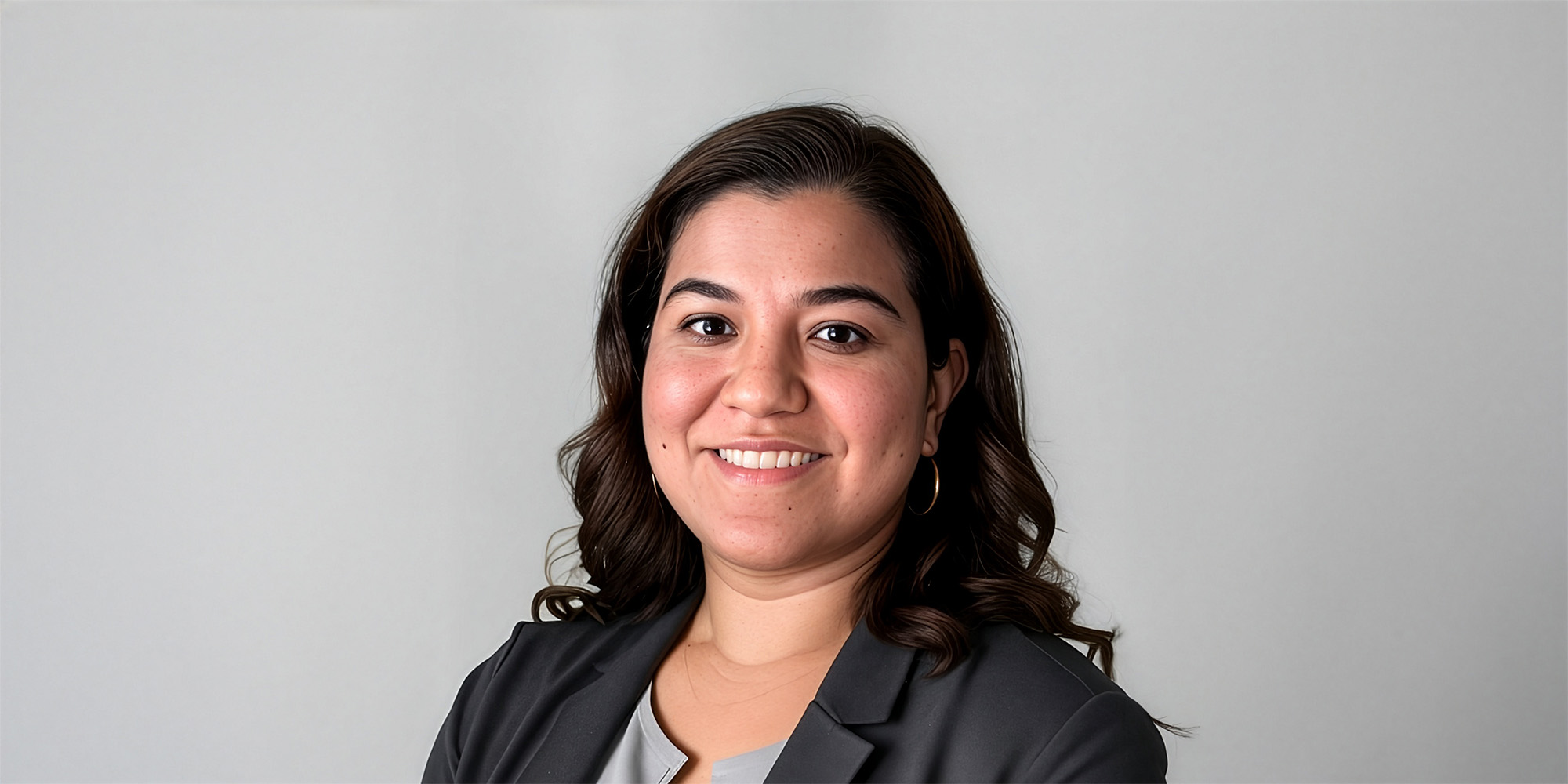
In this episode of The Curiosity Current, consumer insights expert Deborah Mendez explains how to unlock growth by looking beneath surface level consumer claims. She argues that the common gap between what people say and what they actually buy is not a research failure. Instead, it indicates an unmet need where consumers are in conflict between their values and their options. Deborah shares her strategies for using agile research to find patterns across multiple data points, allowing researchers to move from simple validation to becoming strategic creators.
The discussion also covers the practicalities of managing research under pressure. Deborah introduces the narrow and deep principle, showing how limited budgets can encourage surgical thinking and better risk mitigation.
As artificial intelligence changes the landscape of data analysis, Deborah emphasizes the growing importance of human judgment and problem framing. She predicts a qualitative renaissance where deep contextual data becomes the primary way for brands to distinguish themselves. This conversation offers practical advice for researchers and brand leaders looking to drive growth through a better understanding of unconscious human behavior.
Episode Resources
- Deborah Mendez on LinkedIn
- Stephanie Vance on LinkedIn
- Molly Strawn-Carreño on LinkedIn
- aytm Market Research Website
- The Curiosity Current: A Market Research Podcast on Apple Podcasts
- The Curiosity Current: A Market Research Podcast on Spotify
- The Curiosity Current: A Market Research Podcast on YouTube
Transcript
Deborah - 00:00:01:
Yeah. A decade ago, we were seeing consumers articulating things like, I want to be environmentally conscious, and I prefer packaging that is cleaner or ingredients that are cleaner. But then you might conduct a conjoint analysis and realize that they are making decisions based on price or that they prefer private label despite everything they've told you about how they prefer to protect the environment or their families with better ingredients. And then this doesn't necessarily mean that consumers are lying, but it might be that they are in conflict because back then, there might not have been that many options to do both, to be budget conscious and inconvenient and environmentally friendly. But that tells you that there is an opportunity to disrupt a category there, by giving them what they tell you they want, but they are not empowered to choose.
Molly - 00:01:06:
Hello, fellow insight seekers. I'm your host, Molly, and welcome to The Curiosity Current. We're so glad to have you here.
Stephanie - 00:01:14:
And I'm your host, Stephanie. We're here to dive into the fast-moving waters of market research where curiosity isn't just encouraged, it's essential.
Molly - 00:01:23:
Each episode, we'll explore what's shaping the world of consumer behavior from fresh trends and new tech to the stories behind the data.
Stephanie - 00:01:31:
From bold innovations to the human quirks that move markets, we'll explore how curiosity fuels smarter research and sharper insights.
Molly - 00:01:40:
So, whether you're deep into the data or just here for the fun of discovery, grab your life vest and join us as we ride the curiosity current.
Stephanie - 00:01:53:
Today on the Curiosity Current, we are joined by Deb Mendez, a consumer insights leader whose career spans some of the biggest names in CPG, including KenView, Mars, Kraft Heinz, and Pharmabyte.
Molly - 00:02:06:
Deb works at the intersection of agile insights, brand growth, and strategic influence, helping teams turn consumer understanding into sharper creative, stronger business decisions, and more effective brand plans.
Stephanie - 00:02:19:
Her work also spans brand strategy, communications, and insights generation with a strong focus on using quant data not just to measure what consumers say, but to get closer to what's actually motivating them beneath the surface.
Molly - 00:02:33:
So today, we're exploring how to use quantitative research to uncover perhaps the less obvious truths in consumer behavior, how to build deep insights when budgets are under pressure, and what it takes to develop critical thinking talent in a perpetually AI-shaped research world.
Stephanie - 00:02:49:
Deb, welcome to the show. We're so excited to chat with you today.
Deborah - 00:02:52:
Likewise. I'm really happy to be here. I love The Curiosity Current, so I'm happy to be a guest now.
Stephanie - 00:02:59:
Yay. Exactly.
Molly - 00:03:01:
It's always fun to have a fan.
Stephanie - 00:03:04:
Well, Deb, let's get into it with you today. So, Deb, you've built a role where insights clearly do more than just validate decisions that have already been made. Looking back, I'm curious, is there a point where you realize that quant research could be a really powerful tool for uncovering not just what consumers say, but what they're not able to fully articulate?
Deborah - 00:03:23:
Yeah. No. I think there was definitely a shift in the industry that accelerated that. I think that if you look back 15, 20 years ago, a lot of the quantitative studies were large budgets, slow filled in with long questionnaires and super large sample sizes that, of course, because of the large implications in time of budget, they needed to be signed off by so many cross-functional members, right? Like, the same questionnaire would get revisited so many times, and you would get data points that were giving you information about that field in about one point in time. But then, with agile research and big data, we were able to field multiple iterations, sometimes of the same question, getting more data points. And then the value wasn't much about one data point, but it was more about the patterns that multiple data points were giving you. So then, once you start identifying patterns, it's very easy to understand when something is off pattern, and that triggers your curiosity, right? That's the tip of the iceberg that tells you there might be something more interesting here. And where you can start peeling that onion by getting different data cuts, or by getting longitudinal data points or by asking the same question in a different manner or by asking the same question at different points in the questionnaire when the respondent is fresh or when the respondent is exhausted. And identifying those discrepancies is what tells you, like, okay, I don't know if consumers are aware of this, but they are contradicting themselves, and there might be a deeper reason here.
Molly - 00:05:18:
And that is something that really is always really fascinated me about your work and the passion that you have for this, which is the consumer unconscious of things that impact consumer behavior that they don't even know, that they don't even realize. So, when you say that, and you're looking to measure that, what does that look like in practice?
Deborah - 00:05:39:
Yeah. I mean, I think there are a few examples that come to mind, but I think that, yeah, maybe a decade ago, we were seeing consumers articulating things like, I want to be environmentally conscious, and I prefer packaging that is cleaner or ingredients that are cleaner. But then you might conduct a conjoint analysis and realize that they are making decisions based on price or that they prefer private label despite everything they’ve told you about how they prefer to protect the environment or their families with better ingredients. And then this doesn't necessarily mean that consumers are lying, but it might be that they are in conflict because back then, there might not have been that many options to do both, to be budget conscious and inconvenient and environmentally friendly. But that tells you that there is an opportunity to disrupt a category there, by giving them what they tell you they want, but they are not empowered to choose. And that's when you see that mismatch between what they articulate and what they do, and that tells you there is an opportunity to disrupt here. Because if I am the first brand that allows them not to be in conflict between what they say and what they do, they're going to prefer you, right? And that's then, now you can see consumers being much more consistent between what they say and what they do because now there are brands who are there now to give them the option, right? So, then you start seeing how category changes, those mismatches start to align, but then new mismatches start to appear, right? And that's where I think there is an opportunity for disruption and growth.
Stephanie - 00:07:34:
I think that that is such a fascinating kind of process and indicators that you're chatting through with us. I was curious, and I had a question for you around the sort of paradoxical nature of using structured survey data to uncover unconscious motivations. And I was very curious about, like, the signals that you use, and I thought maybe reaction time is some of what you're talking about. But I love to hear from you. You're taking it back. It sounds like you've been doing this before we were doing reaction time-based experiments and really just looking for the mismatch between the kinds of things that we see people say and the kinds of choices they make, and kind of discrete choice exercises, which have been around forever. So, you're really describing a process that doesn't take the newest tech, right? It's something that you could you've probably been doing for years and years, and that's fascinating.
Deborah - 00:08:27:
Yes. Yes. I think you're spot on. I think you can identify those frictions and tensions by putting consumers not only in front of claimed behavior versus simulated behavior like a conjoined or a max diff. That's definitely one way, but also, like, creating artificial environments that put them in a certain situation, right? Like, it can be a shelf test, or it can be adding artificial constraints like timing, as you mentioned. So, seeing how consumers behave in those different environments and how consistent or inconsistent can be very revealing about things that they might not even be aware of, and that's where you start tapping into that unconscious, right? They don't know that they answered one thing, but behaved like the other. They don't know the results of their own conjoined, right? And that's where the richness comes in.
Stephanie - 00:09:31:
So, for you, is it like when we see those discrepancies, it is a cue to investigate further, to really get down to the bottom of, like, why that might be occurring?
Deborah - 00:09:42:
Yes. For sure. When you see those inconsistencies, then you can start, yeah, peeling the onion and doing deeper data cuts of the same thing, right? Like, do these inconsistencies show up across all of my demographics or all of my behavioral groups, or did it show up last year, or does it show up at a different season of the year or through a shopper of a different retailer? And that's where you start seeing the story unveiling itself and giving you some depth on them and some cues on the potential whys for those discrepancies.
Molly - 00:10:24:
I wanted to call out something that you had said a bit earlier because I don't, we talk a lot about the say-do gap on this podcast, but I don't think we've had someone necessarily say that the opportunity lies in actually the middle of that, and it's your job as a brand to iterate a product that allows the consumer to not be in conflict with each other. I don't think we've seen that perspective before, which I just wanted to call out as as really, really interesting of instead of we're trying to close this gap, we're trying to better understand what creates this gap. Instead, it's an opportunity.
Stephanie - 00:11:00:
I think to just, to piggyback on that, Molly, I think it's that we treat the gap as something that means the say was not accurate, right? It's like what they said doesn't match what they do, so maybe they lied to us. Maybe this is a data quality issue, when in reality, that say-do gap exists in real life for consumers and for humans, right?
Deborah - 00:11:23:
Yes. 100%. So, yeah, I think I've seen executives of major corporations say, “Like, yeah, let's not, for example, let's not invest in sustainability or higher quality ingredients.” We see that at the end. This is what they're choosing at the shelf. And true. That is true at that time, and we can oversimplify the consumer and say they're lying; they want to portray an image of themselves that is not true. At the end, they're looking for this. And in some cases, that might happen, but I think they're missing the opportunity to move the category in a direction that it's more aligned with what consumers say they wanna be and how they are behaving today. And then there's gonna be one competitor that's going to do that. They are going to innovate. They are going to fight for a fifth of the share of the larger ones, and they are going to deliver the consumer exactly what they want. And they're going to get a share of the consumer, and that's going to be an opportunity missed, right? So, we've seen that in categories through history, where things that were unique 10 years ago. Now, they are the point of parity and not the point of distinction in the category, right? And that's how you see them evolve. So, I think, yes, sometimes consumers might lie to themselves, but there is a reason. If you understand that reason, then you can capitalize on it and get growth rather than ignoring it and thinking, yeah, consumers are lying, or this is a bad survey that came out wrong. Yeah. Sure. Those do happen, but if you start seeing the consistency in the inconsistency, that tells you there might be something deeper.
Stephanie - 00:13:11:
Yeah. It's like treating it as a signal, not noise.
Molly - 00:13:14:
Mhmm. Mhmm.
Stephanie - 00:13:15:
You know? Which, yeah, I love that reframing. I think that's gonna be useful to a lot of people. There's a phrase in research that I've been kind of noodling around on lately, around, like, deep insights, shallow budgets, because I think it really does, like, capture this tension that so many researchers, especially branch-side researchers, are living with right now. I'm curious, in your roles, how have you protected depth when I feel certain that you've experienced that pressure for speed and efficiency?
Deborah - 00:13:47:
I love this question. And again, this is one of those phrases where we're treating it as a contradiction, but I actually think they can be very well aligned because shallow budgets force you to do deeper research. When you have shallow budgets and shorter timelines, then your critical thinking needs to be flawless, and that's where you can't sacrifice depth. You can't sacrifice depth of thinking. So, truly taking the time to understand the needs of your cross-functional teams, to understand what's the business decision at hand, what are the business risks, what's the cost of those business risks, how do you mitigate the risk, then you can be very surgical about what are the data points that you don't have, that you don't have historically, that you haven't tested in the past, and that you truly do need to get. But you can be so surgical, so specific, so intentional that then you can go deep into those data points, right? So, you can concentrate resources on being deep in what truly matters and isolate what you don't truly need, isolate those nice-to-haves so that you might complement with what you already know or with safe assumptions that you might not be certain, but they don't put the business at risk. So, that way, yeah, those budgets and timing constraints can actually be very helpful to shape the research in the right direction.
Stephanie - 00:15:34:
It sort of forces you to crystallize what's most important, right?
Deborah - 00:15:37:
Exactly.
Molly - 00:15:38:
Yeah. And I was even sort of thinking this push of the cheaper research versus the smarter research and what that looks like. It can be very difficult to see tightened shoestrings, a tightened budget around you and think, I'm gonna do everything that I need to, but I'm gonna do it in this really cheap way versus, like you're saying, really distilling down exactly what you're trying to get at and investing in that in a very smart way.
Deborah - 00:16:04:
Yeah. Yeah. When I think about cheap research, I can imagine something that is very broad and very shallow. So, yeah, you might not be able to do much with that. But when you think about intentionally doing research with budgets and time constraints, I can imagine something very narrow and very deep that actually helps you become smarter. And that becomes part of your arsenal of historic research, and it puts you in a better situation for a future business problem because now you have more relevant data points.
Stephanie - 00:16:38:
Yeah.
Molly - 00:16:39:
And when we talk about doing research to empower business decisions, it's important to have that research as part of the process from the beginning. I know there's a lot of times where we see that research comes in at the middle of the process or the end of the process, even to just kind of say that we did it, and it's not informing anything. It's potentially boxing it into just validating it what could be a pretty bad idea. So, what does that actually look like for you in practice when research gets to be at the beginning of the process and helps lay the fundamentals versus just something to cross the t's and dot the i's at the very end?
Deborah - 00:17:21:
Yes. Definitely. No. I think the function of insights can move from validator to creator when we are involved at the beginning of the process, right? So, when we were thinking about protecting depth by focusing resources on that critical thinking, when insights are at the table from the very beginning, it can definitely help refine the business question, identify the problem, identify those risks, prioritize those risks, establish the business, the success criteria, and identify the standards, right? And then when you finally do all that, validate, then it should be an easier story to tell because the insights have been carrying out that critical thinking framework and tools with the cross-functional team throughout the process. If you're involved later on when you're already validating a concept or copy that you were not part of it, then, yeah, maybe results aren't going to be that good, then insights can also not be accountable. There is a benefit for the marketer, too. If the marketer brings you in throughout all the way and then you task copy and it has poor, then, okay, what was missing from an insights point of view throughout the process, right? But then, if you're leveraging your insights partner only to validate, and the results come poor, then you don't have that accountability partner there. So, yeah, definitely bringing them along the way is critical for the higher risks and the higher growth projects.
Stephanie - 00:19:10:
I like that. I don't think that I've heard somebody talk about the accountability aspect of that and how it aligns everybody's accountability in a way that's important for that development process to have all of the inputs and all of the, you know, the right stakeholders involved to say, I did my part here. And you're right that that's very difficult to expect if you're only being brought in at the end. But if you're involved from the beginning, you are just as accountable as everyone else in that process, and that can only be good for the final product.
Deborah - 00:19:42:
Exactly.
Molly - 00:19:43:
Yeah. Instead of having a moment of, like, blame the research or blame the researcher, why didn't you tell us this sooner? Well, it all happened in a vacuum. I'm only here at the last second.
Deborah - 00:19:54:
Right.
Molly - 00:19:55:
And I know we talk about a lot that it's really important to have that seat at the table and to push your way in almost as, like, an advocate for the consumer and to help that, to make sure that that aligns, of course, with what could potentially be a risky new investment for business.
Deborah - 00:20:11:
Mhmm. Definitely. Yeah. I think about, like, a sample in communications. Right? And then you might be testing a piece of copy against a normative database, and it didn't rank as great as you expected, or it didn't meet corporate action standards. And then insights weren't even part of the brief. It wasn't part of the briefing process with the agency. It didn't onboard the new agency for the consumer. And the results are going to be clear once you include insights versus when you don't. I've seen both examples in, and I don't think I've seen an example where you've included insights from the beginning that has been inferior than when it doesn't. So, yeah, that's a challenge sometimes. Also, multiple projects, and the insight team might not be as large as your marketing or your agency team, so you need to prioritize. But for those large growth and high-risk projects, insights definitely need to be part of the full process.
Stephanie - 00:21:22:
Well, I'd like to talk a little bit about sort of the way that we communicate insights. I know from working with you a little bit, just at aytm in various roles that you've been in, that storytelling is a big part of how you personally, you know, work with data and make insights land with decision makers. When you are translating, maybe, a complex or nuanced finding into something a non-technical audience can act on, what is the first kind of tool that you reach for? I'm curious, is there like a storytelling rule or instinct that you come back to a lot when you're trying to make quant work feel urgent or human to decision makers?
Deborah - 00:22:03:
Yes. That's something that I learned earlier in my career. I think, like, being a junior analyst, and again, back then, there were, like, these large quantitative studies where you felt as a junior analyst that you wanted to tell the audience everything you knew, everything you had said, report on every data point. And I think a great unlock in my career was shifting from telling what I knew to telling them what they needed to do to make their business decisions. So, what's the business decision that they need to make? What is my point of view on that decision based on the data? What are the data points that make it clear that the solution, that decision that they need to make, is a or b, and then putting that story together that can definitely narrow down millions of data points from your survey on that 10,000 respondents to truly 5 data points that you laid out on executive summary, and the decision is clear. And when everything else goes to the appendix, and you are ready to answer. And that's when you showcase what you do know, keeping the storytelling tight and crisp, based on that, the business decision.
Stephanie - 00:23:27:
Well, and I think that makes a ton of sense. And I think something I'm hearing you say that I think I would like to pull the thread on a little bit more is your version of storytelling, which is likely a lot of people's, but I think it's so important to say this again and to really, like, hear it is it doesn't end with, you know, this is what consumers are saying and this is how they're feeling. It ends in a recommendation. And I think that sometimes insights can fall short there, or insights teams may not feel like they have permission to make recommendations, but insights doesn't end with, and that's the data, right? It ends with the implications, and that's the recommendation. And that's a really different skill set than the rest of the research.
Deborah - 00:24:19:
Yes. Definitely. And I also think, I mean, that there's definitely what you're saying, right, about feeling empowered to make recommendations and also owning that the same way that the job isn't done just when you report what the data is saying, but when you translate into the recommendation, the storytelling doesn't happen through a meeting or through a deck, right? There are also those numbers of tiny mitties of elevator pitch of a small top where you're starting to influence your stakeholders even before you get the results, right? When you start aligning that cross-functional team, and when you're starting to plant seeds in their heads. So, once the recommendation comes in, especially if it's going to be controversial, then it lands more softly and with more acceptance.
Stephanie - 00:25:20:
Yeah.
Molly - 00:25:21:
Well, this is the elephant in the room for the vast majority of conversations, but AI is very clearly changing how research is done, and it's also changing what sits with the human and requiring more critical thinking into that distinction, and that determines what successful research teams will value. So, when you're thinking about the research skill set today and developing research talent right now for the next generation of professionals, what critical thinking skills do you think are the most important to protect? What is going to continue to sit with the human being versus what can be optimized or outsourced to an AI system?
Deborah - 00:26:07:
Yeah. I think that there are two critical skills. One, it's going to be problem framing, and the second one is gonna be judgment. So, AI is wonderful even for critical thinking. It can be a very powerful critical thinking tool, but just like any other tool, it's going to be just as good as the user of it. So, being able to ask the right questions to AI or delegating the right types of tasks, developing the right types of agents, designing the right types of workflows, all of these are going to be, at least for the time being, human decisions. So, human beings need to be empowered to identify that and empower the AI-human ecosystem to work at its best. And all of this is important for the inputs, right? You need that problem framing, identifying the sources, training your agents, all of that is for the inputs. And just like it's always been in research, garbage in, garbage out, so you can have the best AI form, but you definitely need that. But then you need judgment for the output, right? Like, when I get an AI output, does this pass a logic test? Right? Like, is this sound? Is the rationale of the AI logically sound? Of course, we've all talked about hallucination, and I think that's probably the most basic issue with logic in an AI, just fabricating evidence that doesn't exist, right? But then others are subtle and harder to identify, right? Like, an AI can be giving you an answer that relies upon an assumption that you haven't tested. And if you're not crisp at identifying AI is relying on this assumption, you won't be able to test it. Or AI might give you an answer using a buzzword that means something for the AI, but means a different thing for your organization, right? And in that mismatch of concepts, there is a baggage of assumptions that come with that answer that you need to identify, to pressure test. They might not be wrong, but you as a human need to have the judgment to see them, hold them out, and be transparent or pressure test them.
Stephanie - 00:28:54:
I feel like there's something to, like, I'm going back to an earlier part of the conversation and kind of marrying it up with this part, when I think of how a lot of, on the supplier side of the industry, how we're using AI on behalf of our clients is really to, you know, allow them to input their their business issues right or their research questions to your point, the point that has to be human owned, and then running the experiment, churning out the analysis, and then putting it in front of the human for them to use their discernment to say, does this, you know, I reviewed everything it did, am I discerning that this is the decision that I would make or that this is an important insight? But it also takes me back to earlier when you were describing, like, what you do to really understand the say-do gap. There's a lot of analysis in that, right? There's a lot of analysis that you're doing, and I think in a lot of our kind of automated experiments, we're not necessarily doing that kind of analysis, right? We are doing a very straightforward, like, you know, we're looking at an appeal and, like, in a concept test. We're looking at whatever the key performance indicators are against the benchmark, and then we're making a judgment about that. But it strikes me that something could easily be lost in this process, but it is also something that AI is remarkably good at, which is pattern detection, back to your earlier point. So, it's really just reminding me, or making me realize that there's this open area where I really think AI, at least on the supplier side, could be doing more. Because I have a feeling that on the customer side, where you have access to all of this data, you're probably doing it more than we are.
Deborah - 00:30:41:
Yes.
Stephanie - 00:30:42:
So, do you find yourself utilizing?
Deborah - 00:30:44:
Definitely. Definitely. And then, honestly, like, I think we're just testing the waters right now with AI because the power it can have on critical thinking, on creativity, on calling out human biases, I think it can be truly infinite or untapped, nothing that we've done up until now. And AI, it's a great critical thinker, it's a great problem reframer, it's great with judgment, right? So, it can be a great companion, a great colleague with whom you collaborate to get to a solid answer, not only faster and cheaper, but probably even a deeper type of answer. So, yes, AI can be a great tool, as you said, in pattern identification, in pattern breaking, right? What are those outliers that are breaking? What are those contradictions that are breaking the pattern? So, it can really accelerate your capacity for thinking, but it doesn't mean that you can delegate that to them. Yes. AI can be great at them, but you still need to own them because, again, the power of AI is gonna be just as great as a human can empower it to be, and you really need to think about the power of that human-AI ecosystem as a whole. You will empower the AI, the AI will empower you, and it can become a virtuous or vicious cycle depending on how you use it.
Stephanie - 00:32:21:
Totally. Absolutely. And kind of pulling on that thread a little bit. You know, universities, workplaces, we're all trying to figure out how to use AI without letting it flatten judgment to your point, right? That cannot be the outcome. In your view, do you have a sort of way that you think about younger researchers or people entering the field about using AI without outsourcing the part of the job that actually helps them grow their ability to be discerning and to make judgments that are accurate?
Deborah - 00:32:57:
Yeah. I mean, I think that a great part of education from now on is truly going to be critical thinking. And by that, I mean, just philosophy, logic, the Socratic method, right, because, yeah, students are gonna have the world of knowledge at their fingertips. They just need to discern, right, and identify when a piece of information is valuable versus not. So, going back to those Socratic basics, I think it's going to be very, very important on one hand. And then on the other hand, once they come into organizations, I think the middle management and upper management need to own that development, right? And that happens when you put people on the spot, right? Like, you guys could send me a discussion guide for today, and I could have replied with AI, but it's when you ask the follow-up. So, when you ask for an example and when we get into the conversation, you can see, okay, this is true human on-the-spot thinking. So, I think that preparing junior talent to present to the boards, to answer questions on the spot, they will be able to continue sharpening their critical thinking needed for what they are managing the AI backstage, right? So, I think, yeah, it's up to the upper and middle managements to develop that junior talent so they don't lose those human skills that will continue to be needed when managing AI.
Molly - 00:34:41:
And the AI is changing so much, not necessarily about the relationship that people have to research, which, of course, is in the way that researchers conduct research, but also the research process as a whole and how research interacts with different parts of the different stakeholders of the business. And so we're seeing now that instead of insights teams, there's insights ops that are serving more of a function that is creating a cyclical insights process that's happening at increasing speeds. How have you seen AI changing the process, creating this new way of thinking in practice?
Deborah - 00:35:23:
Yes. No. Definitely, I think that even when, again, if I go back to the beginning of my career in insights, research used to be very linear, right? There is this project with this question, this budget, this timeline. We go from design, development, execution, storytelling, and we hand it off, right? And what we're seeing with big data, with agile research, and now with AI is becoming less linear and more cyclical, more iterative, right, and having more data and more patterns. So, the processes are going to be continuous, right, and data will be democratized even further. And I think the role of insights is going to be, well, twofold. One, to feed that cycle continuously with new updated data. Two, to be the interpreter of that and to provide cross-functional teams with the frameworks for the organizations to make decisions. So, that's how I see they're changing, and I think that's how they're going to change in the next few years. We see organizations shifting budgets, developing their own AI capabilities, and so forth. We need to see more of that. But I think that maybe in the next 3 to 5 years, who knows? Maybe even sooner. But I do think we're gonna see a wave of qualitative renaissance because AI is going to be so ubiquitous. Everybody is going to be leveraging so much data that it's public at such a great speed that only the brands that decide to invest in deep qualitative data that fits those models are going to be the ones that distinguish themselves. So, I think it's going to be interesting because all the topics of this conversation was leveraging quantitative to reveal consumers' unconscious in a way that they cannot even articulate, but I think the opposite will happen too. We're gonna be leveraging deep, high-quality qual to feed the quantitative, the LLMs, the agents with data that is super relevant.
Molly - 00:37:53:
I feel like we need that on T-shirts, the qualitative renaissance, because I think that that's so important not just in the AI conversation, but in general too, because you can have massive amounts of quantitative data. And to your point, it's going to become all very public, all very usable, very quickly. It's not gonna be as big a differentiator, technically, as it is now, that it's gonna take that contextualization not as just a deeper option, but mandatory in the process.
Deborah - 00:38:24:
Yes. 100%.
Stephanie - 00:38:27:
Right. And I think, you know, 5 years ago, we would have been like, but how? We don't have that much quantitative data. There's not, you know, qualitative is very expensive, but with qual at scale, it really just changed the game of what you can do. And especially with AI to be able to process all of that data, so.
Deborah - 00:38:45:
Yes. 100%. And I think that that's gonna be, if we do go through that renaissance, that's gonna be part of the process. How do we decrease the friction? Because up until now, we've always thought qual means slow, expensive, ad hoc, and custom, right? And maybe new qualitative smart qualities will come in where they unlock that friction. They lower that friction. Maybe they're going to be off-the-shelf reports for the industry where brands can customize with a follow-up, right? Or as you said, leveraging AI to have hundreds or thousands of deep conversations and reach data, reach speech, then you can leverage AI to quantify and to process, right? So, yeah, I think there can be a lot of innovation later on in that area.
Molly - 00:39:44:
Well, thank you so much, Deb. It's been a super enlightening and interesting conversation so far. There's a lot of topics that I feel like we've talked about on the show, but a completely new lens for a lot of them. So, thank you again so much for taking the time to chat with us today. I wanna switch gears a little bit and take us into our reoccurring segment that we have here on the show called Current 101, where we will ask all of our guests the same questions, which is, in the insights industry, what is something that you would like to see stop, and what is something that you would like to see more of?
Deborah - 00:40:20:
In more of, I think it's related to this qualitative piece. I can imagine that having off-the-shelf deep qual, like, you can further customize or things like longitudinal qualitative, like seeing new ways of qualitative that can enrich the insights. Something that I would like to that I would like to stop seeing, that's a harder one. I mean, I think that there is not that much need anymore for these quantitative foundational studies that you just feel every 2 to 3 years. I would rather have the shorter iteration on more continuous studies.
Stephanie - 00:41:09:
I like that. Yeah. And I think especially where we are right now, yeah, 2 years is far too long between, like, we're in a stage of rapid innovation. It's changing so many things. So, I think that those are exactly the kinds of studies that get us in trouble when they're too far apart.
Molly - 00:41:27:
Yeah. And that was actually my first job in research, was actually managing a giant ongoing brand tracker. And I think about contextualizing some of those really niche things that I did back in the day, and I'm like, I wouldn't do three-quarters of this stuff these days. And that's only been, you know, a handful of years. Well, I say that's actually been probably closer to ten, so maybe, yikes. But that's something that's, you know, super interesting about the new and iterative process, which I think, you know, the industry is still trying to get the hang of, and AI is making it easier.
Deborah - 00:42:04:
100%. Yes. No. Our jobs have changed a lot, and I can't wait to see what we will be discussing in 10 years, right?
Molly - 00:42:14:
I know. I know.
Stephanie - 00:42:15:
Brave new world. Well, Deb, for somebody who's listening, who wants to build a meaningful career and insights and stay relevant in this new world that is shaped by AI, speed, and constant pressure on resources, is there a piece of advice that you would give them to just kind of stay grounded through this experience in this time?
Deborah - 00:42:37:
Yes. I would say to continue building the skills that are going to be critical for humans, and they're not going to be unique for humans, AI will develop them too, but they're definitely going to be needed and in an even more degree than it's been in the past. And I think those are, as we've been saying, critical thinking. And I would say the second one, it's empathy, right? Understanding your audience, understanding how decisions get made in your organization, and understanding how to sell a controversial point of view. Those are the things that will continue to be human, and AI will develop its empathy as well. We see how ChatGPT asks you, “Do you want me to now look up restaurants in your area?” You're like, “Oh, you're reading my mind.” So, AI will be empathetic even more and more as it grows, but we’ll definitely continue to need humans in the organization who can handle both critical thinking and empathy. So, keep focusing on growing those and definitely integrate AI management, but don't forget about the basics.
Molly - 00:44:00:
Yeah. Those soft skills are becoming even more important. The human aspect is essential versus just the hard skills these days.
Deborah - 00:44:10:
100%.
Molly - 00:44:11:
Well, Deb, thank you again so much for joining us. This conversation will definitely stick with me, whether it's your approach to the say-do gap or the qualitative renaissance. You've had a lot of amazing nuggets to share with our audience through this, and I think that this has been a great conversation.
Stephanie - 00:44:30:
I agree. I loved that we sort of talked about this, or I raised it as this tension between, like, depth and speed, and you were like, absolutely not. These are not in tension with each other. In fact, here's how agile actually gets you deeper research, and I'll be thinking about that a lot. I loved that answer, so.
Molly - 00:44:51:
And it's also a reminder that great insights don't just happen. They're very intentionally executed. They come from intentional thinking, asking those really better questions, and getting more precise with your questions. You'd said going very deep instead of very wide at a surface level, and connecting the dots in a way and delivering insights that drive decisions.
Stephanie - 00:45:15:
For sure. Deb, thank you so much for sharing how you approach that balance and for giving us a window into what it looks like when insights truly are shaping business outcomes.
Molly - 00:45:25:
And to everybody listening today, thank you so much for being part of The Curiosity Current. We'll see you next time.
Stephanie - 00:45:32:
The Curiosity Current is brought to you by aytm. To find out how aytm helps brands connect with consumers and bring insights to life, visit aytm.com. And to make sure you never miss an episode, subscribe to The Curiosity Current on Apple, Spotify, YouTube, or wherever you get your podcasts. Thanks for joining us, and we'll see you next time.






.jpeg)


