


Description
AI is accelerating research, but it isn’t replacing human judgment.
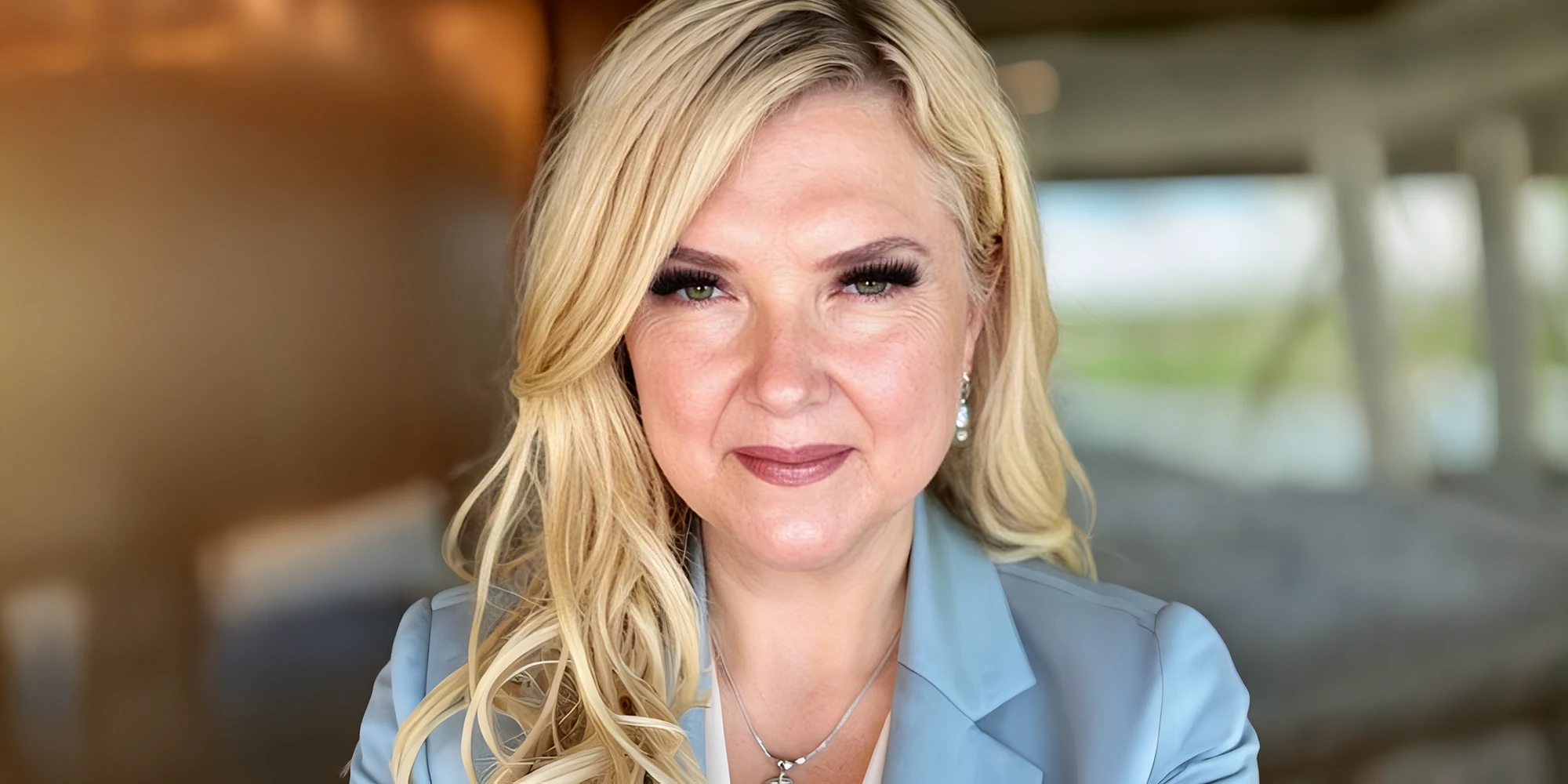
In this episode of The Curiosity Current: A Market Research Podcast, Molly Strawn-Carreño is joined by Lisa Wilding Brown, CEO at InnovateMR. They discuss hybrid research methodologies, human-powered sampling, and how to protect data quality in an era defined by speed, automation, and AI.
Drawing on more than two decades in digital research, Lisa explains why quality exists on a spectrum and why fraud is only one piece of the equation. From survey design and respondent experience to field time compression and incidence rates, she outlines the trade-offs researchers often overlook when prioritizing speed. With nearly half of global online traffic estimated to be non-human, Lisa emphasizes that quality is a shared responsibility between researchers, sample providers, and technology partners.
The conversation also explores the strategic thinking behind InnovateMR’s acquisition of Ivy Exec and the growing demand for hybrid qualitative and quantitative solutions. By integrating expert networks with large-scale sampling, research teams can move beyond isolated data points and toward more holistic, forward-looking insights.
As AI continues to reshape workflows, Lisa offers a pragmatic perspective: treat AI as fit-for-purpose. Use it to remove repetitive tasks, accelerate iteration, and enhance operational efficiency. However, reserve high-stakes decisions for real human context and validation. AI can sharpen processes, but empathy, nuance, and trust remain fundamentally human.
The episode closes with a personal reflection on curiosity, risk-taking, and career growth. From aspiring journalist to CEO, Lisa shares why growth never happens inside your comfort zone. She emphasises how doing the hard, uncomfortable things often creates the greatest professional acceleration.
Episode Resources
- Lisa Wilding-Brown on LinkedIn
- InnovateMR Website
- Molly Strawn-Carreño on LinkedIn
- The Curiosity Current: A Market Research Podcast on Apple Podcasts
- The Curiosity Current: A Market Research Podcast on Spotify
- The Curiosity Current: A Market Research Podcast on YouTube
Transcript
Lisa - 00:00:01:
At the end of the day, we all like to work with people, and it's all about the people, whether it's our employees, or our clients or our partners. Ultimately, it's about forging really great relationships that you can trust and that you can count on time and time again. So, I don't ever want us, despite all the focus on tech and AI and all the kind of shiny cool things that we get to do in a digital space, let's not forget what's most important. And to me, it's the people.
Molly - 00:00:27:
Hello, fellow insight seekers. I'm your host, Molly, and welcome to The Curiosity Current. We're so glad to have you here.
Stephanie - 00:00:35:
And I'm your host, Stephanie. We're here to dive into the fast-moving waters of market research where curiosity isn't just encouraged, it's essential.
Molly - 00:00:47:
Each episode, we'll explore what's shaping the world of consumer behavior from fresh trends and new tech to the stories behind the data.
Stephanie - 00:00:53:
From bold innovations to the human quirks that move markets, we'll explore how curiosity fuels smarter research and sharper insights.
Molly - 00:01:02:
So, whether you're deep into the data or just here for the fun of discovery, grab your life vest and join us as we ride the curiosity current.
Molly - 00:01:13:
Today on The Curiosity Current, we are joined by Lisa Wilding-Brown, CEO of InnovateMR. Lisa has spent more than twenty years advancing the future of online research, from building global panels at USAM to leading InnovateMR's evolution into a powerhouse of high-quality tech-enabled sampling. To name just a few of her incredible achievements, Lisa is an Insights Association Laureate, a former member of SMR Council, a founding member of the Multicultural Insights Collective, sits on the board of directors of WIRE and SampleCon, was on the Insight 250 list, was a recipient of the Global Research Business Network's participant excellence program, and was named an MRS research hero in 2021. So, in this episode, we'll be exploring how hybrid research methodologies are reshaping the industry, why respondent experience remains a business advantage, and where human-driven sampling fits into the world increasingly powered by AI. Lisa, welcome to the show.
Lisa - 00:02:10:
Thank you, Molly. It's great to be here. Thanks for having me.
Molly - 00:02:13:
And I am also personally so excited that Lisa is joining us here today. We had the privilege of working together a few years ago during my tenure at Innovate, and I grew out of my shell a ton more and felt more confident to take on big things under her tutelage. And the trajectory of my career was absolutely helped by this woman, so I am so excited to have you on.
Lisa - 00:02:37:
Molly, thanks so much. That means a lot. That's everything to me is just getting to work with great people like you. So, I'm really glad that you had such a positive experience, and it's great to be on the show now. I love to see where you're going and evolving. This is awesome.
Molly - 00:02:49:
Yay. Okay. I know we can catch up a ton, so we're gonna have to hang out afterwards. But let's jump into the question. So, to start us off, we mentioned earlier that you have spent more than two decades shaping how data is collected, evaluated, and scaled across this digital research industry that we call home. So, before we dive into the nitty-gritty, how do you personally define quality insights in a landscape that continuously is demanding faster data, but also deeper answers at the same time?
Lisa - 00:03:18:
Yeah. I mean, I've been in the space since the early 2000s, and I started in the industry during a really interesting time when a lot of, we'll call it, traditional research, which have been done in person, via caddy, on phone, even paper surveys were still a thing back then. A lot of that was migrating to this new world of online research. It was really, at that point, kind of a real untested methodology. And so my role in those early days was to work closely with the methodology team, do a lot of research on research, and help really convey to clients that the online world was an area that we could really expand and get the benefit of of so many aspects of just the user experience and delivering agile research insights so much quicker than I think what historically had happened. And so it's been really interesting to sort of see that journey and see the online world really take hold. So, I'm dating myself now, certainly, but quality has really evolved, I would say, quite a bit. I've often talked about quality existing on a spectrum. When you talk about what is a quality insight and what are threats to quality. There's a lot of different flavors. I think most of the time, folks immediately go to the blatant elephant in the room, which is the cyber fraudsters, those professional survey participants that are leveraging technology that historically had very sophisticated skills, but I think there's been a democratization to survey fraud in recent years, and the increasing penetration of AI and all things AI. I think that helps to accelerate fraud in many ways, but that's just one angle, right? We could talk a lot about the threats of survey fraud and professional survey participation, but there's also a lot of other permutations or elements to consider, and that's the user experience. What is the participant seeing? What is that survey engagement, that instrument look like? How is it engaging or not engaging them? And then on the other end, you just have kind of, like, natural duplication that can exist if you're multi-sourcing, which I think is becoming more and more a common practice as clients are reaching out for very hard to reach low incidence population. So, I think the net net, Molly, is that there's a lot of different challenges to delivering a quality insight, and it starts with certainly working with great partners that understand best practices around survey research. We're very proud here at Innovate. We just announced our ISO certification for 27001 as well as 2022. We're really thrilled about that, but I think it's about not just saying that you are compliant with these best practices, but actually going through the process of certification, putting your money where your mouth is, and really walking the walk, is so critical. So, working with great partners to help guide you is, I think, mission-critical item number one. So, partnering with the right folks, but certainly looking at what are you trying to address, what business problems are you trying to solve for, really making sure that the why matches the then the recommended methodology and the strategy that you're gonna be employing is so key. And then it comes down to the brass tacks of data collection, the sample that you're using, the audiences that you're looking to go after, the survey instrument itself, the design of the survey is just so critical, and I wish I could tell you that surveys look a whole lot different than what they did when I started back in the early 2000s, but I would say that there's still a lot of really traditionally designed surveys out there. Pretty long in nature. There's still a lot of surveys out there that are over twenty minutes and maybe aren't as well optimized for mobile devices, for example. These are all really things that I think as an industry, we need to continue to pressure test. And, certainly, there's a lot of great companies out there that are doing some cool new things. But in terms of being fully embraced, that's always something that I think is pretty challenging. You’ve got to monetize those new products. You can't just have that kind of shiny product that looks cool and is more engaging for a participant if you're not able to really get the traction from a client perspective. So, I think there's a lot of discussion that needs to happen and a lot of socialization and education that needs to happen, but it really runs the gamut. But I think it all starts with the partners that you get together with, the design of the research, and really thinking about the participant experience, really making sure that the participant is front and center in all the decisions that you're making as you design your work.
Molly - 00:07:54:
Yeah. And I personally know how challenging those ISO certs can be because we've just been approved for the same ones here at AYTM, and it was an extensive process, but a super important one to ensure that we have those quality of insights. I feel like, to your point, we could go a billion different directions with all of that and drill down into so many things. But I wanna zero in on partners, specifically Innovate's acquisition of Ivy Exec, which feels like a signal to the whole industry that this future is not necessarily just about speed or just about depth, but rather it's a really important and dynamic balance of both. So, what kind of problems do you believe that this merger was solving, specifically for certain positions that you guys are now tackling?
Lisa - 00:08:40:
Yeah. No. That's a great question. We came together with Ivy Exec a few years ago. And to me, it was just the perfect marriage, and it continues to be a great marriage. We're all fully integrated now. And I think anytime you make an acquisition, it's really important to think about the culture of the business, the ethos of the business. How aligned are those two companies? Can they really come together to offer a great solution for clients and partners? It's one of those situations like one plus one equals three, or that you're really adding more value by coming together. And what we were seeing in the market, obviously, Innovate historically had been a quantitative sampling global firm, but really focused on quantitative solutions across a wide variety of different audiences. Anytime you sell a sample, you really have to be good at finding all types of audiences, whether it's consumer, or healthcare, or certainly B2B, which is, I think, the core speciality and area of expertise for us from a quantitative standpoint. But we were missing the qualitative solution. And what we were seeing from a lot of clients was that they were working with one vendor for qual and another vendor for quant, and sometimes a lot was getting lost in the fray. And by bringing those two methodologies together, we're really able to offer more of a hybrid solution where we're using Ivy's expert network, which is an incredibly high-quality asset for the business. It's a multimillion-member membership of true experts who participate in whether it's 30-minute or 60-minute IVIs. They participate in advisory councils, so more longitudinal engagements. We've done community recruitments, whether it's a short-term community or a long-term community. But the idea really is about finding that true expert that is high quality that you can get on a video call with or get on a phone call or even meet in a focus group facility to really glean deep, deep insights that are not only telling us what's happened, but most importantly, what's going to happen, that foresight that only true industry experts can give you. So, I think the idea now is, like, a lot of clients were coming to us with this challenge of, okay, I'm working with this vendor for qual. I'm working with this vendor for quant. Coming together really allowed us to offer a more comprehensive and holistic solution, where we might start off with some quant work on the front end that helps to then later inform the quantitative design of a survey instrument or vice versa. So, we start with quant, and then we do a deep dive from some of those participants via qualitative interviewing. And it just really brings and stitches the story together and gives a very, again, number one, holistic view, but just allows our clients to get to a deeper level of insight. And so it's been a really wonderful marriage, and we're continuing to grow together and really help our clients think big and think outside the box. And so now, outside of just community recruits, we're also doing recruitment for AI models. I know we're gonna talk a lot about AI. It's a bad topic now in our industry and other industries, but I think it's really interesting to see that evolution, this idea that, if you are, I think, historically, a lot of AI is kind of seen as this black box. It's like, how is that working, and how can I drive those insights? And so what's really important for any LLM is that you have very high-quality inputs going into those models to then yield the high-quality output. If it's garbage in, guess what? It's the garbage out. So, because of our focus on quality, I think that's been a real answer for many clients as they start to think about their AI strategy. So, I'm excited to see where it goes.
Molly - 00:12:14:
That's super interesting. I wanna definitely come back to that because I know we have some stuff later on that when we're talking about AI, but I wanted to go back to what you were talking about. And just a side comment, we've definitely heard in the industry that there's a lot of clients that say, I would rather go with one vendor that is an A+ plus in something, but then a B in everything else if that meant that I got all my research, everything that I needed, they understood the nuances of my needs in one place rather than all these kind of little disparate solutions.
Lisa - 00:12:43:
Yeah. No. I think it's always convenient. I mean, I hear that from a lot of clients. So, I think if you think about it from a sampling perspective, we can't be everything to everyone. I think there are definitely areas of specialization that every company should have and hang their hat on. But I think when you are in the business of selling samples, you have to be really great at finding lots of different types of audiences. So, you can be that kind of one-stop solution for clients. But I do think there's a lot of multi-sourcing that's going on in our space. I think a lot of agency clients in particular have a lot of pricing pressures, and so that's certainly something that I think we've all felt, especially over the last few years, given the dynamics, socioeconomic dynamics of our country and really the wider globe, really. It's just been a weird time over the last few years since the pandemic. I don't know about you, but, like, the last five or six years have just been different from earlier years in my career and brought with challenges, and it feels more unpredictable than it might have been in years past. But I do think that clients are feeling a lot of pressure, and so they do go to a multitude of different vendors. But I know from talking with a lot of clients that that feeling of being spread so thin across so many different vendors brings a lot of challenges. I think the upside is that it gives you a lot of optionality, it allows you to work with specialists when it makes sense, it allows you to make sure that you, you know, got great feasibility, and you got great reach. If one vendor lets you down, you've got more vendors kind of in the background that can take the share. So, I understand it from a business perspective why it makes so much sense, but I do hear from a lot of clients that many of them are going through this process of really trying to consolidate their vendor and partner list so they can be smarter. They can benefit from that sort of consolidated spend. A lot of companies out there are spending a lot on sample and other ancillary services around sample. And so really being intentional with that spend can help them create savings, create learnings, create that sort of repeat partnership where your reports really start to build. You really start to understand what clients need, how they like to be communicated with, and then speed is obviously what prevails through that, right, as you become more efficient, you become more agile, you deliver insights that much faster for your clients by having those strong partnerships in place. So, I think partnership is so important. And despite all the technological advancements, whether it's a really advanced algorithms and programmatic APIs or DIY platforms, whatever, you name it. At the end of the day, we all like to work with people, and it's all about the people, whether it's our employees, or our clients, or our partners. Ultimately, it's about forging really great relationships that you can trust and that you can count on time and time again. So, I don't ever want us, despite all the focus on tech and AI and all the kind of shiny, cool things that we get to do in a digital space, let's not forget what's most important. And to me, it's the people.
Molly - 00:15:44:
Absolutely. And that's not just the partnerships, but I know that Innovate often talks about this idea around human-powered sampling. So, from top to bottom, it's important to be working with people. And like you said, there's so much tech and automation that's everywhere and is taking over, and people can get very obsessed with the technical, the automation side of it. So, what does it really take to keep that human element at the front and center, especially in panel engagement and when it comes to data integrity?
Lisa - 00:16:14:
Well, I think you've gotta remember that there's no silver bullet. There's no quick fix. You gotta put in the work, whether it means hiring the right people, how are you vetting candidates that come in through your front door as you're looking to fill open roles, being really careful and thoughtful around what makes sense. A person can have all the right skills, have a really impressive background, but maybe they're not the right culture fit. I saw something interesting recently. It talked about, they called it the OOBA framework, and they said, “As you're looking at staff and the employee experience and the employee value, you've gotta think about it outside of just doing the actual work.” When you start to think about people's value and what they bring to the table, you really need to widen the view you have around that output. And so it's really about what outputs are they creating, what outcomes are they creating, what behaviors are they demonstrating, and what attitudes are they bringing to the workplace. So, some of those, like soft skills, we talked about EQ and empathy and being a great listener and being sensitive and kind in your interactions. Like, that is so important. So, I love this concept, this OOBA framework. So, O-O-B-A: output, outcomes, behavior, and attitude. When you start to think about what you want out of folks that you might bring on to your team or partners that you work with, and thinking outside of just what are they delivering for us as a business, or what are they selling to us as a business, it's really to be seen on a much more holistic level. But I think it really starts with training and development as well. So, once you get the right people here, how are you setting them up for success, and what does that training look like? It shouldn't just be two weeks of onboarding, and then our job is done. We'll also be ongoing education, and that education should be varied. It shouldn't, again, just be about the duties of the job. You have to think about some of these other aspects around soft skills that are arguably just as important in a digital world that we operate in as they've ever been. And more challenging, though, because we're both on this podcast today from our home offices, so we're not in the same room together. And historically, a lot of that interaction was in person. And as we've kind of evolved in this industry, and with COVID, certainly, and there's a lot more remote work, which certainly has its benefits for us as people and as moms and wives. But at the same time, I think it puts us on our toes a bit more. We have to be more thoughtful and more intentional in how we show up for each other as colleagues. And so, really focusing on that training and development, that's been something that's been a really big area of focus for us over the years, as well as career pathing. Even when you and I worked together, Molly, we used to talk about, where are you headed, Molly? What does the future look like for Molly? Like, I'd be naive to sort of say that I expect folks to stay with us forever. I get a moment with the people that I work with, and that moment could be a year, it could be 5 years, it could be 10 years. I've worked with some people for 15+ years. I have a client where we've worked together since 2003. We really know each other on such a deeper level at this stage, and so we shouldn't forget about the people piece. I think that's so important. But also recognize that in this world, whether it's because we're geographically so spread out and/or working in these remote, isolated environments, I think it really needs to put all of us on our toes to be that much more thoughtful and that much more intentional in connecting as real people. So, to me, that's what that means when you sort of say keeping it human-centred. Let's not forget that the magic is in the people that we get to work with and partner with, and how do we help them bring their best selves to work and their best selves to an engagement, whatever that might look like.
Molly - 00:20:08:
Yeah. And I think it's, kind of, this remote environment is a little bit of a catch 22, because to your point, we're across the country from each other, and we've met in person. I could probably count it on one hand, even though you've been such a wonderful mentor and friend for all these years. Same thing with a lot of my managers and coworkers at Innovate. And also, here at AYTM, my direct supervisor is in Arizona, and then I have colleagues in Florida and North Carolina. And I love those people, and I wouldn't have been able to meet them otherwise. Like, if we had just had one office in Los Angeles, I would not know those people. But at the same time, I don't know the depths to them as a person, like perhaps when I worked in an in-person office. So, it definitely is, you get more exposure to people. It obviously widens your bucket of talent that you can pull from when you're hiring for roles. So, it just requires, like, to your point, intentionality about making sure that you're making those genuine connections. But there is a part of me that does kind of miss being in an office and knowing what everybody did over the weekend and, like, to see somebody as a whole person. Because when we're in a meeting, you're bringing your best self to the meeting, and there's normally an objective, and there's normally, you know, something you're supposed to be accomplishing versus, like, do you guys wanna go get Mexican food? You know, I do really miss that as much as I do love being at home and present with my husband and my son, but I don't know. There's a little part of me that does still miss that.
Lisa - 00:21:35:
I don't think you're alone. I think just from talking with a lot of folks across all generations, I think a lot of them have suggested that, oh, it'd be so nice to kind of have more FaceTime. And that's the thing we really have been focused on is how do we create more opportunities to meet up in person. We had a great off-site with our leadership team last year in Miami and spent several days together, and it was just so nice to be together in person. But also, just when we're talking with our sales team, how often are they getting on the road? That's something we talk a lot about, is, like, let's not forget that even though you can do it online and do it digitally, sometimes it makes sense to jump on a plane and go sit across the table from your client or your partner, have a cup of coffee, and talk shop. It's valuable in my mind. So, I think, again, we don't wanna lose sight of the opportunity that meeting face to face can have too. Albeit, it's not gonna be as frequent as maybe what it was when we were all in offices back in the day, but I still think those moments can be so rewarding and help to really accelerate business as well.
Molly - 00:22:35:
It's like a celebrity moment for me because I've always seen you on a TV screen. And now I see you in person, I was like, this is a celebrity. I'm meeting a celebrity. Well, I wanna pull us back to talking about data quality, which is, I know, your bread and butter, and we could talk about all day. But the industry, I feel, has never stopped talking about fraud and speeders and bots and declining panel trust, all of those things as we enter new ages. At first, it was DIY, and then it was automated tech, and now it's AI. That's still a continuing and evolving concern and discussion. So, from your perspective, what's perhaps, maybe, the most common misunderstood cause of poor data quality? So, when we have clients that are going and trying to say, I want the best data that I can get, but perhaps they're approaching it the wrong way or not taking something into consideration. How do you think that researchers can perhaps rethink their role in addressing and fixing those issues?
Lisa - 00:23:33:
That's a great question, Molly. I mean, I think the first thing is that there is no magic silver bullet here. There's no quick fix if we're talking about cyber fraud and the sophistication of cyber fraud. And, you know, I always go back; there's a couple of stats. There's a report from a company called Imperva. I follow them pretty closely. They put out an annual report every year, and last year's report indicated that close to 50%. So, 1 out of 2 clicks online today across the world is not real. It's not a real human being. 1 out of 2 clicks, and that's where we're all fishing to find people to participate in surveys. Okay? So, it's messy out there. It's high risk, and that is going to continue to go in a direction that's gonna be challenging. I think point number two, outside of there's no quick fix, is that we all have a collective interest to make sure that the data quality that is produced at the end of whatever project you're doing is of the utmost highest quality. And there is a shared responsibility because guess what? None of us are ever gonna solve cyber fraud. So, 1 out of 2 clicks online isn't real. If you were to quantify the global cost of cyber fraud, this is another interesting factoid. The first time I saw it, it shocked me. If you were to quantify that, not just our industry, but across all industries, the global cost of cyber fraud, if you were to, kind of, calculate that as a GBP, gross domestic product. The third largest economy after the U.S and China, like let that sink in. So, we're all fighting the good fight here, but anyone that says they've solved it is being really disingenuous, and you're only as good as your last project. So, when I talk to folks, it's really about recognizing the realities that it's not going away, none of us can say with confidence that we've solved for it, and so we have to go in eyes wide open and that starts with education, transparency, talking about it, sharing the knowledge, talking about what those risks are and really seeing it as a shared responsibility. So, we all have a part to play. Certainly, those that are procuring the audiences that go into these surveys have a huge responsibility and duty of care to their clients. So, that starts with making recommendations around sourcing or even methodology. Like, there are certain audience profiles that we'll see from a client. They'll come to us, and they'll say, “Hey, I've been doing this study online. I've been buying a sample through some platforms, and I'd love to give that to you guys.” And I'll give one look at it, and I'll say, “This shouldn't even be done online. This should be sourced via Caddy because you're going after such a low-incidence population.” It really requires that kind of niche, targeted, focused approach. Because if you do it online, you're gonna have to cast a really wide net, and you might, again, kiss some frogs to find the prints. We'll get those sorts of false qualifications, false positives that can really create damage in your survey results. So, thinking about the methodology. And then the other piece too, in that example I gave you, if it's been done online and you're switching to a mode that has different implications in terms of the survey participant experience. How you're counting in an online self-administered survey is very different than as you're participating with a phone interviewer and hearing these things versus visually seeing them. So, modal changes have a really big impact on results as well. So, I think it's just really about working through some of those challenges, making sure that you're giving the right recommendations and helping clients understand what are the trade-offs that you're making. So, you want this done in two days. Well, this is a really low-incidence population, so we're going to have to cast a wider net. Or have you thought about expanding the field time to ensure that you're getting a more representative sample, that you're taking into account that this particular audience may be more likely or have a stronger proclivity to take surveys after hours or on the weekends? Those are all sorts of implications, and so I think it's really about, again, working with the right partners who are gonna make the right recommendations and recognizing that there isn't a magic quick fix. And then in terms of what clients can do is, I think, again, being open to feedback, bringing sample providers in earlier in the engagements. I think that's a little bit of one of my pet peeves is that often sample is sort of an afterthought. It's sort of like, okay, my survey is designed, it's programmed. Now let's go out and get our sample and let's get in field today. So, I think a lot of times, field collection is compressed. You might take weeks and weeks and weeks to divine design the survey instrument itself, but you're giving three to five days for data collection. If we sort of step back and think about the overall flow of the project and our objectives, I would challenge that you might wanna reconsider that, depending on the audience that you're going for. Faster isn't always better. Faster comes with cost and trade-offs. And I think, again, it's very important to consider that. But I think the ultimate element that clients can help with, or anyone that's buying sample, is to really think about the design of your survey. What are you asking of respondents? How long are you requiring their attention? Keep in mind, at this stage, human attention spans are even less than that of a goldfish. So, there's so much coming at us. We're so digitally fragmented, whether it's our tablet, our TV, our computers, our phones. We're constantly being pulled in so many different directions. So, I think meeting respondents where they are, keeping in mind that what we're asking of them, do they wanna complete 15 open-ended responses in a quantitative survey, or could we reapproach that design and think about that in a different way to still capture great colorful insights, but maybe also balance it with what we're asking of participants? I think that should be more of a focus than what it has been historically.
Molly - 00:29:36:
Yeah. Absolutely. All I'm thinking when I'm hearing all of this is, wow, it's been a long time since I've worked directly with sample. This is like all coming back to me. And I think you mentioned too about humans. We're continuing to go back to the same of humans being super important, but it's in this world where everybody in our space is racing towards AI-powered data collection and analysis. Where do you see that AI is offering a true value to research, but where do you also feel that the line should be drawn in order to protect context, empathy, human nuance, a lot of these important things that's essential for researchers to be capturing?
Lisa - 00:30:15:
Right. Well, just like there's no magic bullet to solve cyber fraud, I don't think AI is the magic bullet that's gonna solve all of our deepest insights challenges. I think it's really about thinking about AI as fit for purpose. There are certain elements where AI can help create more efficiency for our teams, can help them reserve the headspace and the mental bandwidth to focus on other elements of their role that AI can't do. So, we're doing a lot of redundant, mundane activities. To me, that's just right for AI to help supplant those really repetitive processes so that you can free yourself up to focus on the things that are uniquely reserved for the human brain. So, it's about fit for purpose. I think as AI continues to get more attention and become more well-established, I think it's really about trying to understand where it fits in your repertoire of research solutions. Maybe it's more top of the funnel research, so some early concept testing, package testing to sort of validate some of those early theses and then go into real research with real humans to then subsequently validate that. So, it's not, sort of, choose AI or human, it's how do we marry these two to not only create efficiency, but also, maybe reserving the big burning business questions for human-centered sample collection and data collection. But some of those early, iterative, preconcept ideas that need further testing can be done through synthetic, for example. So, it's not a one-size-fits-all. I think it is absolutely fit for purpose. And I saw an interview with Jeff Bezos last year, he was talking about AI more as, like, think of it almost like electricity. Like, it's a layer that feeds your entire organization. So, it's not like this AI product here is going to be the end all be all. It's really about how do we inject AI into various areas of our business to help, again, help our teams be that much more accelerant in what they're doing and more efficient and really deliver better quality outputs, whether it's the interactions they're having with clients or the insights that they're delivering. It's really not an either-or; it's sort of an and in my mind. And I think it's important to really lean into it, Molly. Like, we've got to lean into it. I think there's still so many businesses and folks in the space that I've personally spoken with that are seemingly a little resistant to it, and I worry about leaning in and figuring out how to inject the benefits. So, for example, we built a tool. I'm sure you remember our text analyzer tool. So, this is a tool that we built selfishly for ourselves many years ago to evaluate open ends in real time and check for things like gibberish, and duplication, and speeding, and then to even measure how contextual the response is to the actual prompt itself. Now with AI, we've been able to really accelerate that tool to make it that much more intuitive and the context measures to be that much more accurate. And we've most recently injected the ability to detect AI. So, we're like, it's very meta. Like, we're using AI to catch the AI. And so it's really interesting. And so that's creating more efficiency and better, higher quality for our clients and more confidence with the participants that we recruit into surveys. So, that's just a use case, but I think we gotta lean into it and figure out the right applications and encourage our teams to leverage it wherever they can.
Molly - 00:33:52:
Absolutely. I love that you talk about using it as that iteration process. I find that I do that all the time with it, too. It's just thinking through some thoughts, like a little brainstorming partner, and then asking truly what I need from human stakeholders. So, that's super fascinating. Well, in the last few minutes that we have of your wonderful time, Lisa, I wanted to talk a bit about you and looking over your journey from operations to now, CEO for the namesake of our podcast? Where has curiosity led you to take risks that perhaps didn't seem obvious at the time? And how do these choices that you've made for yourself shape the way that you lead an innovative company today?
Lisa - 00:34:33:
That's a great question, too. Well, I love the name of your podcast because I think it's all about being curious and also being a great listener, right? We got two ears, one mouth for a reason, so we can listen more and talk less. Although I've been doing a lot of talking on this podcast, but you're a great listener, Molly.
Molly - 00:34:49:
Just like a pivot, I've heard you say that many times, and I'm not gonna lie. It has stuck with me.
Lisa - 00:34:54:
I really subscribe to that because I think there's so much power in the art of listening. It's a form of data collection, really and truly, right?
Molly - 00:35:02:
Oh my gosh. Bringing it back. I love it.
Lisa - 00:35:06:
So, I have always been a very curious person. I think I get it from my mom. I think I love to ask a lot of questions, and so I actually went to college. I had the idea to, I wanted to go into journalism.
Molly - 00:35:18:
Shout out to journalism, girlies. Right.
Lisa -00:35:22:
I really wanted to be, like, the next Connie Chung or Barbara Walter if people listening in are old enough to know who those two folks are. I just used to sit at my dining room table, my parents' table, and pretend to read the news. Like, I was obsessed. I really thought that was the career for me, but I found my way to market research. And at first, I was like, well, this isn't really what I went to school for, but so many of the applications within research were sisters to journalism. Ultimately, a reporter or journalist is looking to get to the why, the what, the where, the when, and the who. They have so many questions, and they're so curious. You need that in your very fiber as a person, I think, to be successful in that field, and the same is true in research. So, if you have a curious mind and you love to understand the why and what makes people tick, what makes products tick, what's the next thing, where have we come from, where are we going, like, those big, broad questions, then this is absolutely the field for you. So, once I landed in market research, it definitely got its hooks into me. And it filled my tank up in a way that I thought journalism would have, but I got sort of ticked that box here in the research industry and never looked back. I would say it is important to take risks with your career. There's another saying that I always go back to that I'm sure you'll remember, Molly, but a comfort zone is a beautiful garden…
Molly - 00:36:43:
But where nothing grows.
Lisa - 00:35:24:
Right. You have got to take risks. You've gotta do the hard things that no one else wants to do or the hard things that others are almost too afraid to do. So, for example, getting up on stage, putting that submission paper into an association or a conference group to get up on stage, I know that's probably, like, the number one fear people have is getting up on stage and speaking. I still get nervous. My hands start to sweat, and I start to feel, my heart starts to pound. You get, like, these physiological reactions that you can't always control because you're nervous, but the nerves need to be harnessed for positivity. The nervousness is just a signal that your body is sending that you really care and you wanna do a great job at whatever you're putting your head to. So, do the hard things. Do the scary things. Take those risks because that's where the growth is, and that's typically where the career opportunity is, whether it's an opportunity to expand your network, to meet that new colleague at an industry conference who's gonna give you your next great gig or introduce you to some awesome client and bring value to. There's just a lot of opportunity laying around there behind every corner, and you have to be brave. So, doing the brave thing, even if it's so uncomfortable, fighting through that kind of dissonance is so critical, I think, for the growth. And I think that's been something I've really reminded myself of. Because we're, as human beings, we always have that feeling of wanting to play it safe, or I'm not really credentialed to do this, or I don't have the agency to do this. But it's the ones that lean in and figure it out along the way that continue to grow and evolve and take their careers to the next level. So, for those listening in, if you're afraid, just convince yourself that you're gonna get through it and lean in, and you might really surprise yourself. I know I have throughout my career. So, keep striving. Keep doing the hard stuff.
Molly - 00:38:38:
That makes me feel slightly better about my sweaty hands before I join a podcast. It still happens to me. Granted, I haven't been hosting super, super long, but definitely, before we get in, we have a prep call beforehand, and I'm, like, trying not to hyperventilate. And I'm, like, getting my, and my heart starts going for sure, and I'm, like, pretty sure I black out for some of it.
Lisa - 00:38:59:
You just have to normalize that. Just that's normal. That is the number one fear that people have: public speaking. And so you just have to say, this is just a signal my body is sending me to tell me that I care. And isn't that great to be able to do something you really care about and wanna do a great job at?
Molly- 00:39:15:
You are consistently an inspiration, Lisa. Thank you so much for your time and for hopping on with me. You've been a wonderful wealth of knowledge, and again, I'm so personally happy that I get to spend this time with you.
Lisa - 00:39:27:
Thank you, Molly, so much for having me. And I just have to tell you, I'm so proud of you. You've really grown in your career, and to see you doing this podcast now, and now as an SMR rep, like, it's amazing, and I'm just I'm proud of everything you've accomplished, and I'm so grateful to have you in my life and to know you. So, it's great to see that you are continuing to grow and accelerate. I love it.
Molly - 00:39:48:
I'm giving you a hug through the screen.
Lisa - 00:39:51:
Hugging back.
Molly - 00:39:52:
Alright. Well, thank you so much again, and we'll catch you on the next episode, listeners. Take care.
Outro - 00:39:57:
The Curiosity Current is brought to you by AYTM. To find out how AYTM helps brands connect with consumers and bring insights to life, visit aytm.com. And to make sure you never miss an episode, subscribe to The Curiosity Current on Apple, Spotify, YouTube, or wherever you get your podcasts. Thanks for joining us, and we'll see you next time.



.jpeg)


