


Description
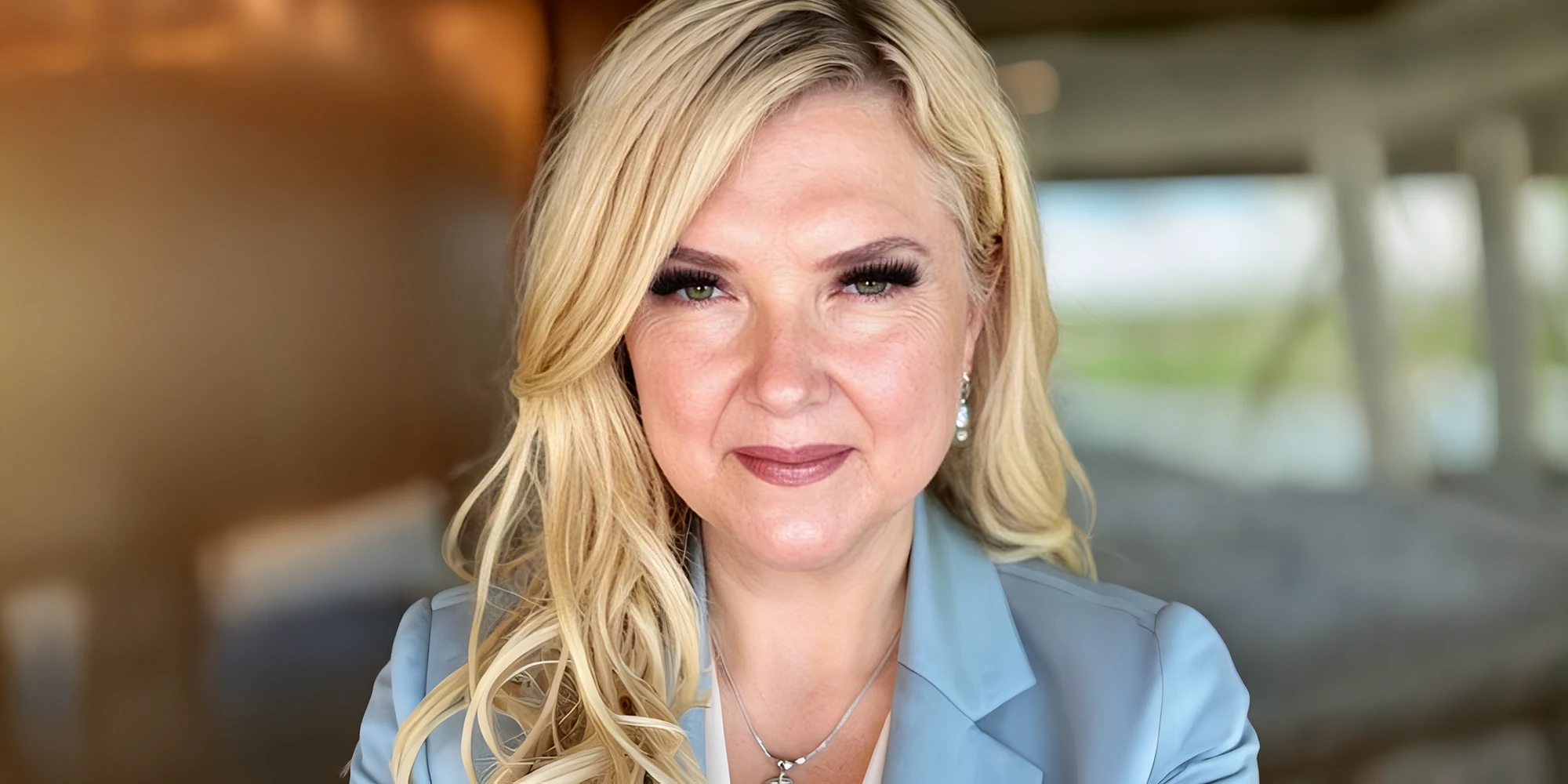
In this episode of The Curiosity Current, Stephanie and Molly are joined by Brooke Reavey, Professor of Marketing at Dominican University and founder of the Marketing Research Competition. They discuss the growing disconnect between academic training and real world experience in market research, and why breaking into the field is becoming increasingly difficult.
Brooke introduces the idea of a “bystander problem” in the industry, where companies assume someone else will take responsibility for training the next generation. As internships and entry level roles decline due to automation and structural shifts, students are being pushed toward expensive degrees without gaining the hands on experience needed to succeed. The conversation explores what is lost when practical training disappears, including diversity of thought and long term innovation.
Brooke also explains why foundational learning still matters, and why overreliance on AI can weaken critical thinking. The episode closes with a look at solutions, including apprenticeship models, industry accountability, and the role of initiatives like the Marketing Research Competition in bridging the gap.
Episode Resources
- Brooke Reavey on LinkedIn
- Dominican University Website
- Stephanie Vance on LinkedIn
- Molly Strawn-Carreño on LinkedIn
- The Curiosity Current: A Market Research Podcast on Apple Podcasts
- The Curiosity Current: A Market Research Podcast on Spotify
- The Curiosity Current: A Market Research Podcast on YouTube
Transcript
Brooke - 00:00:01:
Writing a report, any kind of report, is the most critical part, and it is so difficult to teach. There's no formula because every single question you ask is gonna be different. It's like telling somebody, like, how do you write a novel? Well, I mean, there's a formula kind of, but you need to do the stuff that gets into it. And so that's what started it. And since then, we've reached over 600 students all across the country. We've been able to work with big state schools, a lot of really smaller, rural schools. And, honestly, it's a life changer for a lot of students. It's one of those high-impact practices that the students will think about forever.
Molly - 00:00:39:
Hello, fellow insight seekers. I'm your host, Molly, and welcome to The Curiosity Current. We're so glad to have you here.
Stephanie - 00:00:47:
And I'm your host, Stephanie. We're here to dive into the fast-moving waters of market research where curiosity isn't just encouraged, it's essential.
Molly - 00:00:56:
Each episode, we'll explore what's shaping the world of consumer behavior from fresh trends and new tech to the stories behind the data.
Stephanie - 00:01:04:
From bold innovations to the human quirks that move markets, we'll explore how curiosity fuels smarter research and sharper insights.
Molly - 00:01:13:
So, whether you're deep into the data or just here for the fun of discovery, grab your life vest and join us as we ride the curiosity current.
Stephanie - 00:01:22:
Today on The Curiosity Current, we are joined by Brooke Reavey, Professor of Marketing, John and Jeanne Roe distinguished professor at Dominican University, and founder and president of the marketing research competition.
Molly - 00:01:34:
Brooke is one of those rare people who moves fluently between academia and the real world of research. She's a professor, textbook author, editor in chief, two-time Fulbright awardee, and a long-time advocate for making market research more accessible, practical, and relevant for the next generation.
Stephanie - 00:01:52:
Dominican Brooke teaches marketing research, digital marketing, and sales with a strong focus on applied analytics, ethics, and decision making. She also serves as a research fellow in the Brennan AI Innovation Hub, where her work centers on responsible use of emerging tech and data-driven thinking.
Molly - 00:02:09:
Today, we'll explore what's happening to the entry points into market research, why so many students are struggling today to get practical experience, how AI is changing both learning and the complete profession itself, and what it will take to keep the human side of insights alive in a much more automated future.
Stephanie - 00:02:27:
Brooke, welcome to the show.
Brooke - 00:02:28:
Thank you so much for having me. I appreciate having to be able to talk to you guys today about all of this stuff. It's all very relevant. I'm super excited to chat about it.
Stephanie - 00:02:38:
Brooke, you spent years working in market research before stepping back to pursue your PhD, and then it seems like you built an entire academic career around the mission of making research education more practical and applied, which is music to my ears. Looking back, when did you realize that helping students actually do the work, not just learn about it conceptually and theoretically, was gonna be such a central part of what you do?
Brooke - 00:03:02:
So, I'll have to say that I went in with this idea. I was working at TNS at the time, and I had spent years learning with my master's at Temple about how to do all this advanced analytics and how to do all these really cool techniques. And I was so, wouldn't say upset, but, like, frustrated that nobody wanted to do the advanced analytics. And I was told that it's oftentimes because the person that's asking for it needs to feel confident when going to sell that solution and the knowledge base to the rest of the other stakeholders in the company. And so I thought, well, I'd love to be able to teach that. What if I were to go out and teach and make all these people be really energized about it, and they could feel more confident doing it? And I recognize, you know, that was a very naive perspective. I was in my early 20s. But at the same time, that's also just kind of who I am. Like, well, if somebody's not gonna do it, then I'm gonna do it myself. I'm gonna build it myself. And so I went in, got my PhD I joke with my students, but don't joke with my students. So, I took for my PhD program, I took at least twice as many statistics classes than marketing classes. And, again, I learned all the super advanced stuff, and now I'm teaching t-tests, ANOVAs and correlations. And so then what started happening was that I realized that when I had left the marketing research industry in 2007, that since then, the world has completely changed. And all the practices of what was going on in market research from that point on were totally different. So, it's not that my master's degree is worthless, and it's not that what I learned in the decisions I made, but the way that we digest and discuss information has changed so much that I wanted to be more involved with the industry. And that's at the point where I started working more with the Insights Association, with AMA, and really understanding more about what modern market research practices look like. And then that's also when I wanted to create something that was more national level for the students to be able to get a chance to understand what types of questions people have in marketing research. Most of the textbooks center on satisfaction, which is a good starting point for the students, and it's a very normal business practice. But there's other questions that we have and that, you know, I try and explain to them, like, say you were working for a CPG company and you realize that a lot of your sales are going down because of Instacart, and you wanted to know how can you create a new logo or a new product so that it would look better on a thumbnail as opposed to in comparison to the other types of products. And so those are the types of questions that you have to test. You know, you don't really wanna go through and spend a ton of money on that without testing it first before you make that national rollout. And so the students understand that, but we're also just at a very, we're in inflection point with knowledge information transfer that's very different in the sense that it is rare for my students to come across a question that they don't realize that they just can't Google. They have been googling questions and answers for things for a long time, and that was enough to get through school. And as they advance through into the, like, juniors or seniors and then going into the master's program, they also are, you know, starting to realize, like, oh, yeah. We do actually have to figure this out on our own. That's the reason why. It's like, what are the questions? What are you actually trying to figure out and why? And then how do we get that information?
Stephanie - 00:06:20:
That's so interesting. I'm really blown away. I don't have a formal market research education. That's not my background. And it's so interesting to hear that the focus starts at, like, satisfaction, because I would have just intuitively thought you would start at a place where research influences product outcomes or something earlier, because I would hate for that to be where I actually started research, because that would be a terrible place to start. You know what I mean? Just because it's at the end of the cycle, and why wouldn't we want to influence design earlier? So, that's fascinating, and you know that.
Molly - 00:06:51:
I wanna talk a little bit about those training grounds that you mentioned about how what is learned in the classroom, like Stephanie was just saying, is completely different from perhaps what they'd experienced working in the industry when they actually get out into the workforce. And you've spoken a lot in different engagements that you've had that this idea that the front door to the market research industry is getting narrower, that internships are disappearing, these entry level roles are becoming more few and far between, and people are pushed perhaps towards an expensive advanced degree just to get started rather than your path of experiencing a little bit and then going back for some additional school. So, from where you sit, how serious is that talent pipeline problem right now?
Brooke - 00:07:40:
You know, I haven't written about it formally, but I call it the bystander problem. I have to say, we have a bystander issue going on in market research. And if you recall, this is where, if you're in a crowded area and a bunch of people are walking by somebody who's fallen down, the assumption is that somebody else is going to take care of it. And so what we are dealing with now with all the layoffs and with all of the agencies, more or less, you know, they were these huge pipelines, and they're getting squished down, laid off. And then a lot of the folks that have all this knowledge and information are creating their own, serving as freelancers. They are not the ones handling the pipeline of interns. So, marketing research has always been very practical. It's been the most practical of any of the types of, well, I'm sure advertising would disagree with me, but I would say it's one of the more practical areas of marketing. It is very much process-oriented. You know, we often say that when I'm teaching it, it's much more like the students should think of it more like an accounting class than they should a marketing class because it's not theoretically driven aside from the scientific method. It's very much process oriented of, like having rules, and you have to think through the critical thinking of, like, where am I gonna find these people? Who are these people? How do I make sure that these are the right people? And kind of focus more on sample stuff, but then being able to answer the questions, it does go into much more of a, I guess, deep thought kind of, an idea where what you put into the equation is going to equal the output. And so we have always relied on the knowledge that we have and the experience that we have, and we've always had more experienced researchers teach the younger people, much like you would in an apprenticeship. And so if we cut off that pipeline of what we've always allowed to happen, it's gonna be, you know, 10 years down the road, as people are starting to retire and are going to want to pass off their company to somebody. They're not gonna have anybody trained to be able to take it on. And so what we're seeing now and what I've been kind of talking about for a little while is that the assumption is that somebody's going to fix it. But nobody is out there right now actively trying to fix it because we are automating all of the processes that beginning researchers would take, or we've eliminated their methodologies. So, it was not unusual back in the 90s and actually earlier than that in the early 2000s that you would be working in a phone room, and you'd be calling people and doing surveys, and then you would move up along the ladder of being manager of the phone room and then potentially serving as a junior project director or project director. And so you didn't need to have even a bachelor's degree to be able to get promoted and to be able to run these studies. Now, to be the analytics part, yes, you needed to have a degree, but it was very common for people to say that they fell into market research. And that's not as likely these days for early entry students. We hear much more often that they had to get a master's. These masters' are not cheap. So, what we're doing in many ways is that the students are subsidizing the companies for entry-level positions. So, what normally a company would do is they would invest in somebody to work for a year or two, get the experience level of, like, what I've started off with doing, which was, like, checking tabs and checking reports and listening in on meetings and, you know, having conversations. We're now asking for the students to go into debt, and to do that to be able to then at least start at that next level. But morally, ethically, you know, there's a lot of issues with that, and it also decreases the level of diversity that we can have that comes into the pipeline, right? So, if we're only asking people, if we're saying that it's a gigantic barrier to entry, and the folks that are really operational experts and the folks that are very good at rating reports and all that, typically speaking, they either have a master's or they are experienced researchers. And if you ask if people have been around for a long time, so, you know, when I started, 26 years ago, they didn't necessarily have to have the same background as you do now.
Molly - 00:11:19:
Yeah. I think you brought up a really interesting point, I suppose, I didn't consider, which is that a lot of those roles are being automated, and there's a requirement to come in at a higher level. Are you finding that things in the industry, mentorship programs or networking events, or I'm very involved in the industry, in the Insight Association, Women in Research, SMR. Are those opportunities not translating into entry-level roles or other positions in market research companies?
Brooke - 00:11:48:
Good question. When marketing research first started being taught at the university level, which was in the 1940s and 1950s, around then, it was taught as how do you go into the profession. And so it was always taught, and even when I was in school in the 90s, it was taught as this is what you do. And when you come across a question like this, you find a vendor, and you give it to the vendor, and then they'll run off with it. It's the same as when you were doing advertising in a class about advertising. This is the process. This is the strategy. And when you have a question, you find an advertising agency. And so that's just how it has historically been taught. But what we're starting to see now is that there are more folks that are not either in marketing, have never had a marketing class, or just went into digital marketing or other areas, maybe just maybe management, that have access to customers and are now running it themselves. So, a lot of this information, because of the fact that, you know, like, definitely appreciate aytm, but a lot of these platforms that have made it so accessible have also made it so that there's just less need to go and work with the big agencies. But to go back to your original question about the pipeline, there are 500-plus schools in the U.S that offer marketing as a major. And you have to assume that with all the majors that are out there, let's say, at any given moment, there's 12,000 students across the U.S that are learning about marketing research. It was supposed to serve, and what it had served for a very long time was a platform to decide this is the job and the career that I wanna take on when I graduate. And so it was always difficult to get in. And I'm not saying it was an easy industry to break into, but there were more opportunities because there were more call centers, and there were more localized places and smaller firms and boutique firms than there are now. And so it's just been decreasing. It's been a decreasing trend for at least a decade, to it's just harder and harder to get in. And so even though I'm outside of Chicago, it is exceptionally hard for my students to get internship roles. You know, they're competing with a lot of other schools around here. And some of the schools have more types of relationships with this school, the alumni association. We have other competing processes. And so, as many students as I've had over the years that have been interested in trying to get into the research area, they haven't been able to break in as easily as they've been able to go into other areas like digital marketing or even events marketing or influencer marketing. There are just a lot more entry-level positions that are available within, particularly, the digital side, and it's been hard for me, and it's broken my little research heart to see that so few students get into it even though they really like this area.
Stephanie - 00:14:19:
So, Brooke, that raises a question for me. A business might say, well, this is great, though, because I have all these low-level tasks automated, and now my talent has upgraded to people who are coming in with a larger body of knowledge when they start. Talk to us, though, about what we'd lose in that trade-off professionally, culturally, when these more practical, non-traditional entry points start disappearing?
Brooke - 00:14:44:
We learned this, and a lot of consulting firms over the years have learned this. So, if you look at the Baines and the Deloitte's and the any of the big four accounting firms that have their own, their consulting firms, their other part of their business model, they had learned that if they were getting the same people over and over again, if they were hiring the same people with the same degrees from a business school, they were never getting any innovation. And that's exactly what happens. When you decrease the diversity of thought, you decrease the innovation. And if we're not going to be getting people that fell into market research because it was a part-time job and allowed them to work their way up, and they realized that they liked it, we're not going to see as much information. And, yeah, I mean, we've been teaching, and we've been, you know, operating under a pure capitalistic model for a very long time. Of course, any CEO or any business manager can be like, this saves me money. What do I need to do? And so that's why it's a systemic issue. There is an entire industry-wide issue. The entire infrastructure with which we work has changed, and we need to figure out a way to realign it. One of the simpler ways to do it is to have anybody who is a freelancer or who works at a very small company to put out a hiring for an intern and have somebody work with them for 5 to 10 hours, up to 80 hours for the semester. They don't have to get that much money, but they can at least get the experience. And that's one of the things that we're starting to see across the gamut: a lot of entry-level positions are being eliminated because of AI. And this is not just marketing. We're seeing this across for anything that's business school-related and, obviously, just other areas. We see that companies want you to have 1 to 3 years of experience, but we'll not give you that leg up to get into that. So, it's a catch-22. That's why it goes back to the bystander issue of, like, well, someone's gonna take care of it. Doesn't have to be me.
Stephanie - 00:16:26:
You were talking about how we need these independent consultants and these smaller consultancies to carry on this tradition for us. And I immediately, because I spent a lot of my career in that environment, I was like, oh, but, man, I mean, I would love to have had the luxury of a budget for an intern. But do you very simply, like, were like, it doesn't have to be a full-time internship. If it's 8 hours a week, if it's whatever, it can be over the course of a semester; it's still creating that experience. It's not breaking your bank. It's a win-win for everyone.
Brooke - 00:16:56:
Absolutely. And the Department of Education, a while ago, however many years ago, even though before they were canceled and are going away, slowly being dismantled, but they created a guideline for companies to understand what's the difference between a part-time job and an internship. And so the difference between a part-time job versus an internship is that somebody at the agency needs to know what they're doing and bring somebody essentially under the wing and show them what to do, show them the ropes. So, we've had people be like, we needed to have a social media intern, and we're like, cool. Do you have anybody at your work that knows how to do social media? No. That's why we need an intern. And we're like, that's not an internship. That is a part-time job. Because if you were going to throw them into water and then you're gonna let them just try it out, then that is not an internship. You need to guide them. And so that's one of the things that I've always felt, even though I'm an academic and I don't do active market research anymore aside from academic papers, is that I've always really loved the market research people. This industry pulls in really kindhearted, curious, and wanting-to-help-out people. We're not in it for the money. Well, there are a lot of other industries where we could be in it for the money, and we're not. And we're not in it for the, I always kind of joke that we were the ones that, like, in the basement tallying the numbers.
Molly - 00:18:09:
Totally.
Brooke - 00:18:10:
Yes. Yes.
Molly - 00:18:11:
I would even argue that that's another thing that's lost with the elimination of these lower entry-level positions, both from the learning aspect, but then also from the ability to train up new researchers because, like you said, there is still a gap between what they learn in the classroom and what they learn on the job. I mean, I think back to my undergrad market research class, and we just put some survey in Qualtrics and put it on Facebook. And I come back to my profession and what I know now. And why did that even fly? Why did I even learn that?
Stephanie - 00:18:44:
Yeah. Give me work experience over educational background any day of the week. I mean, they're both important. I also spent a long time in academia and totally value that experience. But, I mean, just when I'm looking at talent and thinking about it, I just know that that work experience is gonna get me a lot further because it's practical. And I think we're gonna get into that a little bit later in this interview because I know you have some thoughts about practical education. So, the question of readiness gets even more complicated with AI in the mix. It seems like universities are still kind of trying to figure out whether AI belongs in the classroom or not, while the business world is just, it's out of the gate. We're all using it every day. How do you think educators should balance protecting foundational learning with preparing students for the way that research is actually kind of practiced now?
Brooke - 00:19:32:
I wish that I had the solution because I would be a millionaire, but I would package that up and sell it just like the capitalist that I am. But a good analogy that I like to use that I think many people can relate to is that calculators have been out for a really long time. I don't even know how long. I know that my mom bought my dad a calculator because he was an accounting major, that was in the 60s, and that was a huge thing to, like, get him his own personal calculator. So, let's just say calculators have been off for a very long time. We still teach elementary students for years how to do the mathematical equations in their head, and you have to ask yourself why. It's not because people are bored. It's not because we just need to fill up their time with stuff. It's because we know that mathematical thinking does so much for the brain. We know that adding problem-solving and reasoning abilities and having the students walk themselves through the steps that it takes to calculate something is, their reasoning abilities, and also just it allows for more critical thinking. You can't replicate that, and you can't speed it up. If we were to just give them calculators to be able to get through the questions, they would memorize what they were doing, but they wouldn't know why they were doing it. And so what we're running into now with AI is if we don't have the students do stuff manually first before they go into synthesizing and creating their own, they're not gonna understand why. They're not going to fall down a few times and stumble before they can figure out how they learn. That is just how humans learn. Humans have learned through stumbling and repetition, you know, like getting back up and trying it again in a different way, for as long as we've been around. And so from this learning perspective, then, I've talked to a number of university professors who say, like, well, you know, we kind of have to just, the cat's out of the bag, might as well just work with it and have them go back and forth with the AI agent to figure out what they're gonna do. That is true, and there is a specific segment that probably can take that step and skip. But having taught now since 2008 at the college level, I can say very confidently that the majority of students need that manual step of getting up, stumbling, getting up again, figuring out what they did wrong, and going forward. So, if we eliminate AI immediately, then we're showing the students that we don't trust them. And if we don't trust our students, then there's going to be some degree of animosity on either side of, like, well, I'm not cheating. What are you doing? But at the same time, if people are able to take that step quickly that we would normally make them kind of struggle through, then they're not able to learn. And that part of your brain, creating those synapses, and getting them to understand these logical steps that you need to take is huge, and you can't replicate it. So, when marketing research, and I've mentioned that in the 40s, there was a paper by a guy named Luck, Professor Luck, who first came out with the first curriculum. He actually required his students to take an entire semester of logic because there is just so much logic that's required in the steps of market research. And so we can't speed that up. Well, you can with AI, but if there's an issue, then what are we doing? And I always go back to why are we doing what we're doing? We're doing what we're doing because we're helping people make decisions and sound decisions. We're going out and making sure that what they're going to do is the right step before they invest a lot of money into it. And so if we look at it from the perspective of, like, what would the shareholders say if you were about to make a big product launch and it was incorrect because some AI hallucinated and gave you this wrong idea, then most researchers would say, like, they should probably, like, talk to real people. But other researchers are like, well, whatever. There's, you know, there's a lot of reasons why regular research is wrong. You could have talked to the wrong sample. You could have talked to you know, could have analyzed it incorrectly. So, that's a huge debate right now. I try and give my students, like, a talk of, you know, your degree is probably one of the most expensive things you're ever gonna spend on your life. And if you take that shortcut, you can't make it up again. You can't compete in the marketplace. You cannot replicate that knowledge building and those logical steps to critical thinking by skipping the steps and just using AI. It would be like if I gave my kindergartner a calculator and I said, don't ever worry about it. Just use a calculator from now on. If your teacher has an issue with it, then tell your teacher that he's not up to practical standards because everybody in business uses calculators.
Molly - 00:23:56:
I think that that's a really interesting way of thinking about it. And I also think about it in terms of, and this is coming from someone who has had years of experience before the use of AI. But is it streamlining something I'm already pretty versed in, or am I using it to supplement my critical thinking? I was having a conversation with our VP of growth ops just the other day, and she was saying I can get back to messages that would have required me to think about it and think how do I say this diplomatically or how do I say it in this way. I'm getting back to them sooner because I can just have AI do it. Am I becoming dumb? And I told her, I don't think so, because could you do it without it? Yes. It would just take you more time. So, their students, I'm sure, and I completely understand this. You know? I think back to my all-nighters and shiver. But students are using AI to just survive deadlines, while others are still doing the work that's required to learn, but perhaps are not always getting rewarded for it. And so I think about, you know, is it automating a task that you can probably pretty sufficiently do, or is it supplementing learning? So, as someone who's right in the middle of this, how do you teach students that differentiation, the practical uses of AI, and what it's used for in business today, while also steering them or perhaps warning them about an overreliance, especially when it comes to critical thinking, creativity, and authenticity?
Brooke - 00:25:23:
I would have to say the students are divided, too. So, a lot of students understand, and they certainly are very versus three years ago, when it first came out, it was kind of like whatever. They're starting to understand more about the hallucinations. They understand that it's not always correct. Because also of the fact that we, as a society, particularly the U.S businesses, put so much emphasis on grade point average GPAs, they feel the need to do their best as possible. They feel like they are not going to be able to succeed without that. And there are so many barriers to them getting into things if they have to put in their GPA. So, GPA is one indicator, but because it's so easy to cheat to get to a 4.0 now, we have to, as a society and also within the market research industry, figure out other ways that we can signal to the community that you can actually do the work. Because what we also know is that, as good as AI is right now, it can't do a market research report. It cannot create a dashboard, and it cannot create insights. It can help you crunch the numbers and get to the next steps, but it can't do all of the thinking for you. And so for me, that's one of the reasons why, you know, I think that something like a third party like the marketing research competition, like, not to pitch my own competition, is helpful because it sends a signal to the market that I know what I'm doing. And so the students that did it and liked it are able to show full-on proof of what they did when they go on an interview. Even if it's not for marketing research, they're able to show something that they did for a major national brand. And these practical ways of working are what we as a society care about. After the Vietnam War, basically, what happened was that Congress provided the GI Bill. And once they granted the GI Bill to anybody who was coming home, we had a boom within universities for people going back to college. It was, like, the first time we got a real boom and started thinking about colleges being more of places that was not going to be a place where you get eliminated, essentially, but it was going to be a place where you can come and learn regardless of, you know, what's going on. You can switch majors. It wasn't necessarily like a factory where we were gonna be seeding people out of, like, this is, you know, you're not doing well. And then up and through the 90s, that's when we started seeing a big boom with the MBAs and all the different master's degrees. We had companies that were paying for these degrees. And now that we have people that were able to learn how to code now use AI, we have a whole faction of people that are saying that there's no point in having a college degree now and that we need to just eliminate college degrees. They're useless. All we need to do is start sending people to work right away. It doesn't signal to the market, and in places where there has to be so much knowledge, and there does have to be so much institutional longevity as to, like, that's not how we do things. That's not how we make these decisions. We need to be able to teach people that in a certain way. So, like, I'm just gonna go out on a limb and assume at some point in your life, you guys have had a bad boss. You know that not everybody is meant to be a manager, and not everybody is meant to teach you how to do something. And so that has been one of the reasons why we have been, as a business school, very successful with what we do. Because you're not gonna go into teaching if you're really bad at teaching, and you're also not gonna be able to stay at a university for very long if you fail everybody out and you're not teaching them. So, I'm sure I have a number of students who would probably disagree with me and say, like, I shouldn't have a job and that I don't teach them, but there's also enough that are saying that I can. Right? So, there's a reason why we do what we've been doing, but the way that we've been teaching and the the idea of defining what the problem is or defining even kind of vocab, creating a word for whatever we're seeing that's going on in the world, and then working to apply it to different concepts and to see what variables would change that thing, and I mean, get to the idea of synthesis and analysis, that is called Bloom's Taxonomy. So, like, defining and looking at that is, like, the easiest thing, and then once we get up to it. So, we've been using that concept of teaching since, like, the year 1100 or 1200, called the Bologna model. And a lot of other types of college models have tried to come up over the years, but they've not been successful because we are teaching the way that it's a logical sense of how humans work, and it's around the world. It's not just a U.S model. This is lots of other folks have tried to come up with a different way. And the Bologna model has been as successful as it is because it's just the way that humans learn the best. We are coming into an inflection point where we have to start thinking about what we're going to do differently. You know, I personally think that, particularly for certain industries like analytics or, like, research, we need to come into an apprentice-style position. We need to have our own journeyman, and we need to start thinking about it from that perspective. Because otherwise, even though computers have the knowledge and AI can do the crunching, it's never going to replace human insight.
Stephanie - 00:30:11:
And discernment.
Brooke - 00:30:12:
Right. I use AI to go back and forth on a lot of ideas, just to kind of push the pressure test some of my ideas. And there's always some degree where I'm always like, a human would never have said that to me, and I don't, it's not that I don't agree with it. It's just that it would never work in the real world with what it's saying. And so I think there are certain times when it's appropriate, and other times it's not. And so I think that anybody who's willing to eliminate entry-level positions or internships because it's someone else's problem and it doesn't matter, the industry is gonna be dead in 15 years anyway, isn't seeing the big picture. Humans are, one of our core characteristics is relationships, and if you don't understand what a relationship is, what emotions are, which computers don't, you're never going to be able to understand what marketing is.
Stephanie - 00:30:53:
Right. And it seems like really a lot of your point is around this notion that wisdom, even. Right? Like, whatever it is that it's between what AI can do versus what humans can do. And with all of your talk around education and Bloom's Taxonomy, etc, it really seems like you're speaking to the fact that for us to produce these people who exist right now, but if this is how we do things going forward, we really have to think about how do we make the people who have the discernment if we're not scaffolding that knowledge up? And that's what you do by creating that journeyman model. Yeah. I love that. It's super interesting. I wanna go back to something else you've mentioned because it's such a cool thing, which is around the marketing research competition. And I would love it if you could talk to us about that. I think it's so cool, and I'd love to hear the story behind it, kind of how it got started and what you were trying to do.
Brooke - 00:31:46:
Sure. Yeah. So, I was actually working with the Insights Association's North Central chapter. They have their own competition level, but it's only for the chapter. And so for a very smaller just for a couple of states. They were trying to reach out to a couple of schools and encouraging students to submit any market research problems that they had, and they could create a report. And it was at that moment that I thought, okay. Well, I can give you some insider information. If you were to approach me and ask me to find some students, I would say, well, this is gonna cost me a lot of time and effort, and I'm not gonna get paid, so, no thanks.
Molly - 00:32:23:
That lovely capitalist we keep seeing.
Brooke - 00:32:26:
Yeah. I mean, like so, the ask is to find students to do this report that they can come up with what about whatever. And it's not easy teaching students how to collect data and to write a survey instrument, or to write any kind of paper project report. So, where do we go from there? And so from that, I had pitched the idea of creating something national, and it did not go well. And so I just took it on my own and went from there. And I think that, you know, for each chapter, it does make sense. It wouldn't make sense for one chapter to be running something national. And I think it also, having the marketing research competition be separate from any association or from anything, just having sponsorships is also helpful too, because then it's an independent third party. And so the idea is that I'm at a very small school. I'm at Dominican University. We're just outside of Chicago. And, you know, we're not a University of Chicago or Northwestern, so we don't have the big brands coming into our class every day. But to have our students compete on the market, it's also really helpful to have them work with these big brands. And so working on a big national brand that anybody across the country can do the exact same thing with was kind of the idea of what I had come up with, let's have them work with a big national brand. Anybody across any market can understand what it is, what the problem is, and how to collect the data. So, the first group that we worked with was Johnsonville. And the idea and the problem set that Karen had come up with was, we wanna sell more in the South. So, how do we do that? Then it allowed the question, allowed teams from other areas of the country to say, well, you sell well in our market, so let's figure out what works well here, and we can maybe apply that same concept down south. And so it just worked out really well. It was really enlightening for the students. The students were able to gather a lot of really good and practical insight, and then, most importantly, write the report. Writing a report, any kind of report, is, like, the most critical part, and it is so difficult to teach. There's no, like, formula because every single question you ask is gonna be different. It's like telling somebody, like, how do you write a novel? Well, I mean, there's a formula, kind of, but you need to do the stuff that gets into it. So, that's what started it. And since then, we've reached over 600 students all across the country. So, we've been able to work with big state schools, a lot of really smaller, rural schools. And, you know, honestly, it's a life changer for a lot of students. It's one of those high-impact practices that the students will think about forever. It's something that they get to say, like, yeah, I got to work with McDonald's. Yeah. I got to meet with the McDonald's team and tell them my idea. And so, like, to me, as a professor, I see all of the reasons as to, like, why it's cool. You know, and a lot of professors have gravitated towards it because of the fact that it's a turnkey model. And each year, what I'm trying to do is make things a little bit better, by you know, like, last year, I made sure that there were mentors for every single class and that each group was able to meet with a mentor. And then the mentor was able to go over their project, look at their reports, and give them feedback. There was just a lot of back and forth of working with somebody who's had been in the industry for a long time that I can't, as a professor, provide. So, if I'm going to be meeting with, let's say, I have 10 teams, and I'm gonna be meeting with every single team for an hour a week, that's a huge commitment. And so they're having that with mentors. I mean, I don't do this every single day, so I'm not ever going to be able to provide that information as quickly as a mentor can. And so providing networking connections for people in the industry, providing real-world feedback and fast feedback, and then having the chance to work with the national brand has been big. I have been a one-man band running this all on my own for the past couple of years. I am looking to build out my board now because I'm recognizing that I'll send myself into an early grave if I continue to do this on my own. And now that I have proof of concept and I have a better understanding of what the mission is, I feel more comfortable and confident going out and finding some more folks to work with and work with me. But I can say that it's a lot. So, it's like, you're the students who feel the time pressure. The mentors feel the time pressure, but it's also so normal.
Stephanie - 00:36:32:
I was gonna say that sounds hyper realistic to a research project.
Brooke - 00:36:36:
Some of the feedback that I've gotten from the students is that there's not enough time. I'm like, an entire semester is not enough time, wait until you go on to market research.
Molly - 00:36:43:
Oh my gosh. I have always had a saying, client's gonna client. And the idea that you can have 4 months to return something for a client, I mean, even just the way that I mean, an AI has accelerated this, so we've been talking about it, I feel like, forever in market research, but the insights are being returned even faster. And the expectation is overnight. The expectation is within hours. The expectation is instant reports because I have a meeting with our executive team in four hours. This needs to get done. So, I always find that funny. And that's what the real importance of this real-world application is.
Brooke - 00:37:17:
Yeah. I agree. Yeah. And it's been a lot of fun. There is a time, because I'm doing it while I'm teaching full-time, right? So I'm doing it, and I'm also putting in my own money. I actually spend a couple thousand dollars per year of my own money to do the operational expenses on the backend because I also have to worry about cybersecurity, website design and all that other stuff and email and all that. And so on top of a regular full-time job. And so, right now, it's a passion project, and it's something that is allowing the students to at least get a taste. And so now that I've got people super excited, what I'm hoping for too is that the next step is to have more internships be available. And for folks, I'm also hoping that, if I can, at some point, get this working out, is that the winners of the market research competition, if they could potentially get a job or an internship. Like, that would be my ideal thing, is that we've got some companies lined up for them to work with, because they can show that they can do it. They do.
Stephanie - 00:38:10:
That would create a lot of confidence, certainly, for me as a hirer or hiring lead. That's exciting. I love that.
Brooke - 00:38:15:
Thank you.
Molly - 00:38:16:
I wanted to bring that kind of conversation full circle and go back to what you had mentioned that has stuck with me about this bystander issue. How do we combat that as an industry? How do we ensure that the industry is serious about building the next wave of talent? Where do you think academia and employers need to perhaps meet each other differently?
Brooke - 00:38:39:
If I could wave my magic wand, what I would do is I would have something along the lines of having a commitment statement, essentially, like, I picture it like something in quirks, right? So, like, having quirks, saying, like, what we're gonna do is we're gonna commit to having 5000 hours of market research interns or entry-level positions this year. And then those that commit to it and then actually find the people, then they can be rewarded in something where they're mentioned in something where they did it. And we can show the names of the interns or whatever, something along those lines. But it needs to be something that's visual, and it's something that is to understand that other people are doing it. And so if you're not doing it, you're actually not cool, and you should be dealing with FOMO.
Stephanie - 00:39:18:
I love it.
Brooke - 00:39:20:
Because the fact of the matter is, when you're asking students to go through an apprenticeship, 18-year-olds in general are pretty fickle. And when you're dealing with somebody who's 22, and they are feeling the pressure of the world having to spend, let's just say, roughly a $100,000 on their degree, and I know it's not the same for everybody, but at a private university, it often is. They feel the pressure of the world to make sure that they make the right decision for the first job. Allowing them these internships gives them a chance to take a chance on a career path that they might not like, which might mean we might get some stinkers coming through. But then we don't have to deal with all those people applying for an entry-level position because they think that they might not like it, and they actually don't. And so it should decrease the amount of turnover that we have because I've never met anybody that has started market research and taken a very meh approach to it. It's you either love it, or you hate it, and the people that stick around love it. It's not like insurance or like a regular desk job where you can just kind of buckle down and deal with it. Like, you have to deal with all of the cumbersome issues that are a part of it. And so I would say it would have to be something very public, at least for the first couple of years. I know that there was a plan to have some folks through the Insights Association going through these rotations. I think that is a beautiful idea for agencies that wanna do that as, like, a management trainee position, but not for the Insights Association or anybody else to be running. Because it's way too hard to find students that are even going to look at market research, because the people that are cool and hip right now are social media and digital marketing.
Molly - 00:40:54:
Well, I want to switch gears a little bit. And as we close out to do a quick round of our recurring segment on the show that we call Current 101, where we ask all of our guests the same question, which is, what is one assumption about entering the market research industry or something in the research industry as a whole that you think that we should stop doing? And what's something that you would like to see more of?
Brooke - 00:41:20:
So, for stop doing, I think we should stop relying on the NPS score. I think it is overused, and I think that the idea behind it, being the only number you need to know to understand our consumers, is way too simple. So, I would like to stop that. And then for seeing more of is more internships.
Stephanie - 00:41:39:
I feel like that's the theme of this episode. We're just gonna call this more internships, and I am here for it.
Molly - 00:41:46:
I'm almost like this episode needs to be mandatory listening for everybody in the industry to say this is a call from academia to have a more robust internship program.
Brooke - 00:41:55:
Got a call from the future of the industry.
Stephanie - 00:41:57:
For sure.
Brooke - 00:41:58:
Yeah. I mean, to be honest, architects went through this 20 years ago. They stopped hiring a lot of junior-level architects, and they have most architecture programs; they couldn't get anybody placed. So, there was just a lower enrollment, and they stopped having as many schools that offered it. And now they're going through a gigantic issue because there's not enough licensed architects, and there's a lot of boomers that are trying to retire. And it's because they weren't future-thinking. So, capitalists are not meant to think long-term. Capitalists are meant to think short-term. And we can't do that if we're thinking about it from the industry perspective.
Stephanie - 00:42:29:
That's such a good point. Well, to close this out, Brooke, for somebody who is listening today and wants to build a meaningful career and insights, but feels overwhelmed maybe by these shrinking entry points, rising expectations, constant technological changes like AI, what do you think is, like, the single most important principle or just thing that you'd want them to hold on to or think about?
Brooke - 00:42:53:
Curiosity. So, I think that maintaining some degree of curiosity and being able to ask questions will lead them on the right path. I am a hopeless optimist. I do believe that we operate in an awesome industry with really great people. And I think that with some collective thought, we can bring this together. You know, like I had mentioned before, no one's going into market research to become rich. And it's the same thing with academia. No one goes into academia to become rich. And so those two things alone, I think, are gonna bring everybody together. At least I hope so.
Molly - 00:43:25:
That's a fantastic way to close this out, Brooke. Well, thank you again so much for joining us. This has been an excellent conversation. I think tons of takeaways for students, for research professionals, senior or not. So, thank you again so much. I've really enjoyed the conversation.
Brooke - 00:43:41:
I appreciate it. Thank you.
Stephanie - 00:43:43:
The Curiosity Current is brought to you by aytm. To find out how aytm helps brands connect with consumers and bring insights to life, visit aytm.com. And to make sure you never miss an episode, subscribe to The Curiosity Current on Apple, Spotify, YouTube, or wherever you get your podcasts. Thanks for joining us, and we'll see you next time.






.jpeg)


