

Description
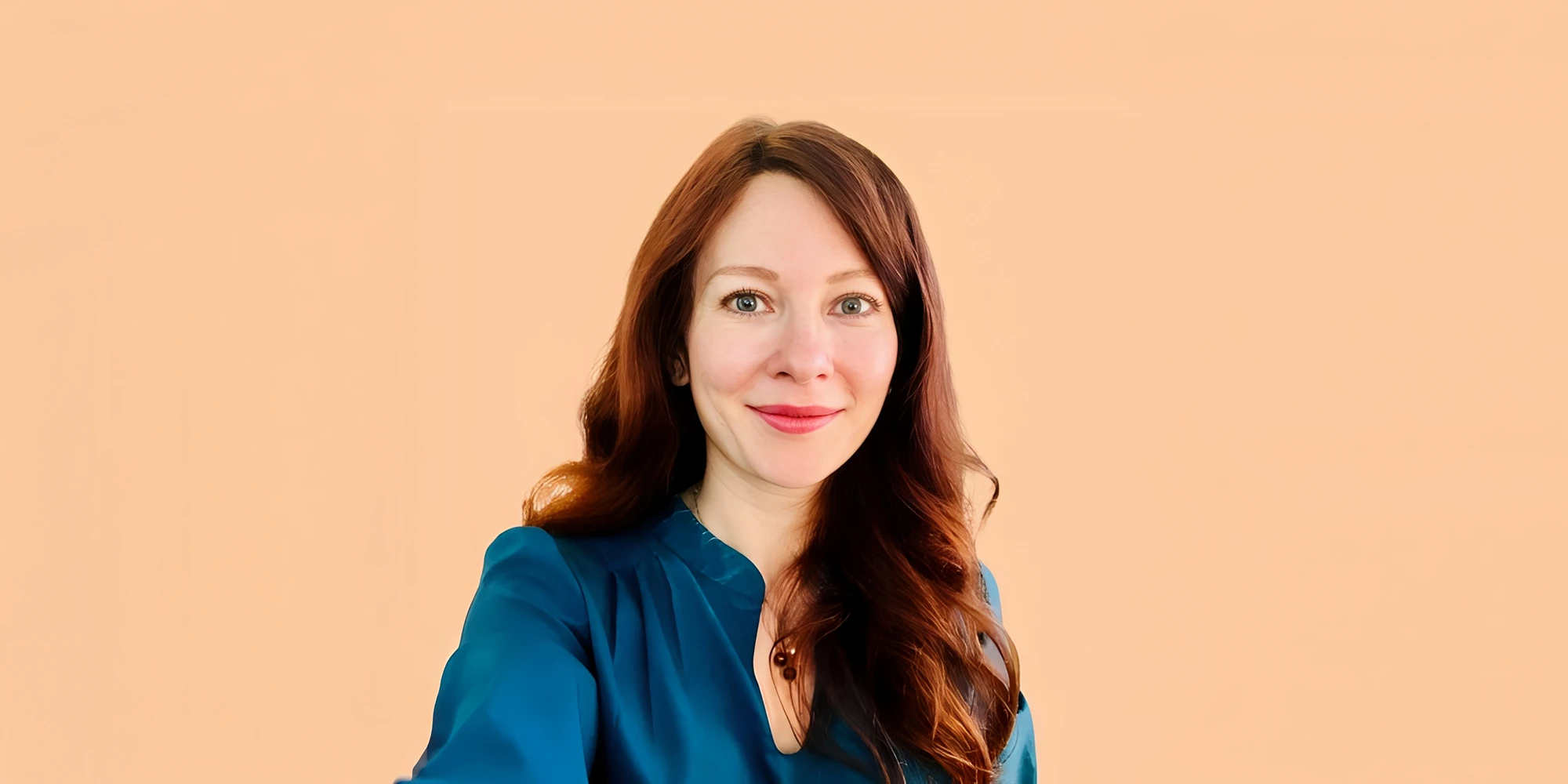
In this episode of The Curiosity Current, Stephanie Vance and Lev Mazin are joined by Oksana Sobol, Vice President of Consumer Insights at The Clorox Company. Oksana leads trend discovery and consumer trend landscaping at Clorox, helping the company translate cultural signals into strategic business decisions.
The conversation explores insights from the Home Care Redefined report, a major research initiative examining how Americans’ relationships with their homes are evolving. Oksana explains how Clorox identifies and validates long-term consumer trends, and why the most important signals often come from understanding what doesn’t change in consumer behavior.
A major shift the research uncovered is that emotional and social outcomes from cleaning are now as important as functional ones. Consumers increasingly see cleaning not just as a task, but as a reset. A way to restore a sense of control, accomplishment, and well-being. This shift is especially visible among younger generations, who approach cleaning with experimentation, creativity, and inspiration from social media.
Stephanie, Lev, and Oksana also discuss the rise of “in-the-flow” cleaning, where tasks are woven into daily routines rather than reserved for traditional deep cleaning sessions. This shift is reshaping product design, packaging, and innovation priorities for brands operating in the home care category.
The episode also explores how social media has transformed cleaning into a form of content and identity expression, creating new opportunities for researchers to observe behavior directly rather than relying solely on self-reported data.
Finally, Oksana shares how insights teams combine social listening, real-world observation, and traditional research to identify meaningful consumer trends and translate them into strategic opportunities for brands.
Episode Resources
- Oksana Sobol on LinkedIn
- The Clorox Company website
- Stephanie Vance on LinkedIn
- Lev Mazin on LinkedIn
- The Curiosity Current: A Market Research Podcast on Apple Podcasts
- The Curiosity Current: A Market Research Podcast on Spotify
- The Curiosity Current: A Market Research Podcast on YouTube
Transcript
Oksana - 00:00:00:
If you just listen to what people say they want, you will usually hear, I want it faster, I want it simpler, I want it easier, I want it more convenient, but then sometimes, I like to watch videos of how consumers engage with cleaning, with kind of like having the sound turned off. Just observing what they are doing and what they're experiencing rather than what they're saying. And that's where you start to pick up some different signals. And so in this case, I was picking up not so much as was this task as fast as it could be, but was it as rewarding as it could be? Did these consumers look like they were enjoying or engaging with this task? And one could make that experience richer. So, that's where you start noticing these details, like the fun little colorful sponges they might be using or behaviors like layering scents. That doesn't make the job faster, but it's doing something for them. It's self-expression. It's enjoyment. Paying attention to how the product feels in their hand.
Molly - 00:00:59:
Hello, fellow insight seekers. I'm your host, Molly, and welcome to The Curiosity Current. We're so glad to have you here.
Stephanie - 00:01:06:
And I'm your host, Stephanie. We're here to dive into the fast-moving waters of market research where curiosity isn't just encouraged, it's essential.
Molly - 00:01:16:
Each episode, we'll explore what's shaping the world of consumer behavior from fresh trends and new tech to the stories behind the data.
Stephanie - 00:01:24:
From bold innovations to the human quirks that move markets, we'll explore how curiosity fuels smarter research and sharper insights.
Molly - 00:01:33:
So, whether you're deep into the data or just here for the fun of discovery, grab your life vest and join us as we ride the curiosity current.
Stephanie - 00:01:43:
Today on the Curiosity Current, we are joined by Oksana Sobol, Vice President of Consumer Insights at the Clorox company, where she leads trend discovery, consumer trend landscaping, and the frameworks that Clorox uses to translate cultural signals into business strategy.
Lev - 00:02:01:
She also co-developed the Home Care Redefined Report, a deep look at how Americans are rethinking time, wellness, and convenience at home. The report has been widely cited in media with over 500 press pickups, including coverage in Ad Age.
Stephanie - 00:02:18:
Today, we're exploring how people's relationships with their homes and the work of maintaining them are actually changing and what that signals to brands, researchers, and the broader insights community.
Lev - 00:02:29:
Oksana, welcome to the show.
Oksana - 00:02:31:
Thank you. It is a pleasure to join you, Stephanie and Lev.
Stephanie - 00:02:35:
We're so happy to have you. Well, Oksana, if you're okay with this, I just wanna jump in with a fun question to start us off. You have built this career investigating what consumers think, and they do, the motivation behind their behaviors and what's actually shifting in their lives. I'm curious to know what drew you to consumer insights in the first place, and what keeps you genuinely, like, plugged in and fascinated day-to-day?
Oksana - 00:03:02:
Like many research professionals, I started actually in a related field. In my case, it was new product development. And then I found my way into insights through curiosity. My journey to the client-side insights and analytics entailed 7 years on the vendor side first. And I have to tell you that this experience was invaluable because I got to learn the ropes not just at one great company, but across several best-in-class clients, including Procter and Gamble, Kraft, Unilever, Johnson and Johnson, and Mondelez. And then what inspired me, back to your question, was the incredible diversity of business problems that can be unlocked with consumer insight. And that is still what keeps me engaged and excited to come to work because I know that every day I will be met by a new business problem to which understanding the consumer is the key.
Stephanie - 00:03:56:
I love that. Yes.
Lev - 00:03:58:
Oksana, we all talk about trends. We live in a very fast-moving, fast-changing environment that seems to be only accelerating. For you and for Clorox, what does it mean when an insight and a group of findings start looking like a trend? What does trend discovery mean for you?
Oksana - 00:04:20:
Your question, Lev, right away gets at the heart of what is valuable in the context of business strategy. And when it comes to trends, it's actually so easy to get caught up in what is constantly changing. But what is more important and more challenging to distil is what is not going to change because that is where you're going to want to place your strategic bets. I will give you an example. Clorox's company strategy is rooted in what we call four consumer mega trends, and that means that we are distilling and betting on these mega trends as the big and enduring forces of growth. So, in our case, they are new wave wellness, home life redefined, transform digital engagements, and responsibility. We have placed our bets on these four strategic consumer megatrends back in 2018, if you can believe it. And they have since carried us through the global pandemic, the ensuing recovery, inflation, and now through this volatile consumer environment that we presently live in. And these same four megatrends still stand. Of course, we pay attention to how their expression evolves with every passing year because consumer relevance is in the nuance of the moment. And that's exactly what our Home Care Redefined report is all about. It dives into one of these four strategic megatrends and unpacks what it means now.
Stephanie - 00:05:48:
Well, you've given me the perfect segue, Oksana, because, you know, in the context of identifying, validating trends, I would love for us to kind of set the scene of the context of the home care redefine study. You know, what was the impetus for doing this piece of research at this specific moment, and what questions were you trying to answer that existing data was not answering for you?
Oksana - 00:06:12:
In this report, we are actually sharing externally what inspires us in how home life is evolving for the American consumers and how these shifts are shaping home care categories for us, for our partners in retail. And it's all centered in the three core consumer themes of time, wellness, and convenience. Most of the insights that led us to this report are insights that are proprietary to Clorox, augmented with some of the publicly available sources.
Stephanie - 00:06:47:
Makes sense.
Lev - 00:06:48:
Oksana, your report found that for the first time, emotional and social outcomes of cleaning, the sense of accomplishment, feeling refreshed, and mood lift are now on par with, if if not even more important than the functional ones, which sort of changes everything that used to be true about how brands express the value of their products. What does this shift tell you about what's actually changing in our consumer psyche, and what's going on in our homes, and in our minds?
Oksana - 00:07:22:
It is actually a big deal for us to see how now, for the first time, emotional and social aspects of what people want to achieve with cleaning are on par with those functional gels. That means that people's relationship with home care is changing, and this is especially pronounced among the younger generations. So, for me, one of the most surprising findings was that almost half of Gen Z, 48%, look forward to cleaning. And that is compared to only 18% among the older generations. Why? They are engaging with it differently. They like experimenting with scents, with textures, with fun new product formats that make their time spent cleaning more rewarding, not just the outcome, but the process itself is more enjoyable. They also see ideas on social media that they are excited to try out, and maybe equally to post their own hacks. And also, they are less beholden to this idea that there is some kind of external validation standard when it comes to what does it mean to have a clean home. The younger consumers, they are less likely to feel like there is some objective bar that they must live up to. And they feel more empowered to say, “You know what? Today, easy does it for me. Maybe today is the kind of day when I wipe and vacuum, and I'm good with that. That's good enough for me.” So, those are some of the interesting differences in not only how the emotional aspects are bubbling up to the top, but also how different generations think about home care differently.
Lev - 00:09:06:
That's fascinating. Do you think this is a continuation of the wave of experiences that society lived through in the COVID era?
Oksana - 00:09:16:
So, what seems to be common there, Lev, is what outcomes do people seek? And that's where we do not see such stark generational differences. And to your point, these attitudes are shaped by culture and what we are influenced by in media. So, what specifically do people seek? They see cleaning as a reset. It is a fresh start. It is a way to feel like you're on top of things. And also in the more recent years, what is coming up to the top is that taking care of your home is a way of restoring a sense of control in your life and a sense of empowerment in the volatile environment. So, it reinforces that while we cannot always control what happens to us or what we are affected by outside of the walls of our home, we absolutely can create the environment to live in that we aspire to and that we find both empowering and comforting. So, those are some of the universal human truths.
Lev - 00:10:18:
Awesome. Some statistics for our listeners and viewers, 86% feel a sense of accomplishment after cleaning, 85% feel satisfaction, 70% feels refreshed, up 13% since 2016. Do you see these trends continuing in that direction?
Oksana - 00:10:38:
We will have to wait and see till we measure it the next time. But so far, I think we would expect yes, that these emotional vectors in home care will continue, and we are curious what new ones might come up in the coming years.
Stephanie - 00:10:56:
For sure. And just hearing you talk about that, Oksana, it's such a cool reset, like you said, because I think that certain generations of us, self included, remember how you keep your home is very much this external reflection of what kind of, you know, parent you are, what kind of adult you are, right? Like it said, there are a lot of external signals that are sent by that. And so I just love the idea of saying, you know what? Cleaning is for me, and I do this to feel a sense of control in my life, and just sort of upending that notion is fascinating. There's another really interesting thing in your report that I would love for you to kind of expound on, which is this idea of in the flow cleaning, which talks about a lot. It has now become the number one type of cleaning that folks do in their homes, replacing that traditional deep clean that we think of as, like, you know, once a week, we're getting in there and doing everything. So, I would, if you can, like, unpack that a little bit for us. What is in the flow cleaning? What does the shift look like in people's lives? And what is that about? Like, what motivates it? And what is the benefit of it for folks?
Oksana - 00:12:08:
It is an interesting shift, and it is one that blends generational differences with evolving attitudes and lifestyles. So, you've just alluded to, Stephanie, that it used to be, there was a certain expectation of what the home needs to look like, even in case guests might drop by or unexpected company, that it projects the image of the family. And also, some of the older consumers will remember how it used to be that a chunk of Saturday would be set aside for the entire family to engage in top-to-bottom deep cleaning.
Stephanie - 00:12:42:
Yeah.
Oksana - 00:12:43:
Which is related to some of these attitudes that we now see fading with younger consumers. As lifestyles have become busier, what we see is that people are adopting a more bite-sized approach to cleaning. And in the flow means that they are weaving some of the cleaning jobs into their daily routine. What might that look like? They might be resetting the bathroom with a quick wipe and spray and touch-up of the mirror while they're engaged in their nightly personal care routine, or they might be spot cleaning the kitchen floor as they get dinner ready. And what does this mean for brands? This shift to in the flow home care, one of the implications is convenience. Clorox has a long history of innovating in home care for the benefit of convenience, as the company that originally brought to market the cleaning wipe 20 years ago, and then other segments, follow-up sprays, toilet wand, and as of last year, we've launched a format that consumers have named toilet bomb, which is even more convenient. You just drop it and walk away. It does the cleaning for you. It could not be any more convenient than that. And then, as you mentioned, Stephanie, it's not just the product itself. It's also about packaging, such as what formats enable product availability within a hand's reach. Think about wipes canisters that are designed to fit into your car's cup holder, or consider that just enabling the in the flow home care remains one of our innovation north stars because that is the one thing, convenience is the one thing that consumers will always want more of.
Stephanie - 00:14:25:
So, it sounds like you've been clocking this in the flow trend for quite some time, really. Like, this is not the first time you're seeing this, it sounds like.
Oksana - 00:14:32:
This is actually the power of this longitudinal tracking that you begin to see bread crumbs of certain trends that might emerge earlier on. So, we've started seeing bread crumbs several years ago. But then the question is, is this something that is going to dissipate, or is this something that is going to magnify? And in the flow cleaning is one of those trends that we see growing and magnifying. And so that gives us confidence that this is the fraction. The category will continue to travel in the coming years.
Stephanie - 00:15:03:
Makes sense.
Lev - 00:15:05:
Oksana, you mentioned convenience is the North Star. But if I'm reading the report correctly, the convenience itself, the definition of convenience is changing and shifting. Where it used to mean easier and faster and handy, it now moves into convenience as a source of joy, joyfulness. Is that correct? Am I reading it great?
Oksana - 00:15:29:
This is actually one of my favorite geeky researcher moments on this journey because this gets at this point, people say they want versus what do people actually want. And if you just listen to what people say they want, you will usually hear, I want it faster, I want it simpler, I want it easier, I want it more convenient, but then sometimes I like to watch videos of how consumers engage with cleaning, with kind of like having the sound turned off. Just observing what they are doing and what they're experiencing rather than what they're saying. And that's where you start to pick up some different signals. And so in this case, I was picking up not so much as was this task as fast as it could be, but was it as rewarding as it could be? Did these consumers look like they were enjoying engaging with this task? And one could make that experience richer. So, that's where you start noticing these details, like the fun little colorful sponges they might be using or behaviors like layering sands. That doesn't make the job faster, but it's doing something for them. It's self-expression. It's enjoyment. Paying attention to how the product feels in their hand. Does it work with the decor when they place it back on their kitchen counter? Those are the unspoken consumer truths, and those are the ones that open up new innovation avenues, avenues that consumers cannot always articulate because they cater not just to the functional outcomes, but to the element of joy, surprise, and delight, making the process of using the product itself a reward. An example outside of cleaning is trash bags. Glad brand pioneered the brightly colored scented bags that bring to life experiences like cherry blossom, Bahama bliss, or my personal favorite, moonlight breeze, and that one comes in a really pretty shade of purple. This is not something you could have designed by listening to what consumers say they want. It's more of watching for what are those unarticulated moments where the satisfaction could be dialed up.
Lev - 00:17:37:
Fascinating. I don't suppose we will see the product claims going from it kills 99% of bacteria to it delivers 80% more joy guaranteed.
Oksana - 00:17:50:
Well, actually, Lev, funny that you should say that, because Clorox Scentiva product platform is an example of exactly what you are saying. We noticed a trade-off so that consumers could pick an efficacious cleaning product that makes their life easier, or they could pick a product that smells wonderful. And that was the insight behind Scentiva. You do not have to choose. You could have both. So, the original tagline that Scentiva launched with was “Works like Clorox, smells like paradise”, which is very similar to the insight that you're sharing.
Stephanie - 00:18:25:
Oksana, you've kind of hinted at this and set the stage for it, but I wanna ask you very directly. So, social media platforms are showcasing, maybe even creating these cultural trends like hashtag clean talk, hashtag oddly satisfying. And they're really turning cleaning into content and into a form of identity expression. What does that phenomenon tell you as a researcher about how the social dimension of home care is really evolving?
Oksana - 00:18:55:
I like how you put it. Cleaning is content, and by extension, everything is content now.
Stephanie - 00:19:02:
Everything. Yeah.
Oksana - 00:19:03:
Implications for researchers, you know, I'll give you three, and I'll start with some of the more obvious ones and maybe finish with the last obvious one. Okay. Number one, most obviously, social media is such an incredibly rich source of learning and inspiration for us researchers. Why would you ask consumers if you can go and see for yourself? And now we are enabled by such great tools that enable the extraction of new insights from the richness of digital space at scale. Number two, going back to the beginning, when I shared that transformation in digital engagement is one of those enduring mega trends that we believe in. And so the trend of cleaning on social media is changing how products are designed. This is what your question was getting at more directly, Stephanie. These are new considerations, like, are your products social media worthy? Is the experience oddly satisfying? As well as the implications of how these products are taken to market, such as in collaboration with influencers. And then I'll share a third and maybe last obvious implication that I'm taking away from social media for us as insights and analytics professionals. I believe our job really is to influence business decisions. That's what we do. And I say it only half jokingly that we are all influencers now. In that sense, we have quite a bit to learn from the professional influencers. We, of course, understand that what people respond to at work is not that different from what sparks them outside of work, and we know why people find social media engaging. But oftentimes, when we try to influence those same people now as decision makers in the work environment, we are coming with 50-page PowerPoints and data tables. And so…
Stephanie - 00:20:51:
That's such a good point. Why?
Oksana - 00:20:53:
Yeah.
There are such fantastic modern formats that are more in the flow.
Lev - 00:21:00:
Work and life balance, work and life harmony, these are the topics that we often think about and discuss because aytm has always been a remote company. We were working from the comfort of our homes since 2008, way, way before it became mainstream cool and normal. And such life and work interweaving dynamic, we spent most of our lives at our home offices. And it seems like people in society alike feel more and more keenly aware of the characteristics of their home environment. They're more tuned to the forever chemicals in the water, the cleanliness of their air, of the surfaces. Do you see that, you know, gaining the momentum as the large trend in society?
Oksana - 00:21:58:
The big idea there is this is a shift in understanding of the building blocks of health. And it is quite incredible for me how consumer appreciation of their home environment factors has progressed just in the past five years. And to your point, Lev, that might have been triggered and reinforced by the global pandemic. Working from home was nothing new for you, but it was for a lot of people. And it used to be that pillars of health before the pandemic were defined very vaguely, and really primarily people thought about the quality of their nutrition and disease prevention, including germ control in their home environment. But now consumers have an appreciation for things like how their home environment and ambiance impacts their quality of sleep. They are thinking about the connection between the quality of their water, and it's not just for hydration, but also the impact that it has on the health and appearance of their skin, of their hair. They know that the cleanliness of air is impacting many facets of their personal well-being. And then even beyond that, as the role of home has expanded, to your point, and it is now a home office and a gym and a culinary hub and a gathering place, and people are spending more time at home overall is what we know from time tracking data. It is also elements like how does the cleanliness of your environment, how does the design and the atmosphere, how does all of that support your productivity, energy levels, and mental balance throughout the day? So, I'll give you one example of an innovation that Clorox has introduced just this year in terms of quality of air, and it is grounded in the inside that there can be more allergens in your home environment than outside of your home environment. And some of the most difficult surfaces to treat are air and soft surfaces. So, there's a line of product that actually disables allergens and prevents them from triggering your body, that takes care of air and soft surfaces. So, cleaning and home care is no longer just about hard surfaces. It is everything that surrounds people in their home environment, and that is quite a significant shift in understanding, and attitudes and habits.
Lev - 00:24:21:
Would you say that we're on the awareness-changing phase of this evolution or on behavioral shift?
Oksana - 00:24:28:
We are in the awareness of how all these elements are interconnected and how they influence health. Some of the problems are better understood than others. So, for example, people have a handle on how to control germs and pathogens within their homes. They have an understanding of cleaning. When it comes to areas like water and air care, these are the spaces that we see evolving. And this is where we see some of the needs are solved, but some of the needs are not solved, and so this is where innovation will happen in the coming years.
Lev - 00:25:03:
Great. I also see some tension in the data outlined between the people wanting natural products on one hand, and everything organic and untouched, unprocessed. And on the other hand, they want to take advantage of the science-based reassurances and something that they can trace back and replicate in a more scientifically rigorous environment.
Stephanie - 00:25:31:
Right. It's gotta be effective, right? Like, we want it to be natural, but we, it's gotta be effective too. Like, that truly is the attention, I think, that we all kind of carry around. Yeah.
Oksana - 00:25:41:
Yeah.
Lev - 00:25:42:
Do you see that that's a right economy, it's not, people are trying to get both of those benefits?
Oksana - 00:25:47:
It's interesting. You're positioning that as a dichotomy, and I see where you could be coming from. In the home care space, we actually see that consumers are very savvy in navigating the space based on the job to be done. And this is somewhat contrary to the popular belief that maybe there is, like, a very natural leaning consumer versus a very traditional leaning consumer, and there are these hard market verifications. But what I see much more commonly in practice, walking through people's homes, is that they have very diverse collections of products in the same household, and they know clearly which benefits they want for specific situations. For example, we know that consumers will often prioritize cleaning power and disinfection in their bathroom, and that makes sense. Those are the tougher jobs. But in the kitchen, we offer all-purpose sprays that are safe to use around food, and pets, and children. And then during the cold and flu season, they prioritize disinfection, and they need versatile products that work across many spaces. Some of the spaces are very large, like kitchen counters, and some are very small, like high-touch surfaces, your light switches, and doorknobs. And then you also want products that are safe to use in your electronic appliances and in the air. So, consumers are very good in navigating by what they need for a specific job and maintaining a product assortment that they can pick from for the specific task at hand, which means that we design our product portfolios around needs and jobs to be done more so than, for example, around segments.
Lev - 00:27:34:
Makes sense.
Stephanie - 00:27:36:
Yeah. It really does. That makes a lot of sense. And it's so funny because I kinda wanna be like, Oksana, are you saying there's nuance here? Because, like, of course, there is. Right? I would love it if we could talk a little bit because I think we're kind of getting closer to wrapping up. But so much of the cleaning redefined report was around ways that people have, like, redefined the way they think about cleaning in a somewhat successful way for them. But there's one area where that's kind of not true, it sounds like. And so that area is laundry, and it sounds like the laundry experience for a lot of consumers in their homes. It's just not keeping up. We know that they're trying to simplify their routines. They're doing fewer loads. They're mixing more. They're sorting less. But only 58% are satisfied with the results that they're getting from their laundry routine. What is breaking down there, and what do you think it's gonna take for laundry to kind of catch up with the rest of home cleaning? And I guess, lastly, what can brands do to help?
Oksana - 00:28:37:
Yeah. This was one of the more surprising findings: just how dissatisfied consumers are with doing laundry. And they expressed it on social media. They say, you know, it takes me 60 minutes to wash, 45 minutes to dry, and then 7 to 10 business days to fold and put it away. And that's not even counting the pre-sorting, the pre-treating, etcetera, etcetera. It is quite interesting to hear that when you consider all the improvements that took place in washers, in dryers, and in consumer products. And yet, laundry still takes me, personally, and I know that it takes consumers pretty much the same amount of time as it did 10 years ago. And it's really not in the flow. So, that's how it's different from how cleaning has evolved; that cleaning is now more woven organically into people's routines, while laundry is the opposite of that. It's like this traffic jam that sits in the middle of your day, and you have to navigate around it. So, the bottom line in laundry is that we see unsolved needs. The time it takes, the tedium of folding, the gas work of treating stains, and then what do you do with those in-between items that are only lightly worn? They end up in that weird space of it's not clean enough for the closet. It's not worn enough for the hamper, plus don't get me started on items that just can't even be washed at all in any practical sense, like your outerwear, or the jackets, the bulky items, blankets, pet beds. So, just overall, this is such a fascinating space that seems prime for innovation and a better consumer experience, a more rewarding consumer experience.
Stephanie - 00:30:19:
Absolutely.
Lev - 00:30:21:
As we are preparing to wrap it up, one important last question for you as a practitioner. Running those trend analysis required to think about the past, the present, and the future. It's a continuum of events, observations and insights that you need to bring together into a coherent story that has often long-term implications. Is there a center of gravity somewhere longitudinally for you when you think about those trends?
Oksana - 00:30:54:
The past, the present, and the future seem like such a good note to close on. I'm actually thinking about your question a little bit differently, Lev, in terms of what are all the signals that you would synthesize that would give you confidence? This is the trend that points to a real consumer tension and unsolved problem, and also this is something that your brand could be a solution to. And so how does it all come together? So, when I think about how we scan the horizon for trends, maybe I would distinguish three big buckets as insights practitioners. And one, it's this social-first approach, which is newer, but that's where a lot of those forward-looking signals can come from. It's the wealth of social media, the wealth of video, TikTok, Reddit, X, Insta, YouTube, the Blogosphere, and so much more. We now have wonderful tools, and as an industry, as well as those that are developed in-house by our data science teams, to distil trends more on a proprietary category level. So, in that space, we focus on more of the future-looking signals. So, what are the tensions? What are the jobs? What are the tipping points? And then, one of the, kind of, places that I find endlessly inspiring is just the real world. And sometimes for us as researchers to get up from behind our computers and see what is happening in the real world, how you're trend hunting, just through your consumer observations in the field. That's where I feel hypotheses are formed, and then you validate those hypotheses by the data and information that you have. But inspiration comes from the real world, and those are your store visits, your consumer home emergence. For us, it's also learning from our international markets. So, we look to our Latin American markets often for innovative formats and value trends, and then our Asian markets for what is happening in food, in personal care, and beauty, and ecom, European markets for sustainability, and the list goes on. And then finally, the third market bucket is your classic consumer research, and this is where the studies, such as the ones that have formed the foundation for our Home Life Redefined report, come in. And these longitudinal ones tend to be of particular value over time because it's often difficult to understand what is changing in the moment as you look at it.
Stephanie - 00:33:27:
Of course.
Oksana - 00:33:28:
And as you compare it to the data a year ago, two years ago, three years ago, oh, suddenly, it is becoming very clear which of the differences in how Gen Z cleans are truly attitudinal and behavioral and unique to this cohort, and which are just a life stage, and they…
Stephanie - 00:33:44:
Life stage. I say this all the time. I'm sorry, but you're saying… Yes. Exactly. It is so hard to tease those two things apart without following it over time.
Oksana - 00:33:52:
Yes. That's where our traditional market research comes in.
Stephanie - 00:33:56:
Love that.
Lev - 00:33:57:
Thank you.
Stephanie - 00:33:58:
Yeah. Well, Oksana, this has been an absolutely, just delightful conversation. I think we talk about a lot of things on the podcast, but getting to dive deep into some actual consumer trends for me is really just, like, exactly how I like to spend my time. So, I really appreciate you coming and talking to us about sort of how people are experiencing cleaning in their homes, and what a treat.
Oksana - 00:34:24:
It has been a pleasure, Stephanie and Lev, and thank you for sharing your observations. I really enjoyed hearing from you.
Lev - 00:34:31:
Thank you so much.
Stephanie - 00:34:33:
Wonderful.
Stephanie - 00:34:35:
The Curiosity Current is brought to you by aytm. To find out how aytm helps brands connect with consumers and bring insights to life, visit aytm.com. And to make sure you never miss an episode, subscribe to The Curiosity Current on Apple, Spotify, YouTube, or wherever you get your podcasts. Thanks for joining us, and we'll see you next time.




.jpeg)


