

Description
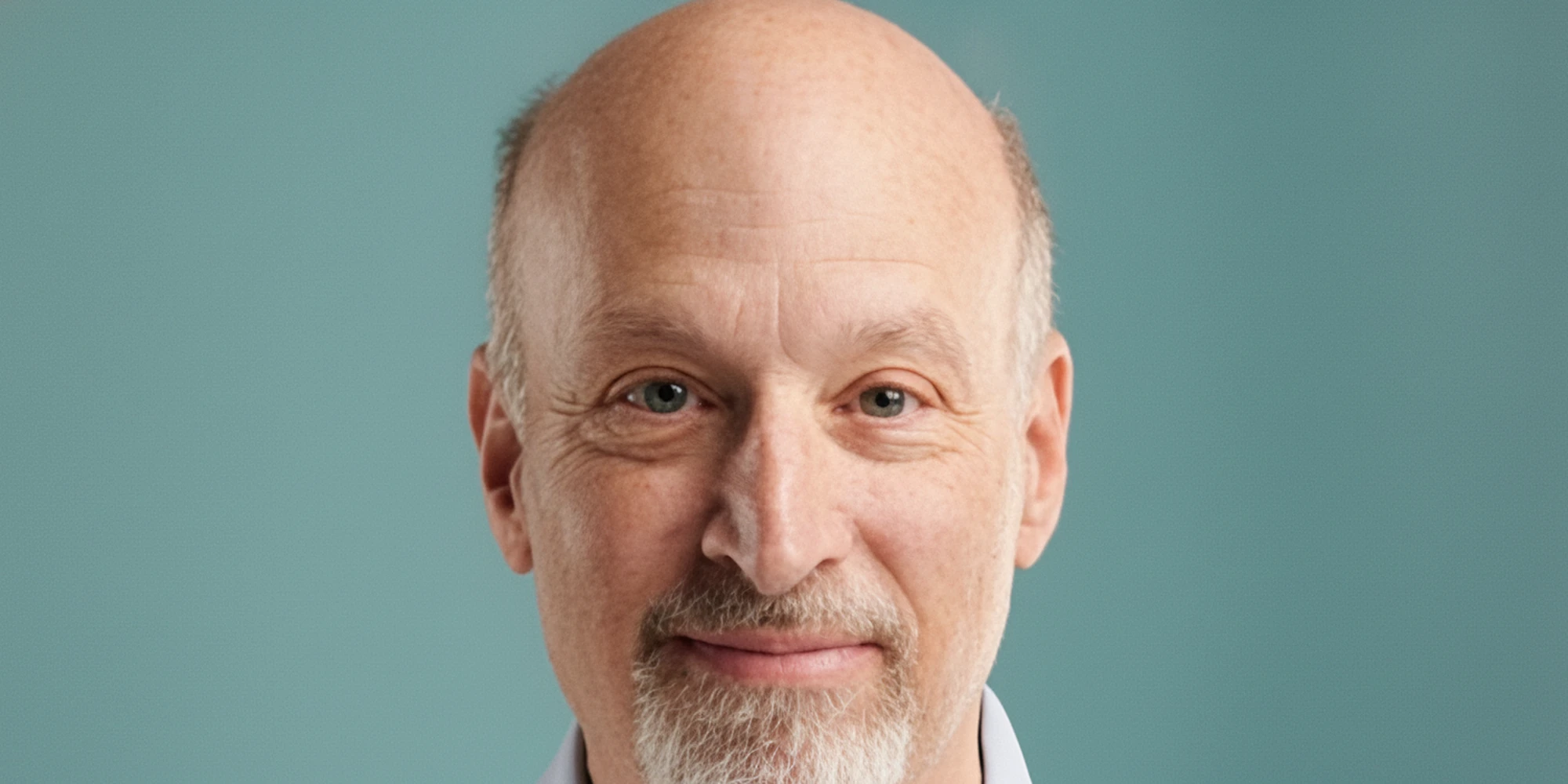
Tom Rich has spent nearly thirty years conducting thousands of focus groups and interviews. In this conversation with Stephanie Vance and Molly Strawn-Carreño, he shares his view on how technology is impacting knowledge workers and why he calls himself a carbon-based researcher in an automated world.
Tom explains that machines excel at finding patterns in large data sets but struggle to connect seemingly unrelated ideas. He details his methods for finding real meaning through intentional disruption and unconventional influences like moral philosophy and the interrogation tactics of psychics. Tom describes how moral mindsets like self-sufficiency or responsibility act as lenses for consumer decision-making. He also demonstrates how calibrated vagueness can lead to more honest participant responses.
Episode Resources
Transcript
Tom - 00:00:00:
When I'm conducting and analyzing research, I love to play games in which I get myself and my colleagues to deliberately disrupt the process. And this can be by abruptly changing the topic of conversation, which is a technique I learned from police interrogation tactics of all things, defining two things that clearly have nothing to do with each other and coming up with a connection, however contrived. That's just not something that, at least as in my experience, AI market research tools seem to be doing, at least not for now.
Molly - 00:00:28:
Hello, fellow insight seekers. I'm your host, Molly, and welcome to The Curiosity Current. We're so glad to have you here.
Stephanie - 00:00:35:
And I'm your host, Stephanie. We're here to dive into the fast-moving waters of market research, where curiosity isn't just encouraged, it's essential.
Molly - 00:00:45:
Each episode, we'll explore what's shaping the world of consumer behavior from fresh trends and new tech to the stories behind the data.
Stephanie - 00:00:53:
From bold innovations to the human quirks that move markets, we'll explore how curiosity fuels smarter research and sharper insights.
Molly - 00:01:02:
So, whether you're deep into the data or just here for the fun of discovery, grab your life vest and join us as we ride the curiosity current.
Stephanie - 00:01:13:
Today on The Curiosity Current, we are joined by Tom Rich, past president of the qualitative research consultants association and founder of Thomas M. Rich and Associates.
Stephanie - 00:01:24:
Tom has spent nearly three decades in qualitative research, conducting everything from in-home interviews and ethnographies to more than a thousand shop-along interviews and over 6,000 focus groups. He's also someone who brings a very unusual set of influences to his work, from moral philosophy to behavioral economics to even studying how psychics ask questions.
Molly - 00:01:45:
Tom has described himself as a carbon-based qualitative researcher in the world of AI, which creates the perfect foundation for our conversation today.
Stephanie - 00:01:55:
So, today, we'll be exploring what AI can and cannot do in qualitative research, why human interpretation still matters, and how the best researchers often draw insight from places far outside the traditional research training.
Molly - 00:02:10:
Tom, welcome to the show.
Tom - 00:02:11:
Thank you. It's great to be here.
Molly - 00:02:13:
So, Tom, you've been in qualitative research for a few decades now, and I have to think that you have seen wave after wave of technology at this point threaten the future of qual. So, I have two questions for you off the bat. What feels genuinely different, if anything, about the AI moment, and what do you see people are still misunderstanding about it?
Tom - 00:02:37:
I'm not sure it's different in terms of what is happening, but more in the pace of change, which obviously is always increasing. You know, as a species, Homo sapiens has always used technology to try to make ourselves obsolete. But until now, most of that was aimed at repetitive physical tasks. But now it seems to be doing the same thing to knowledge workers, engineers, coders, attorneys, accountants, and market researchers. And while it took centuries for the majority of farmers to adopt the plow, this current knowledge work transition seems to have taken about 45 minutes. But it's still putting the same kind of pressure on us. I think that it always has. It's forcing us to be adaptable, to find ways to turn our abilities and talents in new directions. It's forcing us to be as human as we possibly can be to lean into the abilities that we have, at least for now, the robots don't have. Give it time. In terms of what people are misunderstanding, you know, first of all, I'm hardly the only person to point out that AI is kind of a misnomer. It isn't really intelligence. AI models are really sophisticated probability calculators, so they can do some things incredibly well better than any human could. They can find trends and patterns and data that we would never find, but it's important to remember that probability is not wisdom. I think the bigger misunderstanding might be that we're losing sight of the journey for the destination, you know. The data and the insights we gain from market research are crucial, but I'd say even more valuable is what we gain through the process that got us to that data and to those insights, the process that gives us the opportunity to think deeply about all sorts of things, the business and how it creates value, the brand and what it means, customers and consumers and the role that they play and we play for each other, and then the strategic imperatives that change how we do business, how we go to market. When we automate away the process because we're solely focused on the end product, then, you know, anybody who's responsible for the stewardship, or a brand, or a business, is not gonna have the opportunity to engage in that process.
Molly - 00:04:42:
I think that this trends nicely into what Stephanie said at the beginning about how you've called yourself a carbon-based qualitative researcher, which I loved immediately when you're talking about the differentiation between human and AI in all of this brand new work stream that is researched today. What does that phrase mean to you?
Tom - 00:05:02:
I think that it's a way of making a point. It's a way of emphasizing, you know, the role that we puny, fragile, deeply flawed humans play in the eternal pursuit of meaning and purpose and wisdom and stuff like that. I mean, technology is great. You know, technology and the use of technology is a lot of what defines us as a species. Machines genuinely make our lives better except when they don't. But at least for now, they're not human. We have things that enable us to see the world in a nuanced human way, things like self-awareness, empathy, and morality and ephemerality. We can think in crazy, ineffable ways that, you know, bring us to mind-blowing ideas. Pythagoras, and Plato, and Newton, and Darwin, and Einstein, they were not machines. They were humans who absorbed a lot of data, and then they just let their minds wander to all sorts of unexpected places.
Molly - 00:05:54:
I love that we are just a few minutes in, and we're already here at this depth. I'm so excited.
Tom - 00:06:00:
Well, when in doubt, I always invoke Pythagoras, you know, because why would…
Stephanie - 00:06:04:
I mean, how could you not?
Molly - 00:06:05:
Obviously.
Stephanie - 00:06:06:
So, Tom, let's go back to something you just said. You were just describing AI as a very sophisticated probability calculator rather than true intelligence. And, I mean, that is, you know, objectively true. I would love it, though, if you could unpack from a practical perspective, what is the difference then between the kind of probabilistic reasoning that AI does and the meaning-making that humans do when they try to understand each other's behavior.
Tom - 00:06:31:
I'm not trying to call it probabilistic reasoning more than probabilistic analysis. You know, maybe that's just…
Molly - 00:06:37:
That's fair, that's a fair distinction. Absolutely. Yeah.
Tom - 00:06:40:
But I think the bigger point is that AI tools do a great job, an amazing job, at absorbing data and data patterns and finding connections within similar bodies of data. But what they don't do is find connections between seemingly unconnected things. When I'm conducting and analyzing research, I love to play games in which I get myself and my colleagues to deliberately disrupt the process. You know? And this can be by abruptly changing the topic of conversation, which I learned from police interrogation tactics of all things, to finding two things that clearly have nothing to do with each other and coming up with a connection, however contrived. That's just not something that, at least as in my experience, AI market research tools seem to be doing, at least not for now.
Stephanie - 00:07:25:
That's fascinating. I guess I would love to understand what is the yield from that, right? Like, what is that being able to connect to disparate ideas? What does that buy you in terms of insights?
Tom - 00:07:37:
Well, I'll give you an example of one of my favorite ways to do this. I love taking the various visual ways that we present data and research reports, even if they don't seem to fit. So, I'll say to myself, like, okay. Let's do a quadrant chart for all this research that we just did, and see if we can somehow shoehorn the data into that. We'll do a filter chart. We'll do a funnel chart. We'll do a Venn diagram. Who doesn't love Venn diagrams? And when you force yourself to say, “Okay. We're gonna come up with a three-circle Venn diagram here for, you know, these three days of shop along interviews we just did.” What could we do there? The likelihood is you won't end up with anything meaningful. But maybe 30% of the time, you'll say, “Wow. By forcing myself to think about the data in a way that I was not thinking about it, I just came up with an insight that I otherwise wouldn't have had, and I've got a nice Venn diagram to put into my report.”
Stephanie - 00:08:32:
Got it. Love that.
Molly - 00:08:33:
All of this is not stopping so many companies today from hopping on the AI trends. They were very quick to adopt this, add it into the workflows, even if it had to be forced into workflows. But now, we're seeing sort of a corporate trend that they've come back around for an appreciation for the human being and also the appreciation for human-led research. What are they realizing, perhaps with your clients as well, that AI could not actually replace?
Tom - 00:09:01:
I think they're realizing a couple of things. For one thing, I've had more than a few clients over the past several months say to me something like, I'm using AI tools all the time. I don't seem to be, you know, I seem to be working every bit as hard as I used to, and, honestly, I don't feel like the work that I'm producing is any better. So, that's one thing. But the other thing is they're seeing that they're losing things like creativity and fun and randomness. They're losing the opportunity to engage in lively, intense conversation among a brand group, or a research team or something like that. They're losing the opportunity to pressure test their own hypotheses during the research process. And those are things that not only take us to unexpected places, but they teach us, and they help us grow along the way. The other thing I think they're coming face to face with is that age-old dilemma of qualitative research, and that's the fact that when it's being done well, it looks easy. It looks like nothing at all. And when you cut the qualitative professional out of the process, and you try to do it yourself, you realize, oh, wow. This is a lot harder than it looks, isn't it?
Stephanie - 00:10:04:
Yeah. I hear that. You know, we've talked a lot about the ways I feel like that, you know, AI falls short in terms of being like a full-stack solution for qualitative research, but you have made the distinction that you yourself do use AI. So, where have you found it to be genuinely useful in your own workflows?
Tom - 00:10:26:
For one thing, it is absolutely gold for pushing yourself past the blank page. You know? And then need to write a discussion guide. I don't know why. I have a terrible time getting started on discussion guides, and you'd think, having probably written a thousand of them, I wouldn't anymore, but I still do. And I almost always, at this point, have some, you know, AI platform or other write me a first draft of a discussion guide. I would say the final guide, maybe 15% of it, is what was in that first draft, but it doesn't matter. It got me started. Writing proposals, writing, you know, my newsletter, my monthly newsletter, things like that. Getting past the blank page, I think, is something so many of us struggle with. It's also great, you know, if you've got many hundreds or even more than a thousand pages of some kind of transcripts, whether it's from interviews or a bulletin board or anything like that, wow, it'll absorb that data and start to at least give you some preliminary thoughts, and preliminary findings and patterns that just kind of streamlines the process. It gets you going.
Molly - 00:11:31:
Well, let's talk about those thousand pages of transcripts. If you plug all of that into AI and it gives you back some patterns, it could hallucinate. Some of them could be wrong. Some of them could be extrapolations of points that actually aren't statistically viable or reasonable. How do you, as the human, tell the difference?
Tom - 00:11:50:
Hard work. Make a pot of particularly strong coffee, and then sit down and take each of those identified patterns or findings, and you just gotta slog through the data and see if you can validate it or invalidate it. And this takes time. But at least to this point, as a researcher, I found no way around that. And there's also a dividend that comes from this process. You immerse yourself in the data, and so you think deeply about it. And while you're slogging through those transcripts, you know, who knows what'll come up? It brings to mind that remark attributed to Thomas Edison that I've always liked about how most people miss opportunity because it comes dressed in overalls and it looks like work. And this is hard work. And one of the things I think that these AI tools ironically do is sometimes they create even more work that we puny humans have to do to chase down these otherwise unnoticed patterns.
Molly - 00:12:41:
That's a completely different workflow than what it was before. Is this more sophisticated in some ways than just you doing it yourself? Is it less sophisticated?
Tom - 00:12:51:
I'm not sure I'd say it's more or less sophisticated, but it is definitely yielding potential findings that otherwise would have been obscured. I mean, I've had a bunch of, you know, hypotheses that an AI turned up in, you know, out of those couple thousand pages of transcripts that I really don't think I would have come up with. Now, most of those hypotheses in truth don't pan out, but a couple of them do. And, look, insights are the building blocks of research. They’re, you know, that's ultimately the thing that we are looking for. And so anytime, any kind of tool can give me an insight that I otherwise might not have surfaced on my own, that's a gift.
Stephanie - 00:13:31:
Hearing you talk about it, though, really kind of crystallizes for me, and I think about this a lot too in my own work, kind of the double-edged sword nature of it, because it does have a superpower that we as humans don't have, right? But at the same time, that can't stop you from taking that approach that you would always take of immersing yourself in the data because magic happens in that process, right? And you don't wanna forego that magic and just rely on, like, well, here's the AI summary of what was found.
Tom - 00:14:04:
And look, any powerful tool carries risk with it.
Stephanie - 00:14:09:
Sure.
Tom - 00:14:10:
You know, I like to use the analogy of the table saw. The table saw is an incredibly powerful tool. If you're a building contractor, there's no way you can do business without it. But if you're not careful, the table saw will take your arm off. So, you've gotta treat it with respect, and you've got to realize that any tool brings risk.
Stephanie - 00:14:27:
Let's switch gears so we can get into something really interesting. I have heard you talk about, as a kind of framework, the concept that morality is always running in the background of how people think. I'm very curious to know how did you first start incorporating this framework, the context of morality as a hidden layer that informs consumer behavior into your work?
Tom - 00:14:48:
Well, you can say that morality is a mindset, and that's kind of where I'd start because I started learning about mindsets when I was new to qualitative. So, it's been quite a long time now. And a mindset can be thought of simply as a lens through which we see the world. And a colleague of mine had told me about the maximizing and satisficing mindsets and how those influence decision-making. This comes out of the work of the economist, Herbert Simon, and I can tell you more about that if you're interested. When I investigated this particular pair of mindsets, I started coming across a lot of other mindsets, and I began to appreciate that a knowledge of mindsets is invaluable to anybody who wants to understand how people form opinions and how they make decisions. And I realized that probably the most powerful and omnipresent mindset of all, the one that always, as you put it, is running in the background, is morality. You know, our sense of right and wrong. It's always there.
Stephanie - 00:15:40:
Yeah. Incredibly interesting.
Molly - 00:15:43:
Let's talk about the practical applications of when we see morality and moral surface in a real use case. One of the recent studies that you did with a client was around wound care, and you saw that self-sufficiency emerged as a moral value for these people and not just a practical one. So, I'd love to get into that. What did that reveal that a surface-level discussion deliverable might have missed, and what were some of the implications of that study?
Tom - 00:16:12:
You know, because I know a lot about moral mindsets, and I know how to find them, how to tell when people are obliquely referencing them. I picked up on those clues, and that enabled us to enter into a number of really good discussions about the moral foundations of health care, including caring for yourself and caring for a wound. And once you understand that an individual doesn't just see the process of caring for a wound through a lens of practicality and functionality, but also through the lens of right and wrong, that can point the client towards all sorts of opportunities. Once you understand how important it is for certain types of individuals to clean and dress their wounds themselves, and not to rely on others to do that for them. You also understand the importance they place on allowing their own bodies to heal their wounds internally. Then you've got insights that you can take to all sorts of powerful, for instance, brand communication strategies, selling strategies, you know, for their detail, Salesforce and things like that. There's all sorts of things that you can learn, you know, opportunities you can surface that you otherwise wouldn't have.
Stephanie - 00:17:15:
That's so interesting. Do you feel like it has, like, the most application to communications, or do you see this even applying to, like, product innovation and the way that product teams build products?
Tom - 00:17:28:
Oh, I think it definitely does. Certainly, a lot of the work I do is in the area of food. Food is a highly moralized product category. And if you think about so many of the claims that manufacturers make about foods, and obviously, therefore, they've gotta be able to formulate their products to be able to substantiate that claim. When somebody is making an organic claim, when somebody is making a plant-based claim, when somebody is making a sustainability claim, they are, whether directly or obliquely, referencing moral imperatives. And so, that does drive product development strategies.
Stephanie - 00:18:06:
That makes a lot of sense. You've mentioned oblique references a couple of times, so I wanna come to that for a little bit. Some of the moral frameworks that you've studied are probably applied in your research range from virtue ethics to the Protestant ethic to just world thinking. How do those frameworks show up in research conversations, since, you know, participants, respondents, obviously, or probably at least most of the time, aren't explicitly naming them?
Tom - 00:18:33:
Yeah. I find they come up in code words and phrases. So, you have to know what those are, and you have to know how to listen for them. I've been studying morality for a long time now, and I've given presentations on it at market research conferences, and I've run workshops for fellow qualitative researchers. So, I've had a lot of time to think about this. And so there are a few words that, when they pop up in the course of conversation, they are a signal that somebody might be talking about a moral value. So, the word ‘should’, that's a dead giveaway. Somebody's probably talking about some kind something that has to do with right and wrong. If they bring up ideas like fairness or balance, if they say something seems too easy, or something doesn't feel right. If you hear the word ‘guilt’, which in the world of food, you'll hear all the time.
Stephanie - 00:19:22:
Truly.
Tom - 00:19:23:
You hear the word ‘responsibility’. If somebody starts a statement with something like, “My grandma always used to tell me…” You know, start digging. You're probably gonna find some kind of, you're gonna find a story that leads to a moral value. And then there's a whole variety of probing techniques that you can use to dig into those things. You can make oblique statements and see how people fill in the blanks. You can do, you know, what I call moral laddering and stuff like that. There's all sorts of cool ways to dig into that.
Stephanie - 00:19:50:
Very cool.
Molly - 00:19:51:
Speaking of finding unique ways to dig into things, I wanna go into the research that you've done about psychics because that completely surprised me. You've spent years studying how psychics ask questions and elicit information. I have many questions about this, but I will start with what first made you interested in that world?
Tom - 00:20:15:
A long time ago, I heard an interview with Penn Jillette, you know, the half of Penn and Teller, the magician.
Stephanie - 00:20:21:
Yeah. Yeah. Yeah.
Tom - 00:20:22:
And he was talking about how he and Teller had built a psychic cold reading segment into their show. I think this was just after they established residency in Las Vegas, since they could really think about the show more deeply because they weren't traveling all the time. And he talked about the way that psychics and other practitioners of the mystical arts get people to reveal things that they otherwise might not have, sometimes even without even realizing that they're doing that. And a penny just dropped for me. I thought to myself, “Well, not kind of what we do in qualitative. We get people to tell us stuff. So, maybe I'm thinking there's some kind of overlap here. Maybe there's something to be learned.” And so, I've been studying psychics, and mediums, and tarot readers and people of that ilk for at least 20 years. My poor and long-suffering wife is constantly getting dragged to local events that include, you know, somebody doing something spooky and things like that. I gave a presentation at the last QRCA conference on exactly this topic because I wanted to share what I've learned with my qualitative research colleagues. So, yeah, I've been digging into this for a long time now.
Molly - 00:21:24:
I'm sure there's a lot we could get into, but maybe a snippet part of that for our show today, things like calibrated vagueness, things like structured guessing, all of these things can make information feel applicable. How do those techniques, in a practical way, apply to qualitative moderation?
Tom - 00:21:43:
The first thing I think you have to understand, one of the first things that I realized when I was studying psychics is if there's a few, like, brain-blowing realizations I had, but one is that vagueness and guessing are skills. You can do them well, in which case the world will be your oyster. You can do them badly, in which case you could end up looking like an idiot. Psychics use these tools very, very shrewdly. They have really, really shrewd ways of being vague, for instance. There's a technique that I call the split personality statement, for instance, and that's where you credit somebody with a specific personality characteristic and at the same time, it's the exact opposite. So, I might say, you know, “Stephanie, you strike me as a person who really just is incredibly outgoing, and you love social situations, but I also see that sometimes you really need your alone time.”
Stephanie - 00:22:34:
Totally. I know exactly what you mean. That's so funny. Yeah.
Tom - 00:22:38:
Right. But think about what did I just do there? I basically said absolutely nothing.
Stephanie - 00:22:42:
Everything. You said nothing and everything. Yeah.
Tom - 00:22:44:
I gave you two poles of a continuum, and I've said to you, “Stephanie, tell me where between these two poles you lie.” So, I gave you the vaguest possible scenario imaginable, and somehow or other, that creates an opening into a conversation. I do this with doctors all the time because doctors can be tough to get to open up. And I'll say to doctors something like, you know, I'm guessing that sometimes you really strongly empathize with your patients, you really share their pain, but sometimes you're able to create more distance, and they jump on that. They just love that.
Stephanie - 00:23:16:
That is fascinating.
Molly - 00:23:18:
And at this point, they just start revealing what their own take is of where they land on that spectrum? Interesting.
Stephanie - 00:23:26:
Interesting.
Tom - 00:23:27:
One of the things that I have learned from psychics is the way they leverage our pattern-seeking nature as a species. We can find patterns anywhere if we want to, even if they aren't really there. It's not just AI that hallucinates. You know? And this is a manifestation of the characteristics of subjective validation, you know, which is a fancy way of saying we make everything about ourselves. And so, when you put a vague continuum of personality characteristics in front of somebody, they're just gonna see themselves in it. They will map themselves onto that pattern, and they'll start to talk. We all do it.
Stephanie - 00:24:03:
It is so fascinating to hear how you have applied, like, you mentioned, police interrogation methods, and now you're talking about psychics. I hear a lot of, like, social and cognitive psychology, behavioral economics in the way you talk, too. So, I have to imagine that you've applied a lot of that. It's so interesting how you've sort of pulled and borrowed from all these other fields. What a unique approach! It's fascinating.
Tom - 00:24:30:
You know, to a large extent, that is a lot of how we do business in the qualitative research profession. It really is. Almost nobody comes into this profession immediately, you know, you don't roll out from under a cabbage leaf immediately a qualitative researcher.
Stephanie - 00:24:45:
Right.
Tom - 00:24:46:
We all did something else first, and people have incredibly diverse backgrounds. And I think that we're all also characterized by this incredible insatiable curiosity. So, we're always looking for new things to learn about, and then naturally, you're gonna wanna apply them to whatever it is you do.
Stephanie - 00:25:01:
Yeah. Makes a lot of sense. Switching gears a little bit, you know, we've all seen qualitative research is dead articles for almost 30 years now. What do you think those predictions consistently misunderstand about what human qualitative research actually does?
Tom - 00:25:19:
I think that that's a good way to phrase the question because those kinds of predictions, I mean, sometimes they're just polemics. It's somebody looking to be provocative and and get get some attention. And I'm all for being provocative and getting attention, by the way. But those kinds of predictions that, you know, those articles you read in the trade press about, you know, like you just said, “Qualitative research is dead.” They focus almost entirely on the end deliverable of the process, like we were talking about before and not on the process that gets you there, because it is the journey that enables us to learn and grow. And while there are quicker and cheaper ways to generate a research deliverable, I don't think there's any quick and cheap way to replicate the journey. And it's the journey that keeps, you know, us wanting to engage in conversation with people.
Stephanie - 00:26:05:
Yeah. Absolutely. And then now, we're gonna switch gears on you yet again, Tom. We have a recurring segment on our podcast called the Current 101, where we ask all of our guests the same set of questions. In your experience, what is one trend or practice in market research or qualitative research that you would like to see stopped, and what is one thing that you would like to see more of?
Tom - 00:26:29:
Stopped, I would say, one thing that has always kind of gotten under my skin is ranking questions. And we see those, both on the quant side and the qual side.
Stephanie - 00:26:38:
We do.
Tom - 00:26:39:
And I'm not gonna say these questions are of no value. They are. But they assume, you know, I was talking before about maximizing and satisficing mindsets. When you ask a ranking question, you are assuming a maximizing mindset. You are assuming that the person on the other side of that question actually has some kind of ranking scheme for whatever it is you're talking about in their head, and they might not be. But because the people who participate in market research are here because they wanna help, if you ask them a question, they're gonna answer it, whether it's a meaningful answer or not, and you'll never know. And so, you can end up with numbers on a page, but they're not really data because they don't really reflect how somebody feels about something. And so, I think that there are better strategies than ranking questions that we should be emphasizing more.
Stephanie - 00:27:27:
That's such a good one because I really feel like where that comes from is the business says we need to prioritize. So, they force the consumer to prioritize, right, where, yeah.
Tom - 00:27:38:
And the other thing is, you know, look, ambitious, accomplished people often are maximizers at heart, and we project ourselves onto others. We assume everybody's a maximizer. Everybody, you know, can tell me their 6 favorite brands of breakfast cereal.
Stephanie - 00:27:51:
For sure. Yeah. That makes sense. And then what is the thing that you would like to see more of?
Tom - 00:27:57:
I would really like to see a lot more focus during the design and planning of research on research objectives, as well as the business imperatives and the strategies that drive them. I bet you I'm not the only person on this call who has been dropped into the middle of a research study that has already been at least theoretically planned out and realized that either there are no objectives or the objectives really haven't been thought out and they really haven't been discussed, and we're already halfway through recruiting, and, oh my God, what are we gonna do? Research objectives are your North Star.
Stephanie - 00:28:31:
They are. Yeah.
Tom - 00:28:32:
They will tell you whether you're on the right path or not. They will tell you where you're trying to go and give you the opportunity to come up with a way to get there. But if you don't know where you're going to go, how will you know that you ever arrived? So, more and wiser attention to research objectives, I think. And I also think that we, as research professionals, that's one of the ways we bring value to our clients is helping them think these questions through because we're good at that.
Stephanie - 00:28:59:
Truly. And I think that one of the downsides of not doing it is that it's a discipline. Right? And it's undisciplined to show up without research objectives because what it means is that you kind of wanna boil the ocean. And I get it. Like, I get wanting to do that, but then you just don't have realistic outcomes, right? Like, it's, yeah.
Tom - 00:29:18:
You know, research is expensive. You know, and you would be remiss if you weren't trying to get every ounce of value out of your research book that you can. And that's how you sometimes end up with, you know, 35 research objectives.
Stephanie - 00:29:31:
Yeah. For sure.
Molly - 00:29:33:
Well, Tom, we have talked so much about so many things. Thank you so much for being such a wealth of knowledge for our industry and sharing a little bit of that with us today. To close this out, we know that the world of research is changing. So, for somebody listening who wants to become a stronger qualitative researcher, or wants to get into qualitative research, what's the one principle you believe will always hold true throughout AI changes, throughout qualitative research's dead articles?
Tom - 00:30:03:
Here's one. That is, qualitative research is a profession. I'm not sure it's always thought of that way outside of the qualitative world, but it really is. You know, again, I alluded to this before, if you're doing qualitative well, it looks so easy. It looks like a nice schmoozy conversation among new friends, and, oh, how hard can that be? And, you know, the uninitiated don't see the years of experience and the incredible amounts of continuing education and preparation and skill that go into it. You know? Like, it's like any profession. It takes a lot of effort and a lot of time to get good at it. You know? Think of the 10,000-hour principle that Malcolm Gladwell, you know, so famously articulated. And so, while it's important to devote a lot of those 10,000 hours to actually conducting qualitative and learning to do it intuitively and efficiently, it's also important to devote some of those hours to related areas of study, economics, philosophy, the arts, psychology, literature, anything else that interests you that might in some way be applicable to the art of having deep and and meaningful and insightful conversations. There's just no shortcut to mastery.
Molly - 00:31:15:
Tom, thank you so so much for joining us today. What a wealth of knowledge that you shared with us, and what you do for our industry. What really stayed with me from this conversation is this idea, talking about AI, that it could be incredibly powerful, but there are still essential parts of human understanding that require interpretation, intuition, and real human presence.
Stephanie - 00:31:35:
Absolutely. I couldn't agree more. You know, I really like this idea of explicitly calling out that AI can recognize patterns extremely well, but understanding people often requires viewing the data through a mindset lens or even stepping outside of the data entirely.
Molly - 00:31:52:
And we gotta talk about the morality and psychics conversation because what a fun topic that is absolutely gonna stay with me, too. And it's such an essential reminder that great research often learns from unexpected places because it undercuts so much of the human condition, because human behavior itself is messy, emotional, layered, and incredibly nuanced.
Stephanie - 00:32:16:
For sure. Tom, thank you so much for a thoughtful, honest conversation about qualitative research, AI, and the uniquely human side of understanding people.
Tom - 00:32:26:
It was my pleasure.
Molly - 00:32:27:
And to everyone listening, thank you so much for being part of The Curiosity Current. We'll see you next time.
Outro - 00:32:33:
The Curiosity Current is brought to you by aytm. To find out how aytm helps brands connect with consumers and bring insights to life, visit aytm.com. And to make sure you never miss an episode, subscribe to The Curiosity Current on Apple, Spotify, YouTube, or wherever you get your podcasts. Thanks for joining us, and we'll see you next time.




.jpeg)


